The circuit breaker is meant to act as your electrical system’s silent guardian by tripping only when there’s a true emergency. So, when something feels wrong, such as a breaker that keeps tripping or a panel that is hot to the touch or a faint smell of burning, the natural question would be how could you confirm that you have faulty breaker? This guide outlines the seven biggest warning signs and gives useful information on what can safely be checked by yourself and which moments require a licensed electrician. As a faulty breaker may pose a serious risk of fire and shocks, safety is the most important aspect of the whole process.
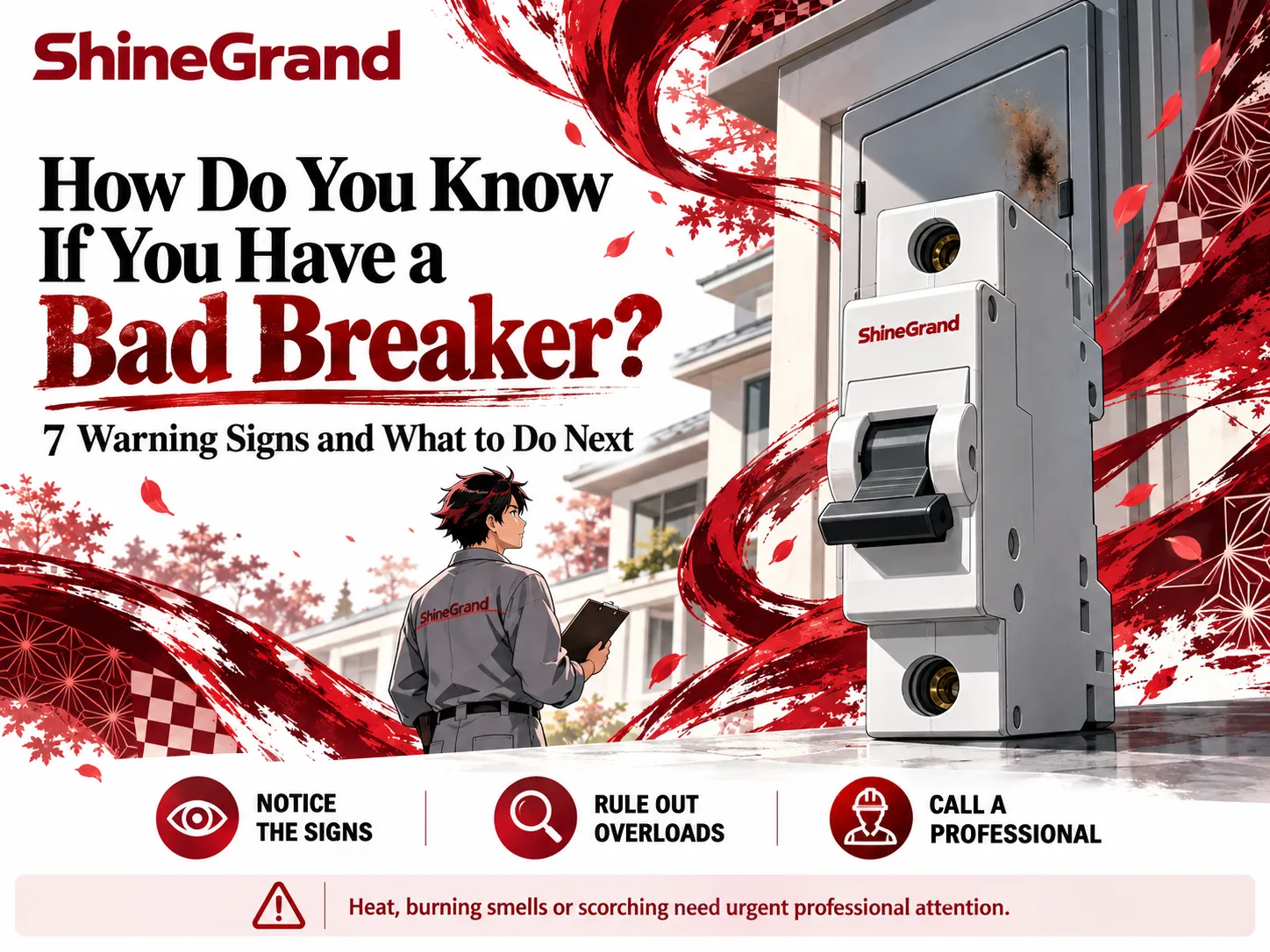
How do you know if you have a bad breaker? The most common signs are circuit breaker that trips multiple times, one that will trip and will not reset, a circuit breaker or the panel being hot to the touch, seeing burnt marks around the panel, flickering or intermittent power onto that circuit, hearing buzzing or cracking sound and a handle that feels loose or stuck between ON and OFF. Note that any burning smell, heat or scald can indicate that you should stop using the circuit and inform a licensed electrician.
What a Circuit Breaker Is Supposed to Do
A circuit breaker acts as a safeguard for your wiring by cutting off electricity when it senses too much current due to either an overload or a short circuit, preventing the wires from becoming hot enough to catch fire. A good breaker will only trip when there is a genuine problem and will reset itself easily. A faulty breaker on the other hand either does not trip when it should (which is serious as it stops protecting the circuit) or it trips when it should not or shows signs of damage. Thus, it is very important to learn how to distinguish gaps between an efficient breaker and a broken one.
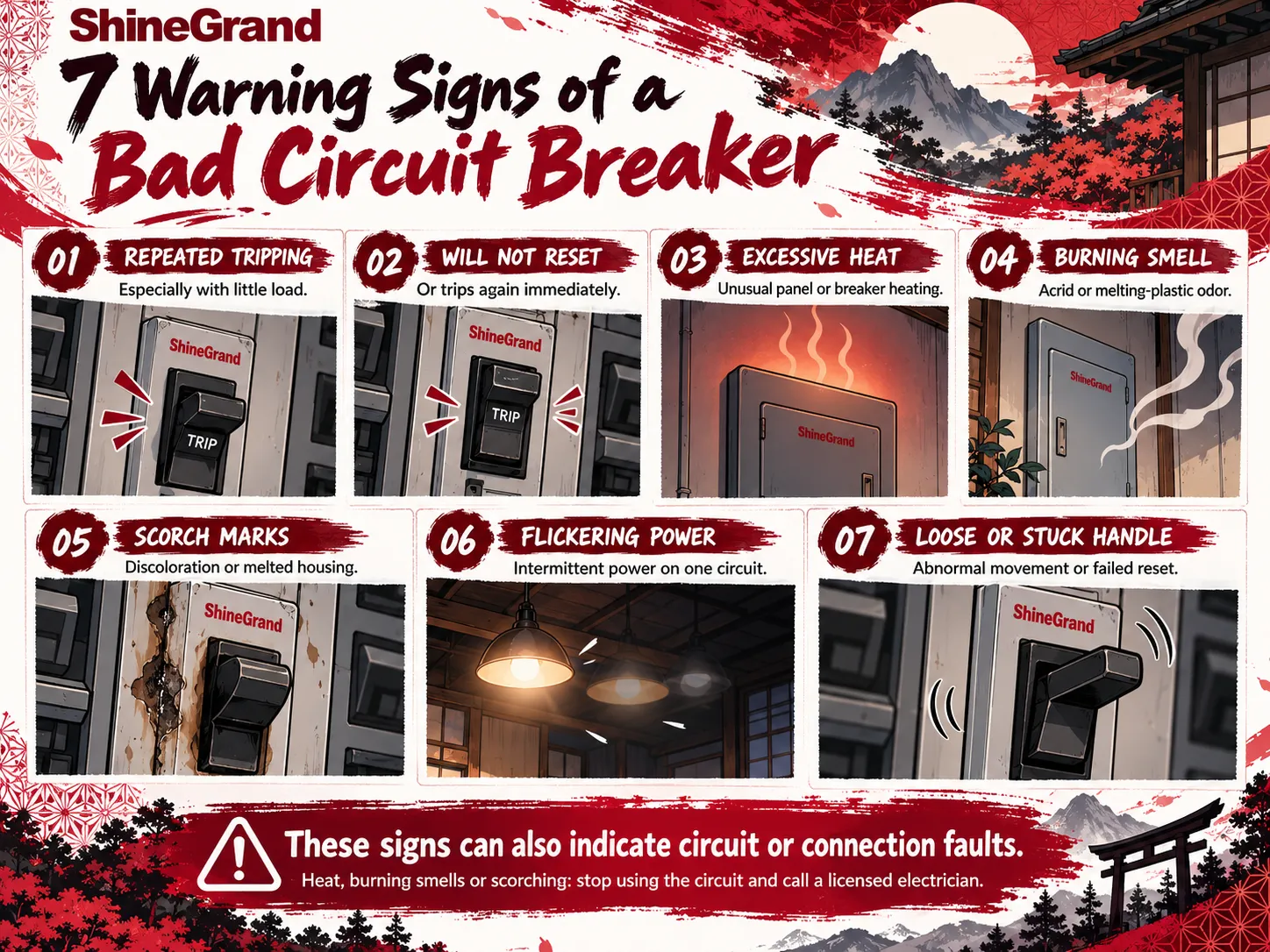
7 Warning Signs of a Bad Circuit Breaker
Watch out for these signs to know if you are dealing with a faulty breaker. Just one of these signs may indicate a slight problem, but several problematic signs together could be bad news.
1.The breaker keeps tripping. It is normal for a breaker to trip from time to time but a breaker undergoing constant tripping even at no load could be a faulty or worn out device.
2.The breaker will not hold or it trips immediately. If the breaker does not stay in the ON position or reverts to the OFF position before one can reset the breaker, then it means that either the fault condition still exists on the circuit or the breaker has malfunctioned.
3.The breaker feels warm. Warm or hot to the touch breaker or the area around the breaker is definitely a cause for concern and may indicate cases where something might be wrong with the internal mechanism of the breaker.
4.The breaker smells like burning. If the breaker appears to be overheating, then it indicates arcing and other malfunctions within the breaker.
5.There are scorch marks on the breaker. If you can see burn marks or discolourations on the breaker, then it may indeed have to do with heat or arcing.
6.The lights begin flickering. If the lights start flickering or if you are finding it difficult to sustain the power supply at one of the circuits, it might indicate a probable breakdown of a circuit breaker.
7.The handle of the breaker feels loose. A good breaker switches between ON and OFF with the snap of a finger but if the handle of your breaker feels loose and mushy, that means there is something wrong with the internal mechanism of the breaker.
A buzzing or crackling sound could be yet another warning signal worth adding to the above list. Additionally, an old or physically damaged circuit breaker may also not work properly.
How to Safely Check a Suspected Bad Breaker
Some tests may be satisfactory for the owner, while others may be bad. Now, let’s see how to know if your breaker is bad.
Look, smell, and listen. With the panel door closed, see if you can find burn marks, burning smells, buzz sounds, or if the breaker moves freely in any direction. These kinds of tests are not dangerous but can give you lots of answers.
Feel for heat. You should be careful with this test. Without touching the metal or opening the panel, see if you can notice some heat that should not be there. If it is too hot or you smell burning, stop here and call for an electrician.
Isolate the circuit. If the breaker does not work, turn it off, and unplug all the devices that are connected to the circuit. After that, turn it back on again. If it will not trip with the load, you might have a faulty appliance instead of a bad breaker.
Never repair or test electric panels yourself. You should not try to open the cover, work with the live voltages, check the switches with the multimeter, and change the breaker. Such work should always be done by qualified specialists.
What to Do Next
If you have seen one or more warning indicators, make sure you respond according to the level of seriousness. A burning smell, heat or scorch, or an arcing sound means that you need to turn off the circuit breaker if it is possible and contact an electrician immediately, as it suggests that there is a danger of fire. If your circuit breaker keeps tripping but there is no apparent reason for this, make sure that you do not overload the circuit and that there are no faulty appliances. If you do not discover anything wrong, ask your electrician to check it and replace the circuit breaker if necessary. Please, never force or tape the circuit breaker.
Bad Breaker or Something Else? Ruling Out the Alternatives
Before concluding that the fault lies with the breaker itself, it is important to rule out two common alternatives. An overloaded circuit may create the impression of a faulty breaker. If the breaker is tripping because high-draw devices, such as microwave, kettle, and heater are used together on the same circuit, then the breaker is functioning normally and the problem lies elsewhere, specifically with the load on the circuit. The second look-alike to be considered is a faulty appliance/wiring downstream. If the breaker does not trip with all devices unplugged, but does trip when one specific device is plugged in, then that is the actual problem. The truly faulty breaker may trip without any load, may not reset with the current cleared, or may show burn signs as shown above. By following through these logical steps, starting from the load aspect and moving on with appliances and, finally, breaker, one may avoid a situation when healthy breaker is replaced without identifying the real problem.
Preventing Breaker Problems
There are some habits that can keep breakers in good condition and lessen chances of coming across with a failure. Do not overload electrical circuits regularly making use of high running devices like space heaters. Always keep the panel dry and clean of dust and moisture because moisture, dust and corrosion have the ability to weaken connections inevitably over time. It is also necessary to have the electrician check the terminal connections from time to time.
Why Breaker Quality and Certification Matter
Not every breaker has the same quality. A breaker has a function to trip every time fault current flows in it and if it trips reliably every time for years of its lifespan. The key to its reliable performance is the quality of manufacturing process and testing. That’s why it is important to use certified breakers developed and tested according to already developed international standards like UL 489 or IEC 60898-1 and IEC 60947-2. The companies get the product approved to guarantee correct interruption of fault. Cheap, and uncertified breakers are quite dangerous as they do not trip. The principle is always the same, regardless of the specific type of device at hand, as the integrity of the protective device is the key factor.

Frequently Asked Questions
What happens when a breaker goes bad?
A faulty breaker may not trip when required, which means that there is no protection against overloads or shorts in the circuit, or it may trip unnecessarily or be incapable of resetting or may even become too hot. A malfunctioning breaker may also arc or overheat causing fire. This is why overheating, bad odor or burnt marks should be treated seriously while repeated unnecessary trips should be monitored before complete malfunction of the breaker occurs.
How much does it usually cost to replace a circuit breaker?
Costs differ based on region, type of breaker, and the labor involved. Generally, the replacement of a typical standard circuit breaker costs around 100 dollars which includes the cost of hiring a licensed electrician. Specialty circuit breakers like AFCI or GFCI are more expensive. Replacing an entire panel is an even bigger job. Costing keeps changing hence it is advisable to get the latest quote from a licensed electrician.
How long do breakers usually last in a house?
In a clean and appropriately loaded environment, a good quality home circuit breaker can last for approximately 30 to 40 years, which is about the same length of time as the lifespan of the panel itself. In worst-case situations, frequent tripping, overloading, moisture, heat, or some manufacturing defect may prevent it from achieving its full lifespan. If your breakers or panel are many years old and displaying worrying indicators, you should have them checked.
Do I need an electrician to replace a circuit breaker?
In almost all situations, yes. Changing a circuit breaker involves doing work in the electrical panel surrounded by live, dangerous voltage, and it usually has to meet local codes. A qualified electrician will be able to determine that the circuit breaker is indeed the problem, select the correct type and size, and install it properly. It is not a recommended DIY project, and in many cases it will not comply with local regulations.
Can a bad breaker cause a fire?
Yes. When a breaker does not trip during an overload or short circuit, the wiring can become dangerously hot, while a breaker that has faulty connections or arcing inside can become overheated. Either way, both situations can cause fires, which is why any signs of heat, smoke, or scorch marks on a breaker should be considered a serious matter that needs the intervention of an electrician.
References
- Benlong (benlongkj.com) — MCB/MCCB Manufacturing and Testing Solutions. Production and test-line technology behind reliable low-voltage circuit breakers.
- UL 489 — Molded-Case Circuit Breakers. The North American standard for circuit breaker safety and performance.
- IEC 60898-1 and IEC 60947-2 — Circuit Breakers. International standards for household and industrial circuit breakers.
- NFPA 70 — National Electrical Code. Requirements for overcurrent protection and panel work.
- Electrical Safety Foundation International (ESFI). Home electrical safety guidance and warning signs.
Reliable Protection Starts With Quality Equipment
Understanding how to determine if your breaker is faulty is fundamentally about protecting your home or building and this means that whatever means you use for protection is only as strong as the equipment that you are using. For businesses that build or source low-voltage protection equipment, Benlong provides MCB and MCCB manufacturing and testing solutions engineered to those standards; you can learn more at benlongkj.com. And for medium-voltage distribution and transformer projects, where dependable protection is equally critical, ShineGrand Electric supplies power and distribution transformers, disconnect switches, and related equipment, explore the full transformer product range or contact the ShineGrand team for support.