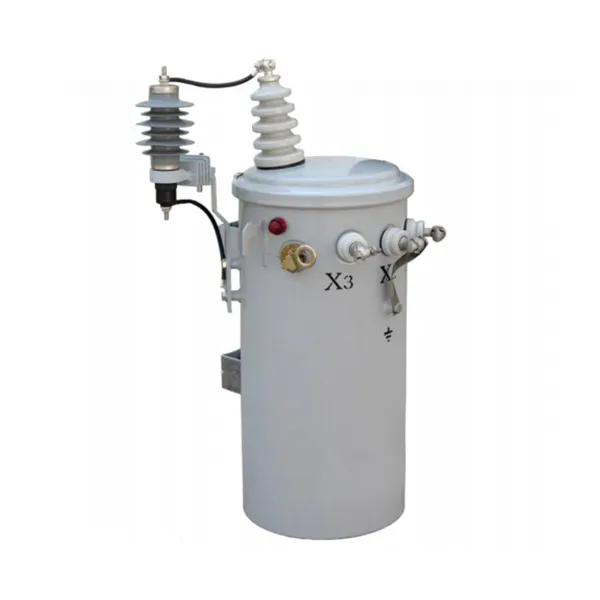
When you stroll through a suburban neighborhood, one thing you will likely notice is a metal canister secured to the wooden utility pole. The telephone pole transformer is the most widely used name for this device, although it would be more accurately referred to as a pole-mounted distribution transformer. In addition to supplying an answer to what is a telephone pole transformer called, this article will also explain the main functions, types, pricing, and why it’s one of the greatest unsung heroes of the electrical grid; a pole-mounted transformer.
Main Names for Pole Mounted Transformers
There are several names used to refer to telephone pole transformers based on your location, industry jargon, and context:
- Telephone Pole Transformer: The most common name among residents. This is commonly used because telephone poles are usually where telephone lines are hung on; therefore they are commonly placed in suburban and rural areas.
- Pole-Mounted Distribution Transformer: The technical name of the telephone pole transformer highlights that its purpose is to step down high voltage power from power transmission wires to an electric service that can be used in homes and businesses.
- Utility Pole Transformer: This is more of a generic term that utility companies use to describe both residential and commercial pole-mounted transformers.
- Single Phase Pole Transformer: These are designed for residential use only and will provide power to a 120/240 volt electric service to each residential customer.
How Do Telephone Pole Transformers Work?
Telephone pole transformers convert high voltage electricity into lower voltage electricity through a process known as electromagnetic induction to help reduce the amount of voltage that is available to homeowners and businesses. Here’s a simplified breakdown of how pole-mounted transformers work:
High Voltage Input: The transformer takes in power from overhead transmission lines at voltages ranging from 11kV to 345kV.
Transformation to Standard Voltage: The transformer transforms this high voltage into a lower standard voltage suitable for distribution by using magnetic fields created within the copper wire coils of the transformer (120V/240V for homes and 480V for commercial buildings).
Distribution of Safe Power: The transformer distributes the lower voltage power through service lines to customers to power lights, appliances, and electronics.
Mineral oil or silicone gel used for insulation inside the transformer serves as both insulation and coolant, so that the transformer avoids failure due to overheating over its typical life of 20–30 years.
Types of Pole Mounted Transformers
Although all pole-mounted transformers perform the same basic function, they are designed differently or used in different applications.
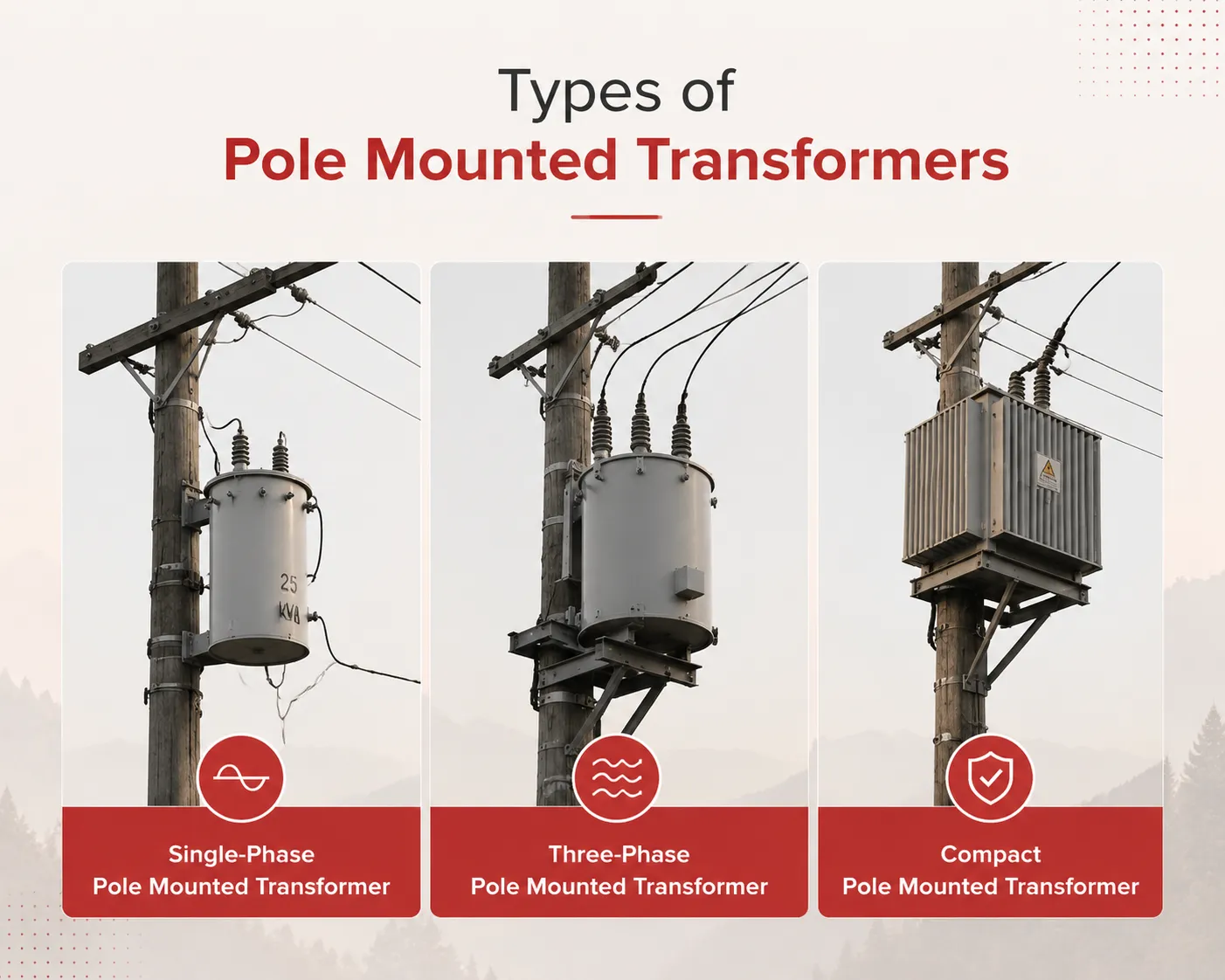
1. Single Phase vs. 3 Phase Transformers
| Type | Application | Specifications |
|---|---|---|
| Single Phase | Homes and small businesses | 120V/240V output, 10kVA to 100kVA capacity |
| 3 Phase | Industrial and large commercial buildings | 208V/480V output, 100kVA to 5MVA capacity |
2. Other Types of Transformers
Beyond pole-mounted designs, here are other major transformer types found in the electrical grid:
- Power Transformers: These increase or decrease voltage for long-distance transmission at substations.
- Distribution Transformers: These include the pole-mounted, pad-mounted, and ground-mounted units that provide power to customers locally.
- Isolation Transformers: Designed to provide electrical isolation for sensitive uses, such as in medical equipment or electronics.
- Instrument Transformers: Used to measure voltage and current in high-voltage systems for monitoring and safety purposes.
Some classifications expand this list to include specific transformer types, such as autotransformers (for grid voltage adjustments), pulse transformers (for signal transmission), and resonant transformers (used in high-frequency applications like radar systems).
Costs, Brands & Key Specifications
Price Range: Residential single-phase pole transformers typically cost between $3,000 and $10,000, while 3-phase industrial models can range from $15,000 to over $50,000. Replacement costs may add an additional $1,000–$5,000 depending on accessibility.
Top Brands: Trusted manufacturers include Siemens, Eaton, ABB, and Cooper Industries. Their products are renowned for their durability and weather resistance.
Weight & Copper Content: A typical residential transformer (50kVA) weighs between 500 and 1,000 lbs and contains 100 to 150 lbs of copper, making it valuable for scrap and recycling after it has served its lifespan.
FAQ: Questions About Pole Mounted Transformers
What are the two types of pole mounted transformers?
The primary types of pole-mounted transformers are single-phase transformers (used for residential applications) and 3-phase transformers (used for industrial or large commercial applications). Single-phase transformers provide 120V/240V power for homes, while 3-phase models deliver 208V/480V power for heavy machinery in industrial facilities.
What are the four types of transformers?
The four main types of transformers include:
- Power transformers (for long-distance transmission)
- Distribution transformers (for localized power delivery)
- Isolation transformers (for safety-sensitive applications)
- Instrument transformers (for voltage/current measurement)
What are the transformers called that are mounted on poles outside residences?
These are most commonly called telephone pole transformers or single-phase pole-mounted distribution transformers. They step down high-voltage electricity into the 120V/240V power used in residential homes.
What are the seven types of transformers?
The complete list expands to include:
- Power transformers
- Distribution transformers
- Isolation transformers
- Instrument transformers
- Autotransformers
- Pulse transformers
- Resonant transformers
A telephone pole transformer serves an important function as an integral component of the electrical grid but is often overlooked. A telephone pole transformer can also be referred to as a “pole-mounted distribution transformer” or a “utility pole transformer.” It reduces the voltage of electricity supplied to residences or businesses, safely reducing the high voltage from power transmission lines to usable levels through electromagnetic induction while minimizing energy loss. Whether you’re a curious consumer or a utility professional, understanding the types, costs, and benefits of these devices fosters a greater appreciation for the technology that powers modern life—one utility pole at a time.