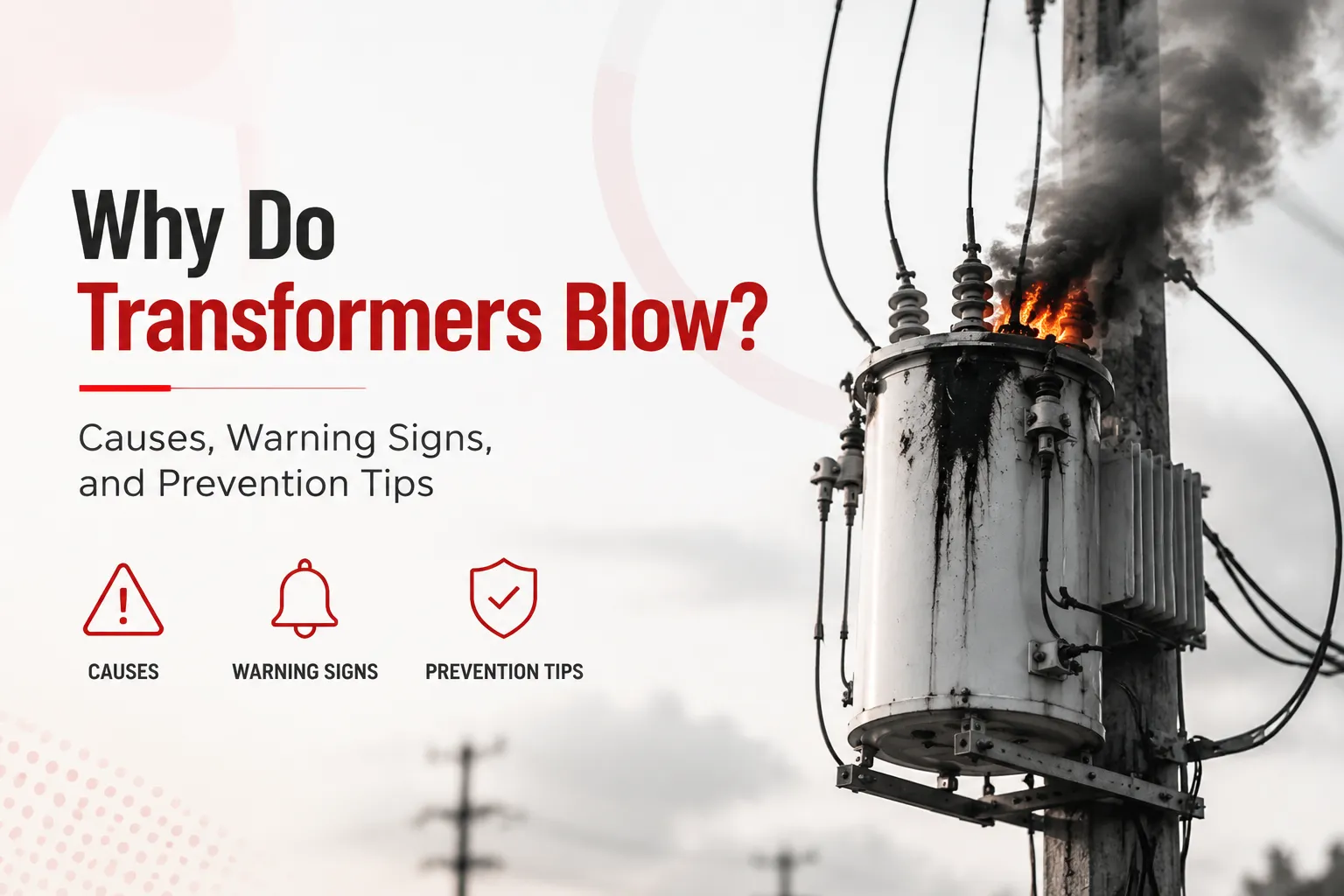
A transformer failure is an alarming experience! An electrical transformer is responsible for powering our homes and businesses. When a transformer fails, it shuts down power to either one or many homes and businesses at the same time. Although transformers were designed with a service life of approximately 20–30 years, there are many reasons why they can fail — including weather, normal wear-and-tear, and human error. This article will explain why transformers fail, how to identify them, and what to do in the event that a transformer does fail. We will specifically focus on transformer failures caused by various types of extreme weather conditions (i.e., severe electrical storms, extreme temperature changes, and blizzards).
The Main Causes of Transformer Failures
Depending on the environmental stress experienced by a transformer, it can no longer handle electricity and stop working. The most frequent reasons for transformers failing are categorized into five different categories.
1. Weather-Related Failures
The leading cause of transformer failures is the weather. Weather accounts for approximately 60 percent of all outages to the entire United States utility systems. Different types of weather create conditions that can lead to the failure of a transformer:
- Severe Storms & Lightning: A lightning strike will create high voltage surges that can exceed the rated insulation of the transformers. As wind blows trees into power lines, the transformer will short-circuit and cause severe damage to the transformer.
- Freezing Weather & Ice Storms: Metal components will contract under severe cold temperatures, creating loose connections that can cause arcing. Additionally, the excessive weight of ice forming on the power lines may pull the power lines down onto the transformer or even cause the poles holding the lines to fall down.
- Rain & Humidity: After heavy rains or in areas experiencing high humidity, moisture will penetrate into a transformer, damaging the transformer if the seals are not operating properly or have been compromised. As the moisture enters the transformer, it will conduct electrical energy and will short-circuit the transformer. That’s why many transformers will explode after heavy rainstorms or humid nights.
- Blizzards & Snow Storms: Wet snow builds up on transformers until it melts and refreezes, forming ice dams that prevent cooling vents from cooling the transformer. The trapped heat causes the transformer insulating oil temperature to rise, also causing insulation degradation and explosion of the transformer.
2. Overloading & Aged Transformers
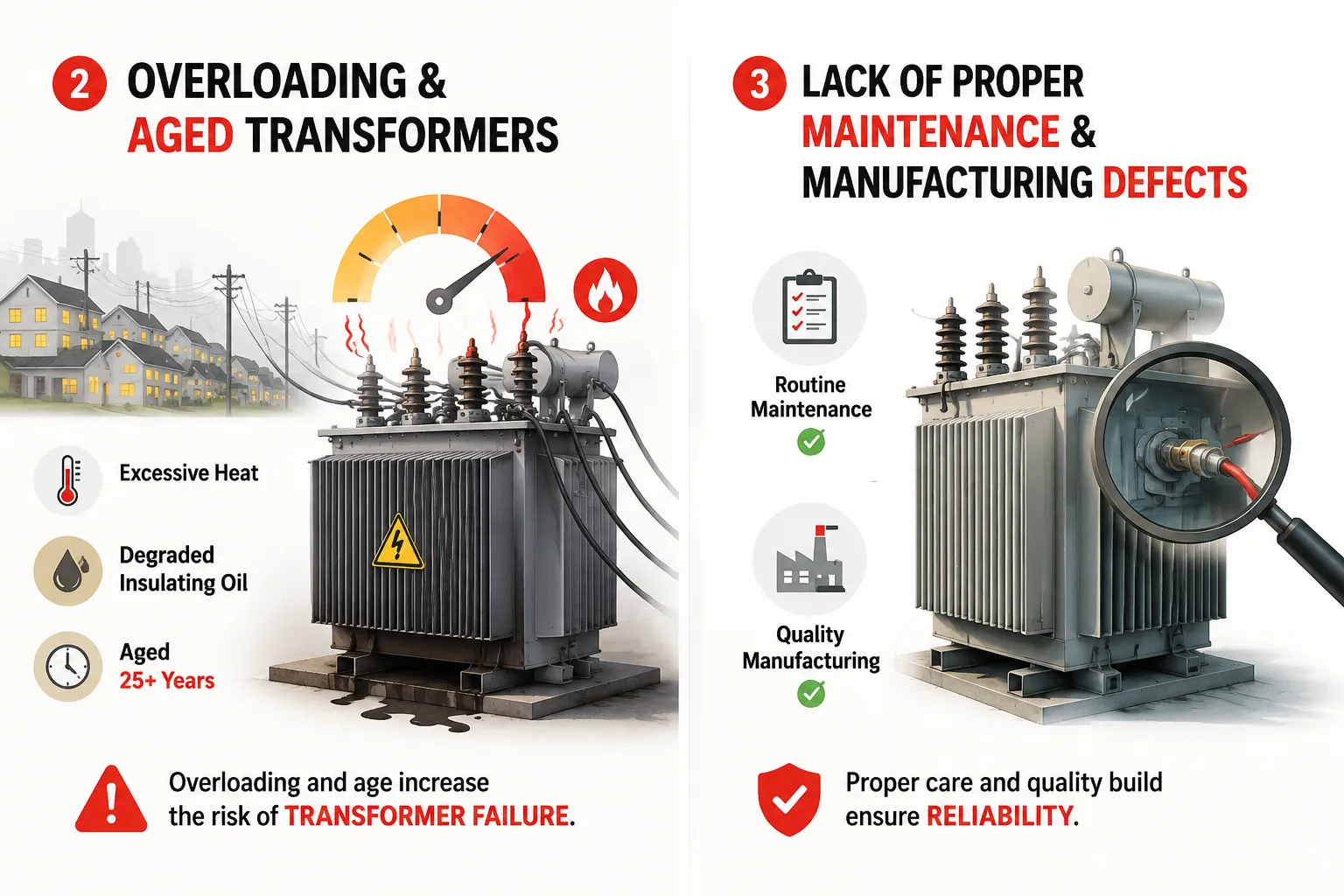
Due to communities growing, transformer loads are often pushed beyond the nameplate capacity in order to supply power to more homes and devices. Overloading from excessive heat, degraded transformer insulating oil over time, and aged transformers (25+ years) are susceptible to failure because their insulating materials become brittle.
3. Lack of Proper Maintenance and/or Manufacturing Defects
Routine maintenance such as oil testing, cleaning the transformer, and inspecting all transformer connections can help identify issues before they become catastrophic failures. Manufacturing defects, such as faulty wiring and poor-quality insulating materials, are sometimes responsible for transformer failure, but most modern transformers are very reliable.
4. Animal Contact
Animals such as squirrels, birds, and raccoons are very common culprits of transformer failures. Oftentimes, when animals are on top of transformers, they provide a path between electrical components that result in short circuits. Utility companies do put animal guards on transformers to reduce the number of animal-related failures; however, thousands of such outages occur each year due to persistent animals.
5. Human Error
Transformers can fail due to accidental damage caused by construction equipment, wiring errors from electricians, vandalism, and in rare cases, overloading from space heaters or electric vehicle chargers on older residential transformers.
Warning Signs: Signs Your Transformer Is Failing
Generally, transformers will seldom fail without providing some type of warning. When it appears that a transformer will fail, keep an eye out for the following indications:
Increased Volume (Buzzing or Humming): Increased noise from the transformer may indicate something is wrong, such as debris accumulating inside the transformer or loose connections.
Visible Leak and/or Rust: Oil leaking from the transformer reduces its insulation and cooling capabilities, while rust indicates water damage.
Burning Smell: Detection of electrical smoke or a burning oil smell means the transformer has overheated.
Flickering Lights: If your lights flicker frequently, it could indicate an issue with the transformer supplying power to your area.
Discolored or Damaged Parts: Blackened insulation or bulging metal components are signs of damage or failure in the transformer.
What to Do When a Transformer Fails
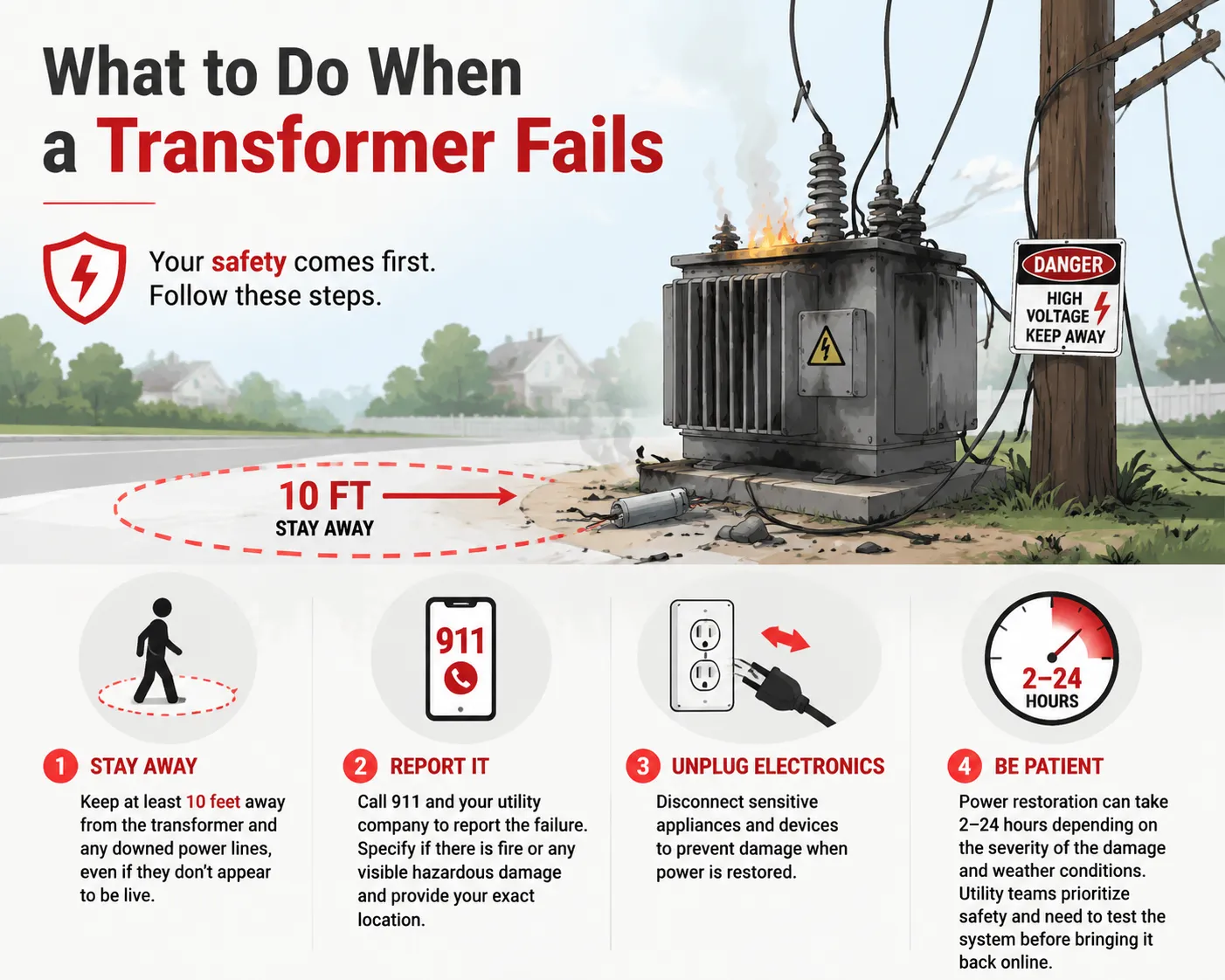
If you see a transformer fail, follow these steps to protect yourself and help restore power as soon as possible:
- Stay Away: Keep at least 10 feet away from the transformer and any downed power lines, even if they do not appear to be live.
- Report It: Call 911 and your utility company to report the failure. Specify if there is fire or any visible hazardous damage and provide your exact location.
- Unplug Electronics: Disconnect sensitive appliances and devices to prevent damage when power is restored.
- Be Patient: Power restoration can take 2–24 hours depending on the severity of the damage and weather conditions. Utility teams prioritize safety and need to test the system before bringing it back online.
Preventive Measures for Transformer Failures
There are no guarantees when it comes to preventing transformer failures; however, both utilities and homeowners can take steps to mitigate the risks:
Utility-Side Actions: Conduct regular oil sample testing, infrared inspections, and consistent tree trimming near power lines. Employing smart transformers with inbuilt surge protection can also help prevent weather-related failures.
Homeowner Actions: Avoid overloading circuits with multiple high-wattage devices, install whole-home surge protectors, and promptly report damaged transformers or power lines to local utility companies.
FAQ: Common Questions About Transformer Failures
What causes transformers to fail?
Transformers fail due to electrical overload, insulation breakdown, or internal arcing caused by lightning strikes, excessive weather-related stress, animal interference, or poor maintenance. Most failures are attributed to severe weather, including storms, ice, and extreme cold.
How long will power be out after a transformer fails?
The duration of a power outage depends on the severity of the transformer failure. Minor damage might result in 2–8 hours without power, while extreme weather events or widespread damage could extend outages to 24 hours or longer. Utility crews first ensure the area is safe, repair or replace damaged parts, and thoroughly test the system before restoring power.
Why do transformers fail during windy conditions?
High winds can cause trees to fall onto power lines, leading to short circuits and electrical surges that damage transformers. Additionally, wind can tear down power lines or damage transformer casings, further increasing failure risks. Salt spray in coastal regions can exacerbate transformer corrosion, making them vulnerable.
Why do transformers fail during blizzards?
Blizzards combine heavy snow, strong winds, and freezing temperatures, creating the perfect conditions for transformer failures. Snow accumulation can block cooling vents, leading to overheating. High winds can cause physical damage to insulation, while freezing temperatures may shrink metal components, causing loose connections and arcing. Ice-laden power lines add extra weight, sometimes pulling lines into transformers or causing supporting poles to collapse.
Transformers are the backbone components of the electricity grid but are vulnerable to extreme weather, component degradation, and human-caused issues. By understanding the root causes of transformer failures—ranging from lightning strikes to overloading—you can be better equipped to identify potential warning signs and safeguard your home. While not all failures can be avoided, collaboration between utility providers and customers can improve reliability. If a transformer failure occurs, ensure safety by keeping your distance and reporting it promptly. With preparation and awareness, you can reduce disruptions and protect your home from power outages.