When you inquire about the person behind the invention of transformer technology, you may receive a long list of names instead of a straightforward answer. The transformer didn’t just appear in the hands of a genius inventor overnight; it needed the combined effort of more than fifty years. It is much more useful to gain insights into how this revolutionary device came to be made than simply to find out who invented it. This article will cover the most important names involved in the creation of the transformer starting with the physicist who discovered the principles behind it and ending with the engineers who turned the idea into a commercial product.
To put the above into a nutshell, Michael Faraday invented the principle of operation of the transformer in 1831 and from that year on various inventors worked to create functional versions of the device until in the mid-1880s a group of Hungarian engineers and an American also composed the fully-functional version of the transformer.
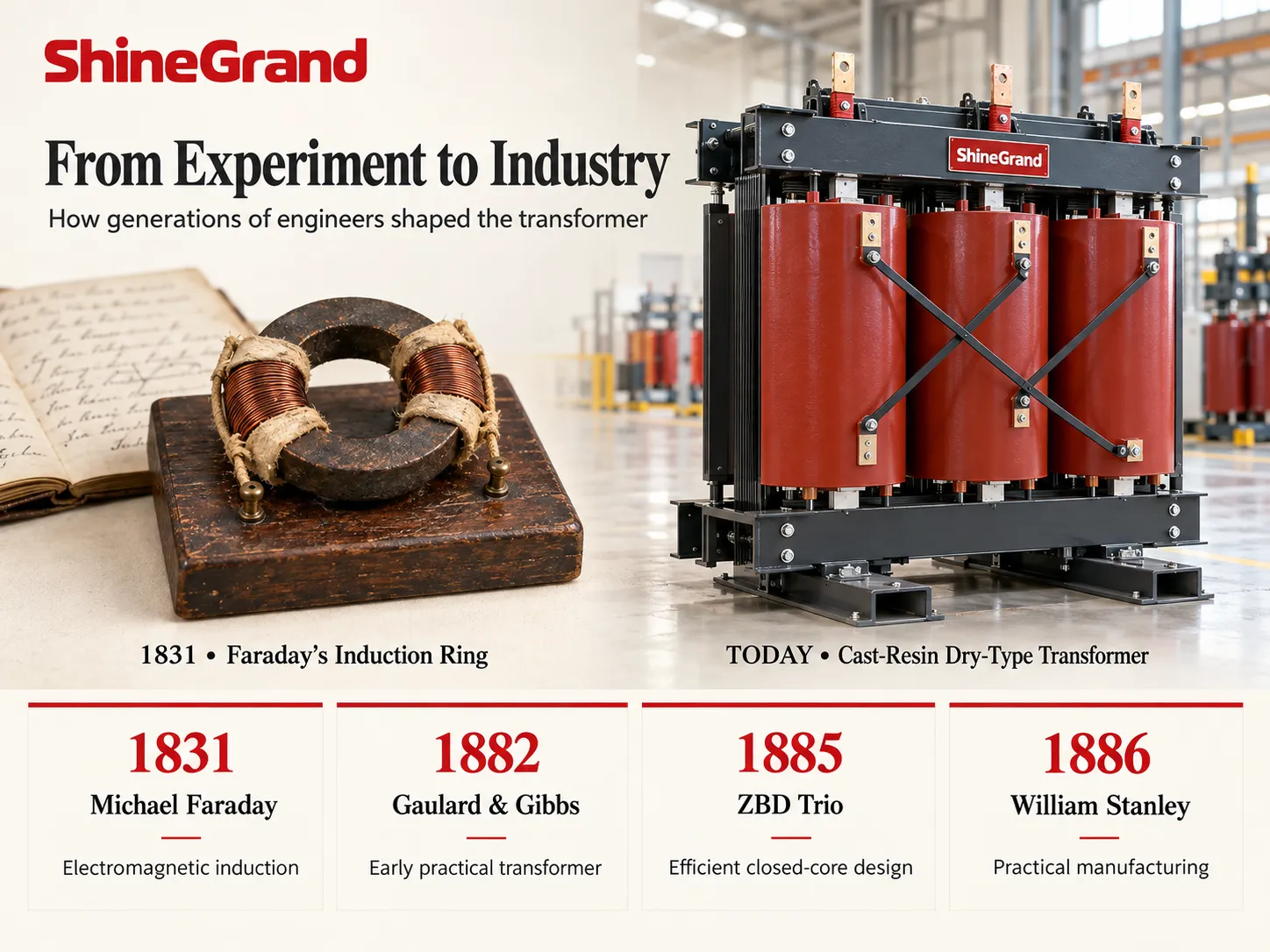
One person cannot be credited for inventing the transformer because it was the end result of an evolutionary process in the world of technology that lasted more than fifty years. Michael Faraday is known to have found the principle of electromagnetic induction in 1831. The practical first form of the transformer was created in the year 1882 by Lucien Gaulard and John Dyxon Gibbs. The “ZBD” trio created the revolutionary design in 1855. William Stanley was the first to make the transformer a commercial product in 1866. So the honest answer to who invented the transformer is: several people, each building on the last.
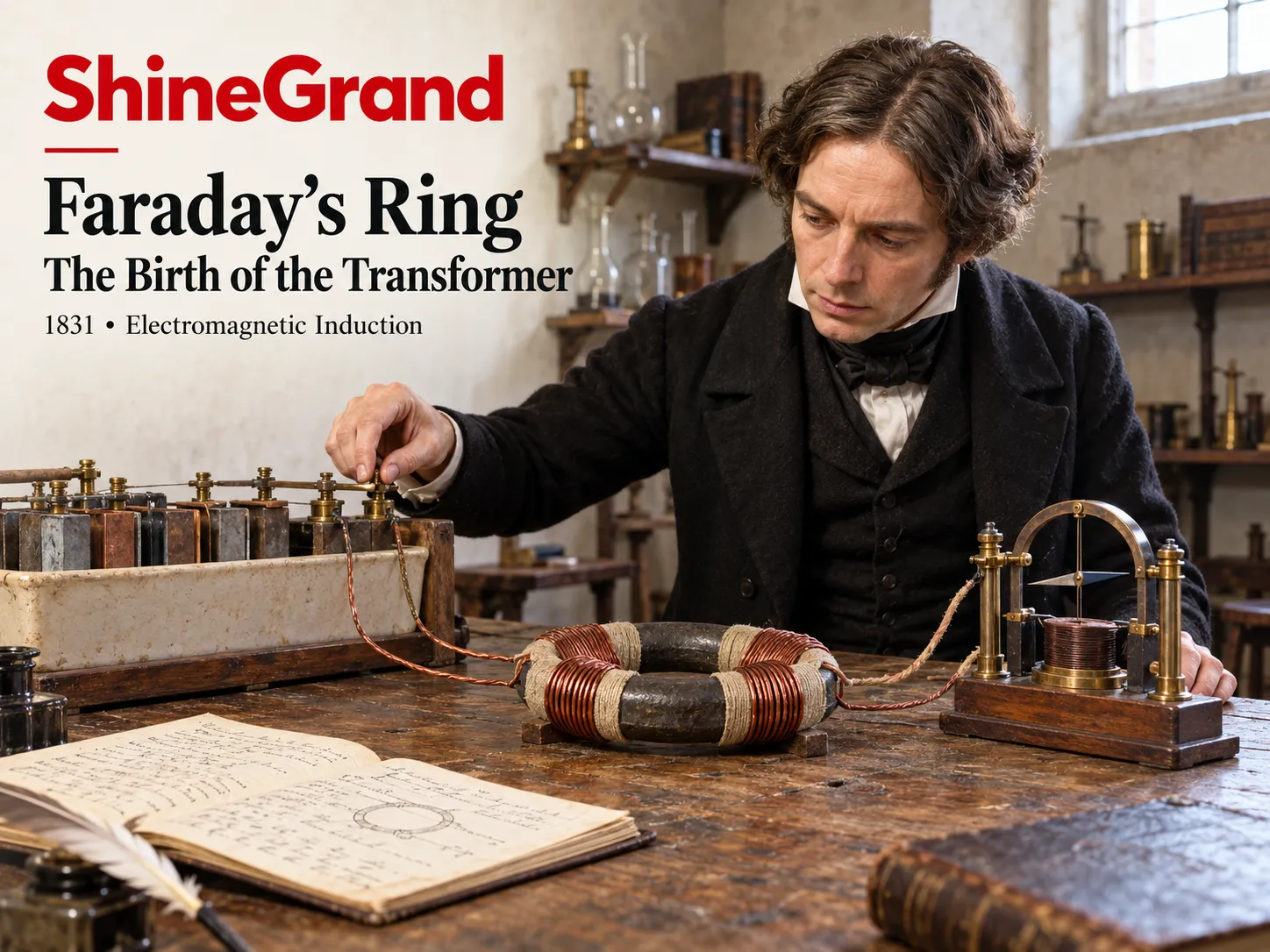
The Foundation: Michael Faraday (1831)
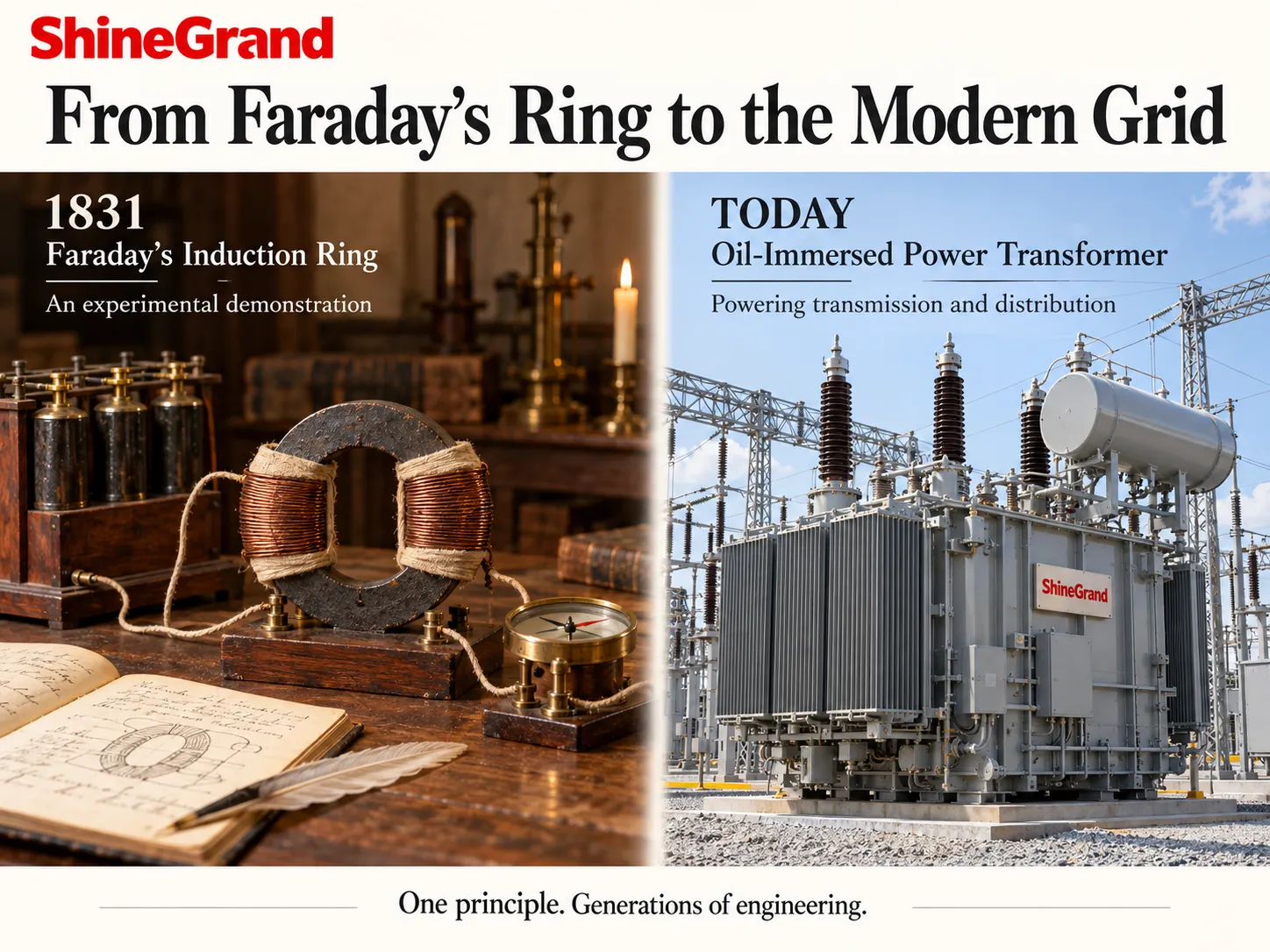
The narrative starts with the main concept which enables the working of transformer: the phenomenon of electromagnetic induction. It was in the year 1831 when famous scientist Michael Faraday discovered that a changing magnetic field could cause voltage in not far off coil of wire. He proved this fact through an apparatus that is currently referred to as the Faraday induction ring. In this apparatus, when current was applied to one coil, it resulted in brief induction current through the second coil. Though Michael Faraday was not working on inventions, which is why any answer to who invented the transformer has to start with him.
The Early Prototype: Gaulard and Gibbs (1882)
It took a little less than fifty years for the principle to turn into a workable device. In 1882, a French engineer by the name of Lucien Gaulard, together with an English designer known as John Dixon Gibbs, created their version of the “secondary generator” and introduced an early prototype of a transformer in their experimental projects related to lowering the voltage level of alternating current. The main points of their system demonstrated that it is possible to transfer alternating current and reduce its voltage level into something useful, thus proving that this principle actually works and is capable of generating electricity. The effectiveness of the designed system was not very high, and its connection system had its own defects, but it eventually brought the principle closer to the real energy supply network.
The Breakthrough and the Name: The ZBD Trio (1885)
The breakthrough in transformer technology occurred in 1885, thanks to three engineers from the Ganz Works in Budapest, Hungary, namely Károly Zipernowsky, Ottó Bláthy, and Miksa Déri, and they are commonly referred to by the initials of their last names as “the ZBD team.” They made two important advancements that make the modern transformer what it is. The first innovation was a closed iron core which was much more efficient than the existing materials. The second was their conclusion that transformers should be connected in parallel as opposed to series, which remains the case. In addition, it should be noted that the first group also introduced the term “transformer.” For giving the device both its efficient modern form and its very name, the ZBD trio has one of the strongest claims in the whole question of who invented the transformer.
Industrial Adoption: William Stanley (1886)
A great design still needs to be realized on a mass scale, and that was done by the American engineer William Stanley in 1886. He designed a transformer with a stamped laminated core which allowed the transformer to be easily made at scale. This significantly enhanced the capacity for mass output of transformers. Thus, he laid down the standards for manufactured transformers, resulting in the development of AC systems that were going to be used in the world. While the ZBD team worked out the invention as such, it was Stanley who made realization of this invention possible on a mass scale.
So, Who Invented the Transformer?
Everything has come to a by putting in order all of the events that happened. The answer to the question who invented the transformer is not as straightforward as it seems. Faraday discovered the principle of working of the transformer. Gaulard and Gibbs made the first transformer prototype and established that AC electricity could be transmitted. The ZBD team was the group that designed the most effective transformer with the closed magnetic circuit and given it a name. Stanley was able to create transformer manufacturing. Thus, it is clear that each invention depended on the previous one and if people want to find a single inventor of the transformer they will choose the person who invented the thing they are interested in.
What About Tesla and Westinghouse?
Most people first come across AC power thanks to Nikola Tesla and George Westinghouse, so the first query that comes to many minds is how they contributed to the invention of the transformer. The people in question were instrumental in the introduction of AC technology to the United States, but they are not regarded as the original inventors of the transformer. George Westinghouse was a businessman who obtained the authorization to use the Gaulard and Gibbs invention and brought William Stanley on board, who designed an improved transformer which he used to test AC technology. Tesla was a genius mainly responsible for the creation of an AC induction motor and polyphase system which were combined with the transformer without which the technology would not have come into existence.
Why the “Single Inventor” Idea Is a Myth
The reason why we tend to think that there is only one person behind transformer technology invention is that we prefer to believe that there is only one hero in the story. However, it is hardly ever the case with technological innovations. Specific inventors behind transformer technology solved different problems: Faraday’s question was whether the innovation was even possible, Gaulard and Gibbs’ question was whether the device would be useful. The systematic ZBD trio was concerned with efficiency and practicality in the use of the transformer technology while Stanley thought about making the similar devices in hundreds of thousands. It would be impossible to have a transformer if any of them had not existed. Apart from that, each country celebrates its own inventor (Britain honors Faraday, Hungary – ZBD trio, and the U.S. of America praises Stanley). Thus, calling transformer technology a common invention is not a sign of dishonesty, but rather an unbiased statement.
Why the Transformer Changed the World
The importance of this invention and the fact that many incredible minds were eager to work on it should be taken into consideration. In the end of the 1800s, a serious debate was on about whether AC was going to be the most valuable invention in the sphere of electrical engineering. In fact, the main advantage of AC was that its voltage can be easily increased for long-distance transmission and then decreased for safer consumption, and the technology that made this process possible is the transformer. Without this invention, electricity would not have been able to travel far from the point where it was produced and the system of power supply that we know could not have existed. By allowing the efficient high-voltage transmission, the transformer played an important role in the history of modern electrical engineering. It is very important because the invention of the transformer showed the world how to achieve electrification.
From the First Induction Ring to Modern Transformers
What began as Faraday’s small iron ring has become one of the most essential devices on the planet, present everywhere from phone chargers to the largest substations. The same principles the ZBD trio and Stanley established, an efficient iron core and reliable manufacturing, still underpin every unit made today. ShineGrand Electric continues that lineage as a modern manufacturer of power and distribution transformers, including the 6-10KV Oil-Immersed Distribution Transformer, the high-voltage 110-132kV Oil-Immersed Distribution Transformer, and the indoor 20-35kV Epoxy Dry-Type Transformer, carrying a 190-year-old idea into today’s power networks.
Frequently Asked Questions
When was the first transformer invented?
Michael Faraday discovered the concept in 1831 when he used a particular induction ring. The first transformer-like device was created by the inventors Gaulard and Gibbs in 1882, while coming up with the designs of the efficient modern transformer was an invention by the Hungarian ZBD trio done in 1885. Lastly, this efficient transformer could be manufactured thanks to William Stanley’s invention done in 1886. So, depending on how you consider original inventions, the dates might start from the year 1831 until the mid-1880s.
Who invented the AC transformer?
The invention of the alternating-current transformer is attributed mainly to the trio of Zipernowsky, Bláthy, and Déri. The three men developed the efficient design of a closed-core transformer, which made their product successful; it was in their honor that the transformer got its current name. Their invention was based on the work of Gaulard and Gibbs and William Stanley helped to develop the AC transformer further in a way that provided its mass production in 1886.
Who is considered the father of the electric transformer?
It is true that Michael Faraday is often referred to as the “father of the transformer” because he formulated the scientific principle of electromagnetic induction in 1831. Nevertheless, the credit for having developed the first transformer goes to the ZBD trio and to William Stanley. In reality, one can say that the invention of the transformer is an achievement of multiple people rather than just one.
Who is the most famous name in transformer history?
In the history of electricity, the transformer is a product of Michael Faraday’s induction theory. The most recognized group of inventors who built the first functional transformer includes the ZBD Group and William Stanley. The answer to which one is “most famous” depends on whether you mean science in general, or the device that was made.
References
- Encyclopaedia Britannica — Michael Faraday. Background on Faraday and the 1831 discovery of electromagnetic induction.
- Transformer History — Wikipedia. Overview of the transformer’s development from Faraday through Gaulard and Gibbs, the ZBD trio, and Stanley.
- Engineering and Technology History Wiki (ETHW) — Transformer. Neutral engineering-history resource on the invention and evolution of the transformer.
- IEEE — History of Electrotechnology. Reference on the milestones and figures in early electrical power development.
- Electrical Engineering Portal. Neutral educational resource on transformer principles and history.
Modern Transformers From ShineGrand Electric
From Faraday’s laboratory ring to today’s grid, the transformer has been refined by generations of engineers, and it remains the backbone of every power network. ShineGrand Electric Co., Ltd. designs and manufactures a complete range of power and distribution transformers, in both oil-immersed and dry-type designs, along with high-voltage fuses, surge arresters, and disconnect switches. Whether you are curious about the history or sourcing equipment for a real project, explore our full transformer product range or contact the ShineGrand team to learn more.