It’s not easy to open up a medium-voltage circuit that’s still carrying current. As soon as you separate the contacts, an arc appears, and at voltages of 11 kV, 15 kV or 33 kV this arc doesn’t die by itself. A load break switch is made for precisely this purpose: when that happens it opens and closes circuits with the normal load current, and extinguishes the arc. It also makes it possible to switch transformers and cables without shutting down the upstream breaker. This document will explain how load break switches do this, what the types are, their ratings and when it’s necessary to use a load switch as opposed to a regular disconnector like GOAB switch.
What is a load break switch? A load break switch is generally described as a medium-voltage switch capable of making, carrying and interrupting load current to its rating but not breaking the current due to faults. It employs certain technology in order to suppress the arc occurring when separating the contacts with the use of a fast-operating mechanism. In certain cases, the load break switches may be used for interruptions of the transformers, feeders and overhead sections.
What Is the Purpose of a Load Break Switch?
Load break switch pertains between the two devices, wherein circuit breaker interrupts all types of causes. The cost of circuit breaker is high and it requires protective relays, while disconnect switch is inexpensive, and it provides safe isolation, but it can only be operated in an unloaded condition. Load break switches allow users to:
Switch normal load current on and off, which means switching on or off a distribution transformer or power feeder.
Change load from one feeder to another by closing or opening tie points; for instance, splitting the closed loops in ring networks.
Sectionalize the line or cable by isolating faulty section of the circuit and restoring the network, keeping the other sections working without interruption.
Make connection to a circuit, regardless of whether it is faulty or not, without damaging the connection; that is, this connection enables another equipment to eliminate the fault.
Utilize protection with fuses simultaneously to safeguard transformers and feeder circuits at a much lower cost than that of circuit breaker.
According to IEC standard, the name of this device is just switch, and conditions for medium-voltage switches having voltage level up to 52 kV are stated in IEC 62271-103. In North America, load break switch as well as load interrupter switch are the terms which are widely used.
How a Load Break Switch Interrupts Current
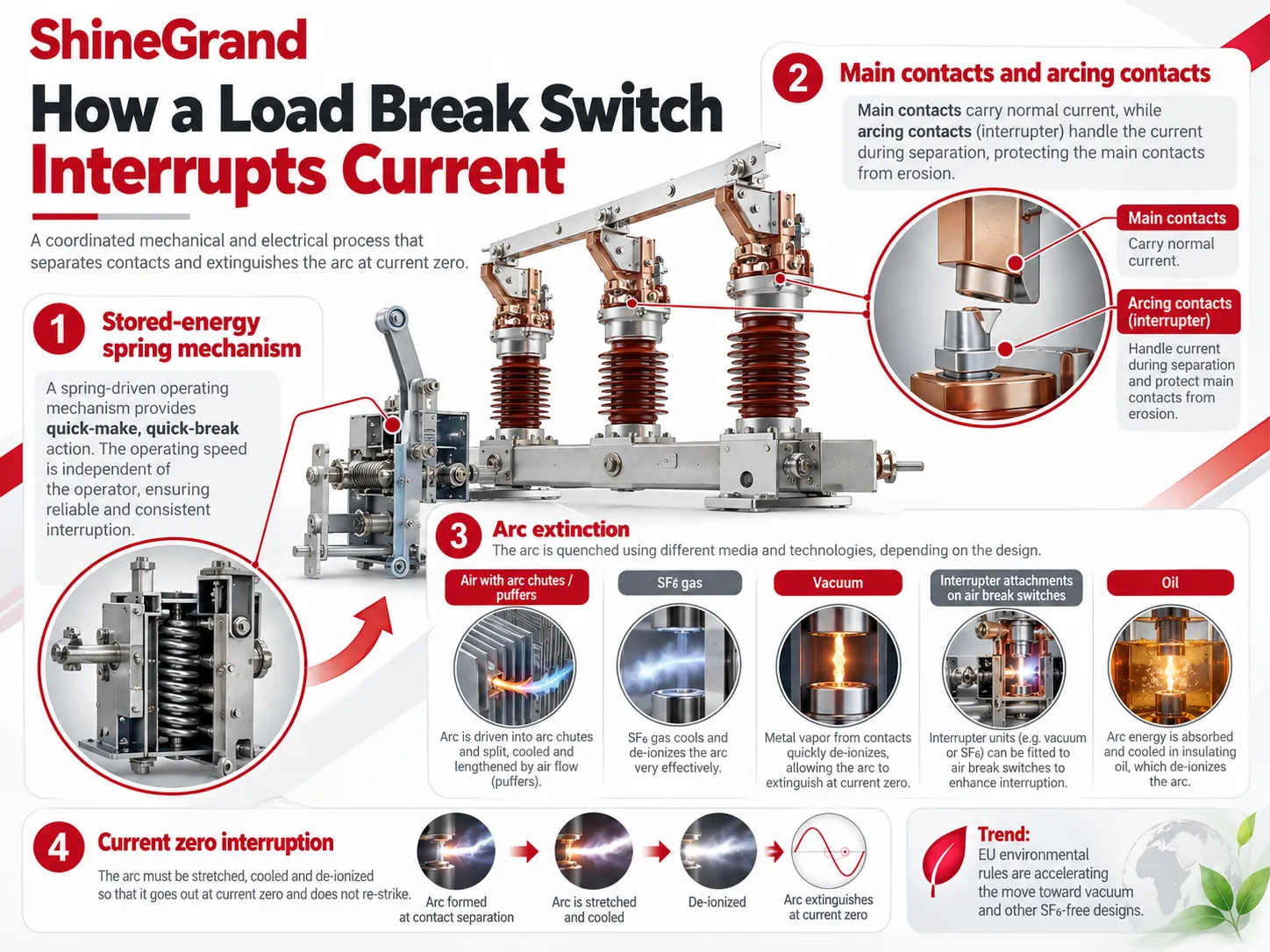
Every load break switch has the same task to perform: whenever the main contacts are opened while load is still present, the current is still flowing through an arc. The load break switch must extend and cool down that arc in order to extinguish it at zero current without re-striking.
The operating mechanism: speed independent of the operator
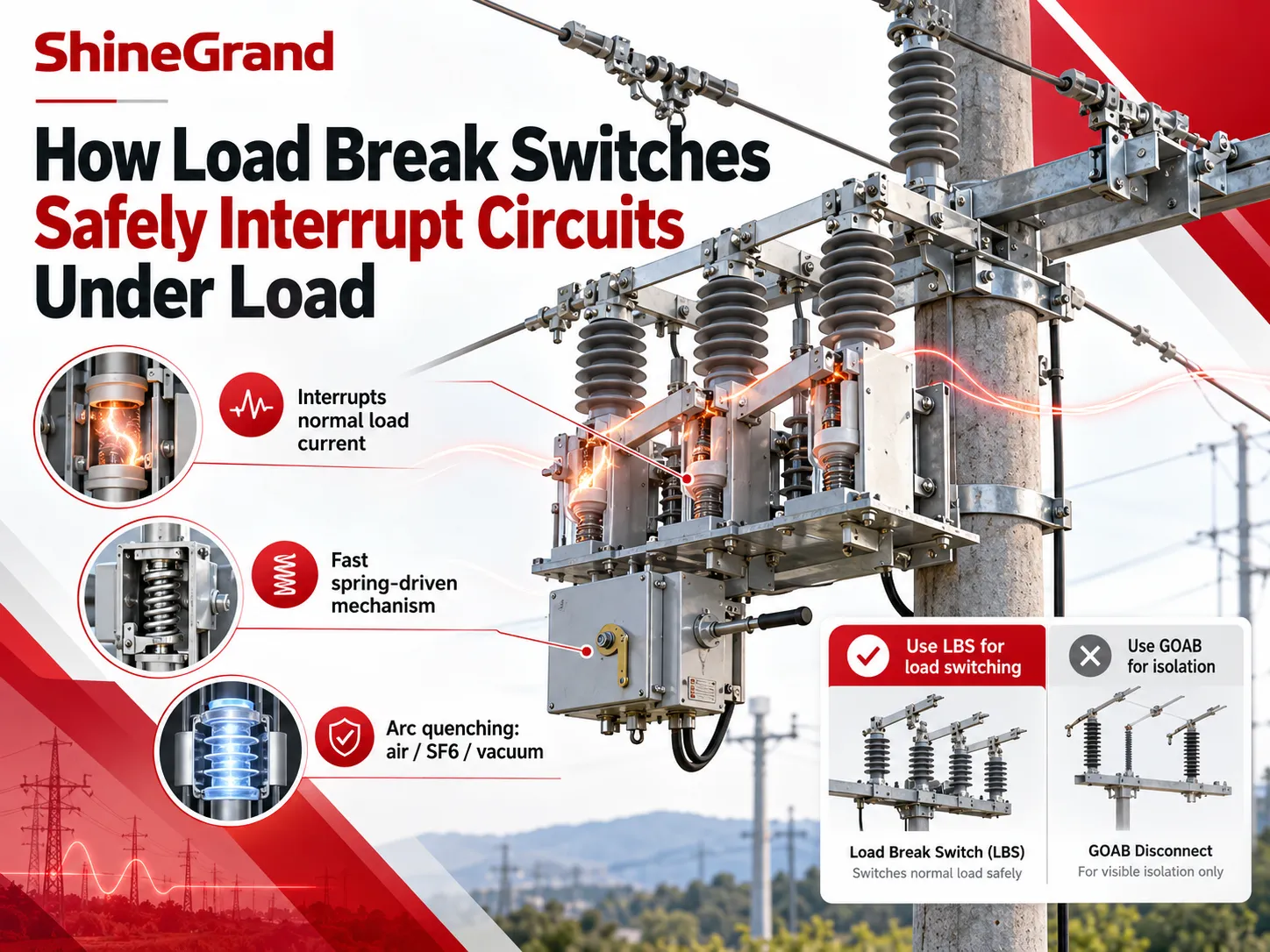
The load break switch is based on a spring mechanism that pre-stores energy. In such a case, as the operator moves the handle, a spring is charged and then discharged, rapidly opening/closing the contacts. The speed of contact motion is fixed and does not depend upon how fast or slow the operator works; so, this allows for proper arc interruption and safe closing of load break switches on short circuits.
Separating main and arcing contacts
Different designs allow for separation of main contacts that carry the load with some low resistance and arcing contacts or interrupters that take the load at the moment of separation. An arc appears at arcing contacts or within the interrupter itself, thus protecting the main contacts from erosion.
Extinguishing the arc
The method of the arc extinguishing defines all types of load break switches:
Air with arc chutes or compressed air for cooling: The arc would be pushed through a series of insulated plates which break the arc and cool down.
SF6 gas: contacts work within a special vessel filled with SF6, a specific gas with excellent insulating and arc breaking properties. SF6 load break switches are extensively used in ring main units and pole-mounted disconnectors.
Vacuum: the arc is interrupted inside a vacuum container and ceases to exist when power voltage is zero. Vacuum switches are often insulated by solid dielectrics, and apply to those segments where no SF6 usage is accepted.
Interrupter installations on air break switches: outdoor air break switches may come with vacuum or SF6 interrupters on each pole, turning a normally disconnected switch into a robust load breaking switch.
Oil: oil was used in previous designs of load break switches. Nowadays oil-filled load break switches along with oil-containers may be applied in some transformers.
Categories of Load Break Switches Based on their Usage
Overhead load break switches: 3-phase load break switches for overhead line applications for sectionalizing and tie points with either air break switches with interrupting units or sealed with SF6, vacuum and solid dielectrics. Many of these switches are motorized for remote control.
Ring main switches (RMUs): compact switchgear typically used for use in urban cable networks with two load break switches for in and outgoing ring cables.
Pad-mounted switchgear: low-lying cabinet used in underground installations, combining load-break switch and fuses for the switching and protection of feeder cables.
Metal-enclosed breaker switchgear: used in electrical installations for commercial and industrial setups as well as utility installations.
Switches inside pad-mounted transformers: switches that facilitate the switching of the transformer and sectionalizing of the loop-feeds.
Load break cable accessories: these are separable elbow connectors connected to underground cables and operated under limited load current.
Load break switch versus non-load break switch
The basic difference lies in the current each of them can switch.
Load break can break the load current only to its rated value.
A non-load break switch on the other hand has to be done only a non-load current is present. It does not breakThe purpose of an isolating switch is to create a secure break that is usually visible allowing proper grounding of the equipment.
The two types of switch can manage load current continuously and can withstand fault current but cannot interrupt it. Using a non-load break switch in a load situation can be very risky because of arcing at the contacts and probably to the operator.
Differences Between Air Break and Load Break Switches
There is confusion between the two terms, air break and load break; these terms have different meanings.
The term air break refers to the type of construction meaning that the switch contacts open in the environment, which is generally visible. An air break switch like GOAB is a disconnect switch and does not have a load interruption rating.
On the other side, load break refers to the ability of the switch to interrupt loads at particular ratings.
The air break switch can be called the load break switch only when being equipped with the devices responsible for interruption of load current. Provision of arcing horns only allows interrupting low load currents. To learn more about the air break switches of the gang-operated type, read the article of ShineGrand What Is a GOAB Switch.
When to Use Load Break Switch Over GOAB
Use GOAB switch when circuit can be disconnected by anotherAt times when circuit intervention is not feasible, a Load Break switch becomes a necessity. Typical situations include:
No upstream device nearby: during long feeders, the nearest breaker or recloser may be a number of km away and opening it would isolate far larger sections or circuits than necessary. A Load Break switch lets crews switch locally without an out-of-service condition for other customers.
Load transfer and tie switch: load should be switched in once a normally open tie point is closed. The switch must next be opened to transfer load between feeders.
Remote/automated switching: FLISR resources depend on motorized switching devices that are capable of load break operations under the command of the system operator. A motorized disconnect cannot perform this operation safely.
Frequent switching: cyclic loads, like for those on seasonal loads, capacitor banks, or industrial process feeders, need to be switched under load with devices rated for more than frequent load operations.
Cable networks: when switching underground cables, the circuit should be opened while cable charging current is still present, a function that disconnect switches do not perform.
Transformer switching under load: energizing or de-energizing transformers without dropping the circuit breaker ahead of the transformer.
Renewable energy collection systems: solar and wind farms are required to have the ability to switch individual collection feeders or step-up transformers while still allowing the rest of the plant to continue operations. ShineGrand’s guide on how solar farms work explains where these switching points sit.
When a GOAB Disconnect Is Enough
A standard GOAB switch, without load-break attachments, should still be the clear choice when:
A circuit breaker or recloser always opens first and the switch is used only for isolation.
Visible isolation is required for crew safety, for example on either side of a breaker or recloser in a substation.
The switch bypasses equipment such as a recloser or voltage regulator where a bypass path is closed before removing the device so no harmful voltage change across the switch occurs.
The switching occurs infrequently and is well-planned.
The cost and simplicity outweigh the need for flexible switching.
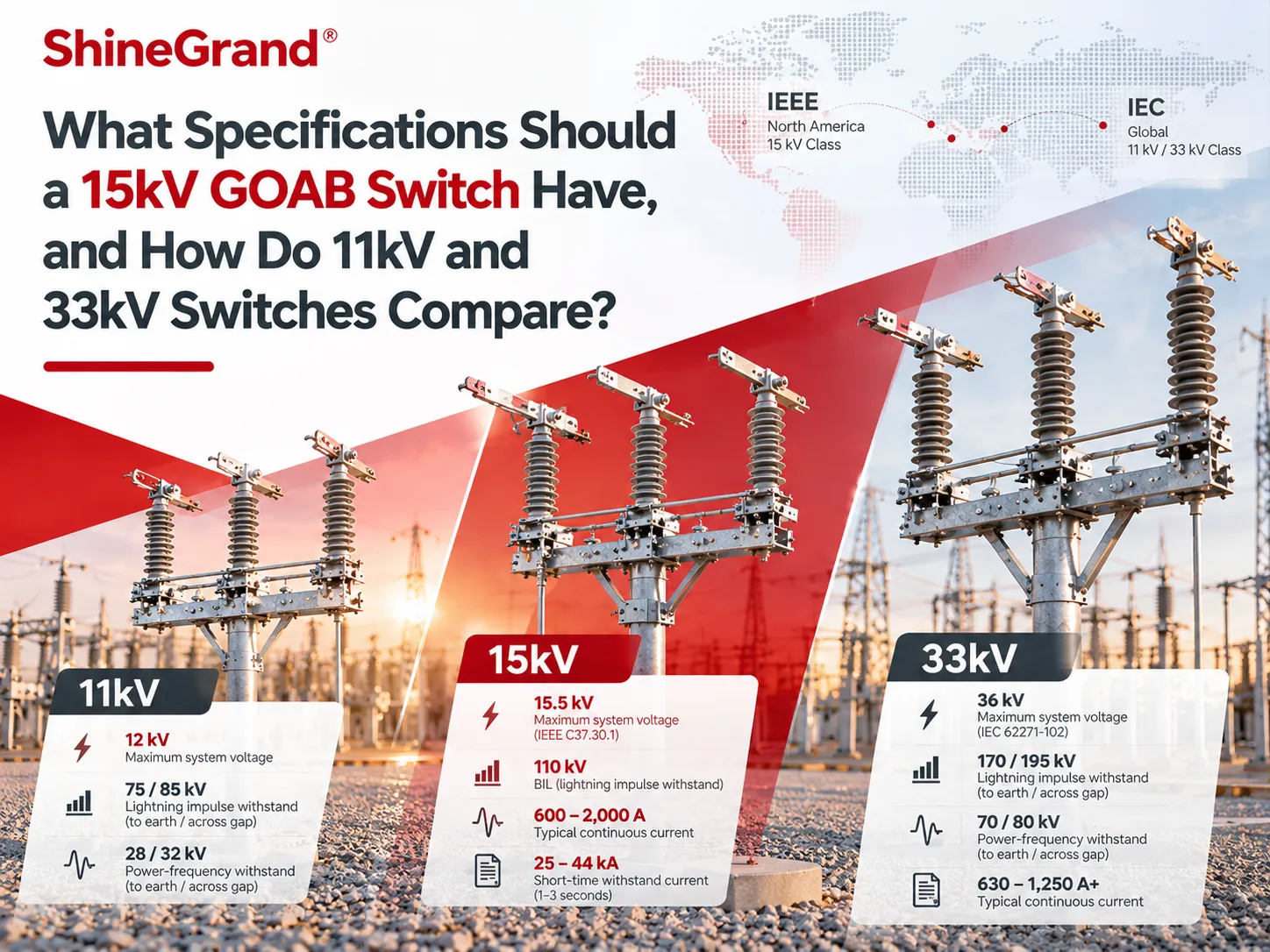
The 15 kV GOAB switch specification guide covers the ratings to check when a disconnect is the right choice.
Using a Load Break Switch and a Disconnect Together
It is common for both types of device to be used in selected installations. A typical arrangement is as follows:
A circuit breaker or load break switch interrupts the current.
A disconnecting device, in this case usually a GOAB, provides physical disconnection and visible breaking of the circuit when the equipment is being worked on.
The grounding switch or portable earthing devices (the latter are applicable when the isolation is confirmed).
In some instances, the devices are combined. Thus, there is the switch-disconnector, used as a load break switch and a disconnecting device; a load-break GOAB combines functions of an air-break switch and an interrupter.
Load Break Switches with Fuses
Since load break switches do not stop faults, they are used in combination with fuses:
According to IEC 62271-105, the switch-fuse design has a current limiting fuse that removes the fault while at the same time enabling swtiching of the all the three phases of the switch using the striker pin. The switch can deal with lower fault currents up to its rated transfer current. This method is standard for protecting distribution transformers within ring main units and compact substations.
Pad mounted transformers and switchgear use the combination of internal load break switches with expulsion and current-limiting fuses for both switching and protection.
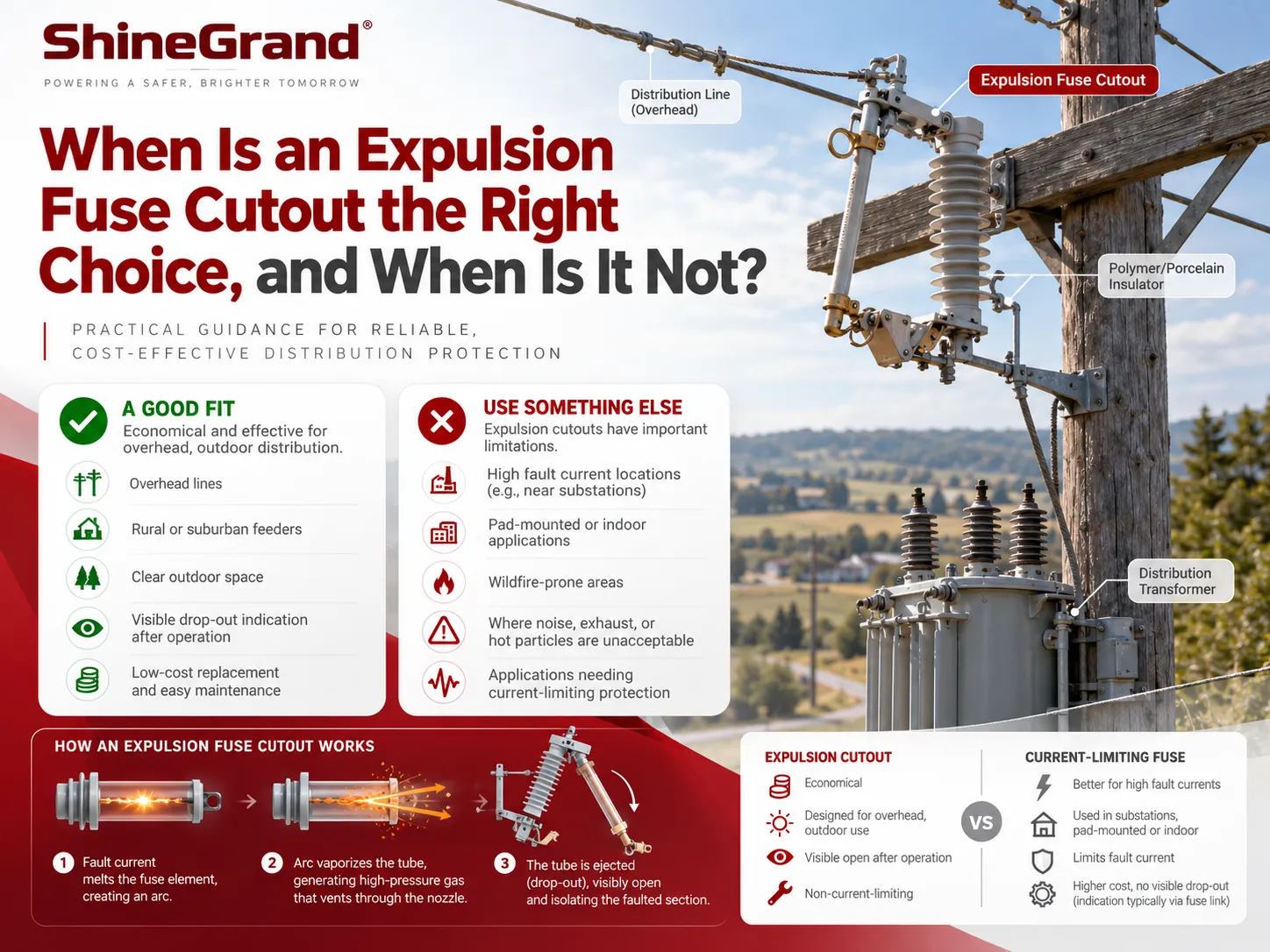
On overhead lines, load break fuse cutouts integrate a load breaking part with a fuse making it possible for the crew to turn on a fused tap while the power is still on. ShineGrand’s articles on fuse cutouts and expulsion fuse cutouts explain how these work.
Key Ratings of a Load Break Switch
In addition to the voltage and insulation rating, the specifications related to a load break switch elaborate its operational make and break features. The specifications are listed as per IEC 62271-103 and these are:
Rated voltage and insulation rating which consists of lightning impulse withstand voltage to earth and open circuit.
Rated normal current refers to the normal rating of the equipment based on its continuous current flow.
Key-breaking current signifies the load current that the break switch is capable of interrupting which generally equals the rated normal current.
Closed-loop breaking current specifies the load current that is interrupted while breaking the ring or parallel circuit which involves low recovery voltage and high current.
Line-charging and cable-charging breaking current explain about the capacitive current at the time of breaking the loaded cables or power line.
Short-circuit making current is equivalent to the fault current that can be safely interrupted by the apparatus which typically equals the rated peak withstand current. Count of operations refers to what type of usage applies.
Both peak and short-time withstand current are considered for fault rating of the switch while the switch remains closed.
The mechanical endurance class indicates the number of operations.
In North America, different standards are accounted for devices as per IEEE standards like C37.74 for pad-mounted load breakers, C37.20.3 for metal-clad interrupters and C37.30.1 for overhead air breakers.
How to Choose a Load Break Switch
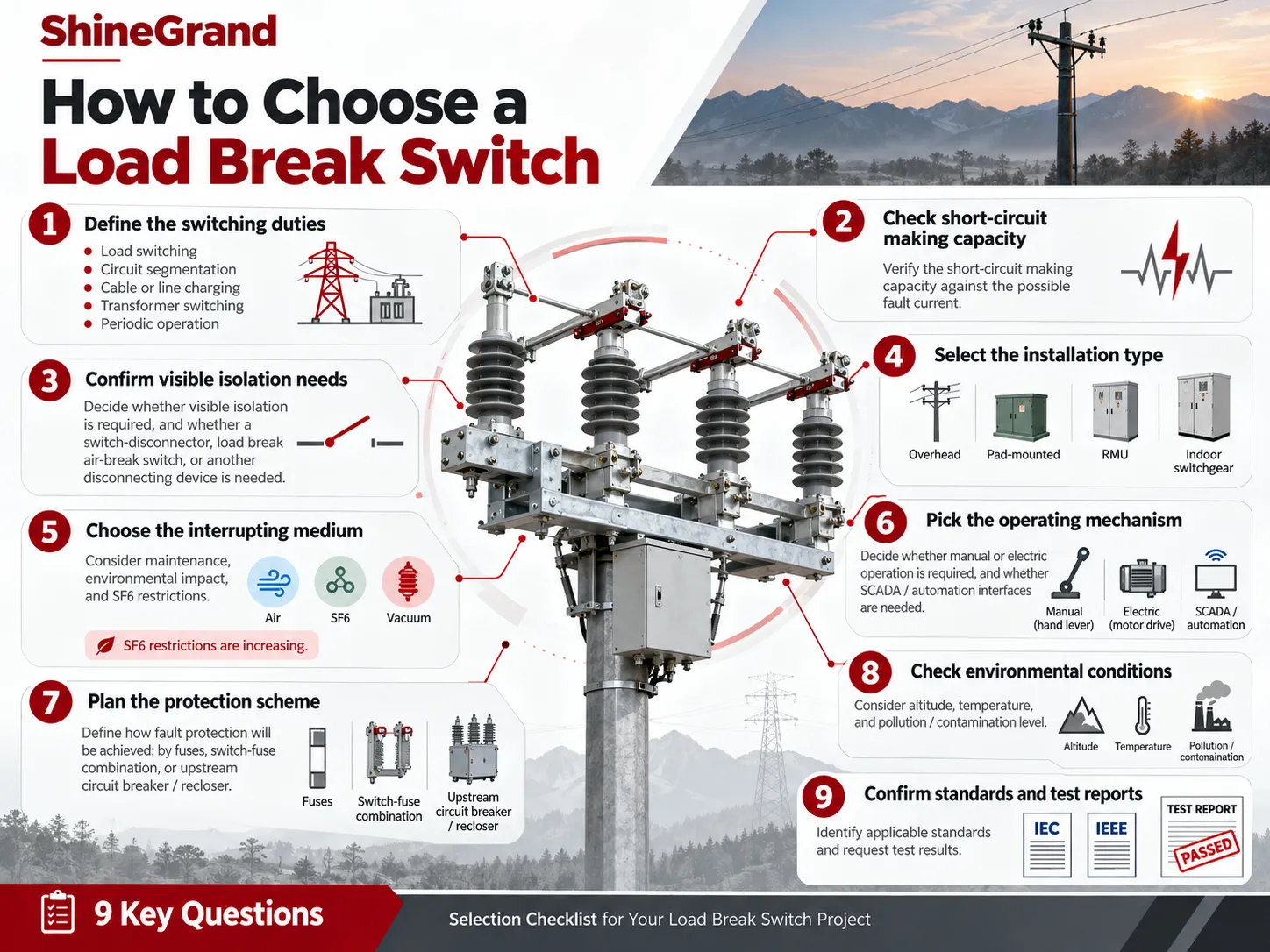
1. Determine the duties of a switch: load switching, circuit segmentation, cable or line charging, and switching on transformers, and periodically.
Ensure compatibility of voltages, insulation levels, and constructional and operational features with the system including safeguards for future changes.
2. Verify short-circuit making capacity with respect to the fault current possible in a certain case.
3. Define if visual isolation is required, and whether it is to be obtained using a switch-disconnector, load break air-break or different disconnecting device.
4. Make up your mind about the configuration of installation: overhead, pad-mounted, RMU, or indoor switchgear.
5. Choose the type of extinguishing medium taking into account maintenance issues, the impact of environment and SF6 restrictions.
6. Decide if manual or electric drive will be used, and whether SCADA and automation interfaces will be implemented.
7. Determine how fault protection will be achieved: by the means of fuses, switch-fuse system or upstream circuit breaker or recloser.
8. Describe the parameters of the environment affecting the operation of the device: height above sea level, temperature and degree of contamination.
9. Divide the standards applicable to the outlined project and inquire about the test results of a specific switch.
Operating and Maintaining Load Break Switches Safely
- Always check the actual load before using the switch and do not exceed the limit on the rated interruption current of the switch.
Be sure to follow switching orders given by the utility and verify the position of the switch in all the phases after the operation.
Also, one should note that a load break switch is not a protective device and clearing of faults downstream is performed by breakers or fuses.
In regard to sf6 switches, one should regularly control the pressure in the gas and work with the gas in accordance with local requirements.
Furthermore, regular inspections of the mechanisms, contacts and insulation, as well as occasional use of switches that are seldom used is important.
The thermal imaging technique can be used for identification of overheated connections before they fail.
Where ShineGrand Fits In
ShineGrand Electric does not manufacture standalone load break switchgear such as RMUs or pole-mounted load break switches. It supplies related equipment used alongside them:
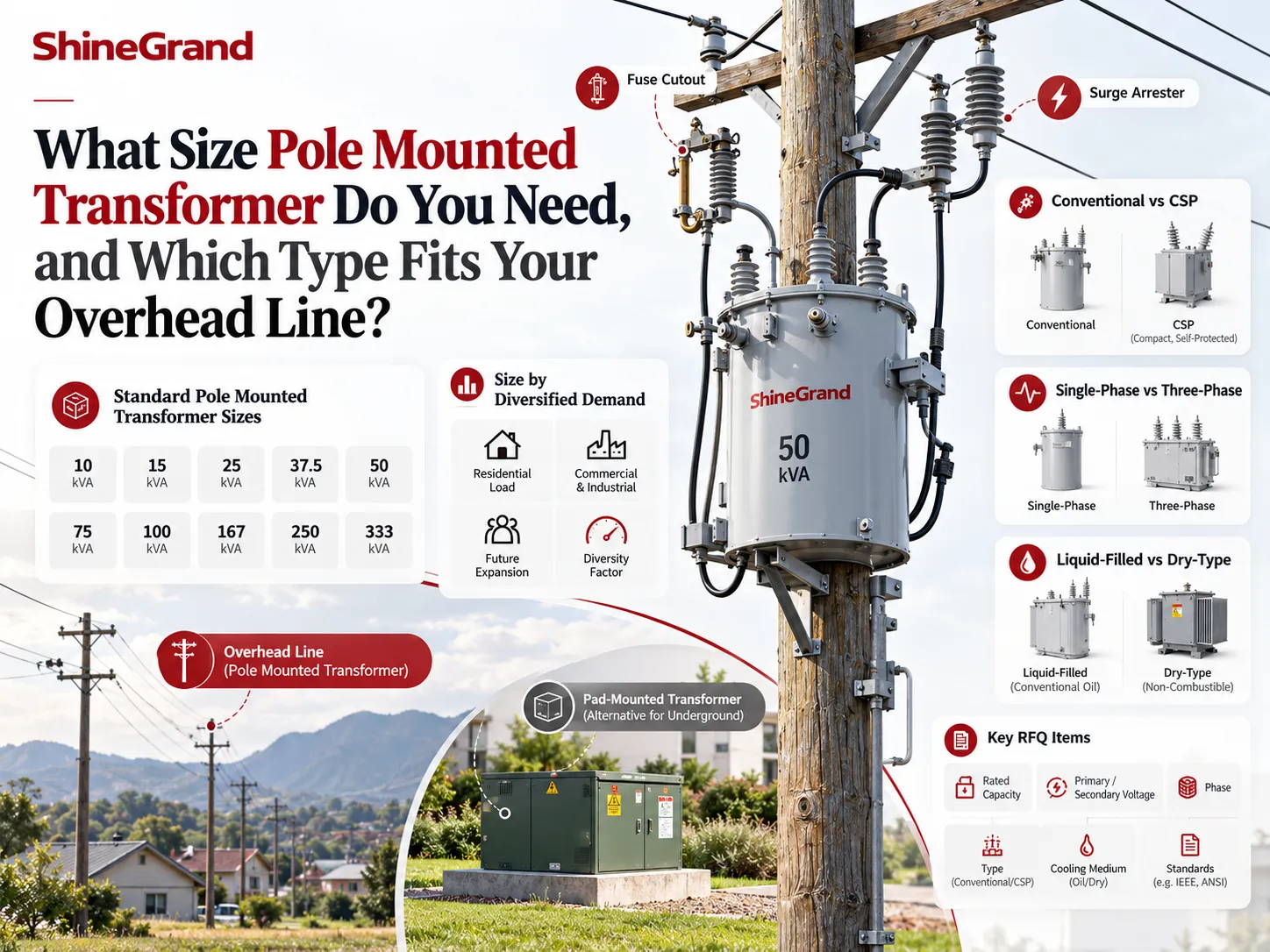
- Three-phase pad-mounted transformers, whose component list includes a four-position load-break switch, load-break bushing inserts and bayonet fuses for switching and protecting loop-feed underground systems.
- Load-break fuse cutouts for 12 to 36 kV overhead lines, for opening fused taps under load.
- GW series outdoor disconnectors such as the GW4-40.5/630 and GW1-10/1250, which provide visible isolation alongside load break switches and breakers.
Frequently Asked Questions
What is the purpose of a load break switch?
The aim of this device is to turn circuits on and off that function at medium voltage, while they are working under the load conditions and carrying the load current, and thus helping operators to transfer power to transformers and lines without interrupting the supply circuit. Generally, the device is able to complete the circuit during an overload, with the actual interruption done by fuses or circuit breakers.
What are the differences between a load break switch and a non-load break switch?
A load break switch comes equipped with an arc-extinguishing system and a rapid operation mechanism that enable it to interrupt the rated load current. A non-load break switch, also known as a disconnector, lacks both features and can only be used under conditions of zero load or negligible current. Its job is to put equipment out of service. Both types maintain current flow through them and resist faults when closed, but only the load interruption switch is capable of interrupting faults.
What is the difference between an air break switch and a load break switch?
Air break switch operates its contacts in the open air and it’s typically utilized as a no-load disconnect switch. As for load break switch, this is the type of switch which is capable of interrupting load currents and it can be classified into several categories such as air with arc chutes, SF6, vacuum or interrupter attachments. An air break switch may become a load break switch only in case it has interrupters and means to test load breaking.
Can a load break switch interrupt fault current?
Not really. It can usually isolate a fault and conduct a fault current for a limited time period, but breaking a short circuit necessitates the use of either a circuit breaker, recloser or fuse. That’s why load break switches are often combined with fuses.
When should I choose a load break switch instead of a circuit breaker?
The load break switch is usually equipped with fuses and should be selected when it is necessary to switch the load and protect equipment such as distribution transformers, but it is not necessary to have relay-based protection, automatic reclosing, or re-interruption of faults. The circuit breaker is used for main feeders, large transformers, and in cases where faults must be repeatedly interrupted or controlled from a distance using relay control.
Does a load break switch provide visible isolation?
Not in every case. Open-air break designs with interruptors create a visible discontinuity in electrical supply. Enclosed SF6 or vacuum switches usually do not produce any visible break, although some models do offer window views or reliable indicators of their position, and they are labeled as switch-disconnectors. If your safety regulations require the visible break, make sure you know how the switch provides it, or use a separate disconnect.
What is a fused load break switch?
A fused load break switch combines a load break switch with fuses. The switch allows switching of the normal load while the fuses deal with faults. In the case of switch-fuse combinations, a striker pin on the fuses causes the opening of the switch thus enabling the tripping of three phases at the same time.
Why are SF6 load break switches being replaced?
SF6 represents an extremely powerful greenhouse gas. As evidenced by regulations such as the European Union’s F-gas Regulation 2024/573 which calls for the discontinuation of any new SF6-filled switchgear at voltages of 24 kV and up as of 2026 and at voltages beyond 52 kV as of 2030, the world is getting its way towards new vacuum and other fill-free load breaking switch technology.
References
- IEC 62271-103 — Switches for rated voltages above 1 kV up to and including 52 kV. Defines general-purpose switches and their switching duties.
- IEC 62271-105 — Alternating current switch-fuse combinations. Covers load break switch and fuse combinations for transformer protection.
- IEEE C37.74 and C37.20.3. North American standards for pad-mounted load interrupter switchgear and metal-enclosed interrupter switchgear.
- ESB Networks — F-Gas Regulation (EU) 2024/573. Timeline for banning F-gases in new medium-voltage switchgear.
- ShineGrand — What Is a GOAB Switch?. Gang-operated air break disconnects explained.
- ShineGrand — 15kV GOAB Switch Specifications. Ratings for outdoor disconnect switches.
Switching and Isolation for Your Network
A load break switch is the right tool whenever a circuit has to be switched under load without involving an upstream breaker. A disconnect such as a GOAB is the right tool when the current has already been removed and a safe, visible break is what matters. Most networks need both. For outdoor disconnectors, load-break fuse cutouts and pad-mounted transformers with integral load-break switching, contact ShineGrand with your system voltage, current and switching requirements.