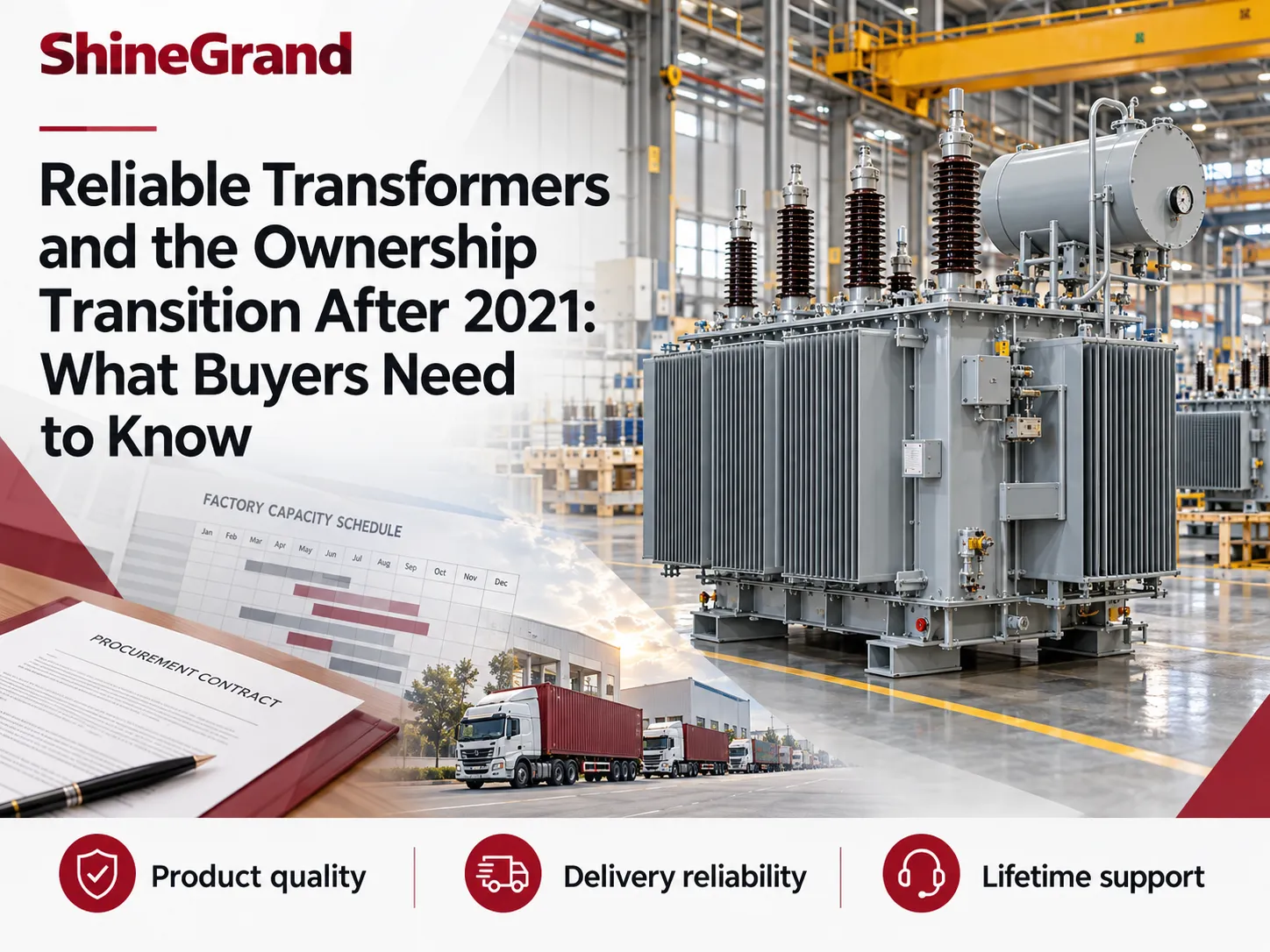
Prior to 2021, purchasing transformers for distribution and power was a straightforward process: provide the needed specifications, place an order, and wait for its arrival for a few weeks or months, and at a guaranteed price. But that is no longer true today. Since 2021, the period of waiting for delivery has widened from almost a year and up to two, three, and even five years for high-output transformers, so prices have changed dramatically. And now the buyers all over the world must compete for limited providers of the needed products. But behind this supply shortage, there is another story: the transformation of the ownership of many providers of reliable transformers since 2021 due to the activity of private capital, acquisitions, and consolidation of the industry players. This article will clarify how this process happened, its impacts on the reliability of the transformer provider on the market, and how to evaluate the reliability of a supplier of transformers today.
The term “reliable transformers ownership transition” refers to the series of mergers and acquisitions in the modern transformer market that started due to the lack of supply in the modern market and due to the need for grid modernization and electrification, and the lack of raw materials in the market caused by the war between Russia and Ukraine. In practical terms, this means that the word “reliable” does not refer only to the quality and durability of the products provided, but also to the supply process, terms of delivery, and after-sale services, which might be disrupted in case of any change in ownership of the manufacturer.
What Changed After 2021: A Market Under Pressure
To comprehend the change in ownership, one must begin with the supply crisis that caused it. After 2021, the transformer industry was hit by several factors that transformed a market with stable production rates for an ordinary commodity into one with a scarcity of strategic resources.
First of all, the demand skyrocketed. As grid upgrading, renewable energy connections, data centers, EV charging infrastructure, and electrification processes took place, the demand for transformers experienced a significant increase.
Moreover, the lead times multiplied. As orders accumulated due to the limited capability of factories, the supply period for some distribution systems grew to about one year, along with large power transformers which began taking the supply period of 2-5 years.
Besides, the raw material became scarcer. Grain-oriented electrical steel (the main material) was among those resources that became rare and expensive.
Lastly, there was an increase in price. Due to the shortage of resources and increasing demand, the prices on the products increased significantly.
Geopolitical events influenced the market too. The Russian-Ukrainian war had a negative impact on the energy supply and raw materials.
In summary, it is possible to conclude that the ones who managed to control transformers market started acquiring the ownership of these resources due to its being valuable.
The Core Drivers of the Ownership Transition
The concept of scarcity encourages investors to allocate their resources. As soon as transformers ceased to function as mere machines and began to halt the whole energy transition process, manufacturers of such machines became obvious targets for investors and acquirers. There have been several drivers of transformer ownership changes since 2021.
Private equity came into play. Having noted stable demand, coupled with the ability to dictate terms, PE funds started acquiring transformer producers and companies manufacturing distribution equipment as long-term investment platforms intending to integrate several regional companies under one umbrella.
Strategic investors entered the stage. Major power industry players acquired transformer capacities to secure their own supplies and to benefit from profit from scarcity.
Mergers and acquisitions in the sector have intensified. Small and family-owned companies that cannot afford expanding their capacity due to high costs have been acquired by larger players; thus, independent suppliers’ numbers have reduced.
Investment into capacity increased. New owners invest significant amounts into capacity attraction, although it takes years to build transformers and prepare them for operation.
Undoubtedly, this transformation is not negative for company owners; extra funds may be translated into expansion. However, as long as ownership is changing, transition takes place and transition comes with certain risks regarding reliability.
How Ownership Changes Actually Affect Reliability
This is a crucial element in any genuine venture. The ramifications of any ownership change in a corporation manufacturing transformers are defined by the areas that the purchaser relies on, and it is precisely in understanding these ramifications that the essence of the issue of the ownership transfer of the reliable transformers from 2021 to the present time lies.
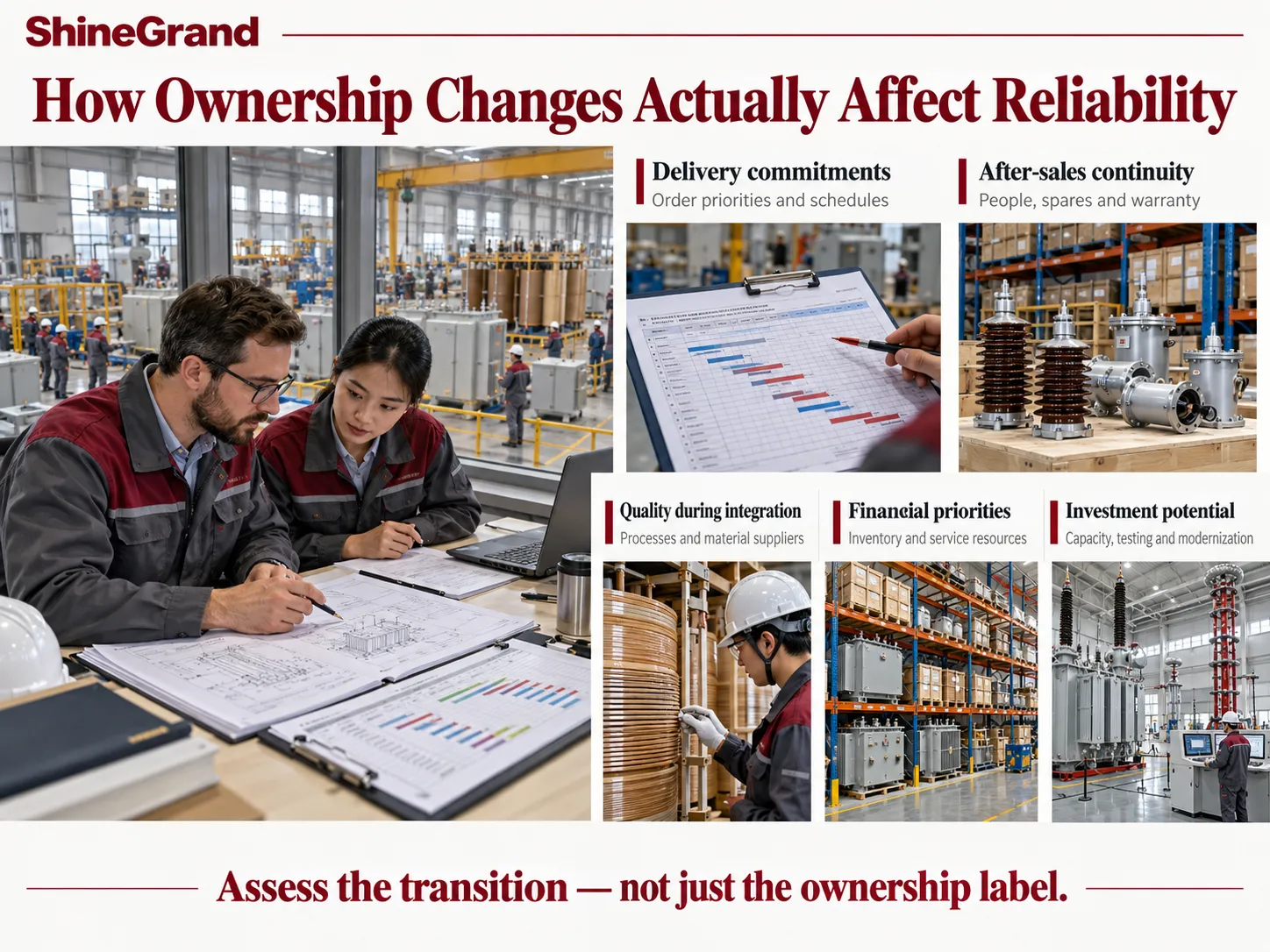
Commitments on lead times may vary. A new owner can change his priorities in respect of the orders they receive, concentrate on a different type of production, restructuring the system of their work and the delivery dates in accordance with the previous owners may differ greatly in many cases.
After-sale maintenance may weaken. The warranty service, replacement parts supply, and engineering service depend upon the institutional knowledge of the company. During an ownership transfer, some of the specialists can leave the company causing an interruption in maintenance at some time.
The systems of quality assurance could suffer a lot due to integration. The open-up in operations, production shifts, or changes in suppliers of main resources may result in the fact one is not capable of getting the required quality until the system is settled.
Financial priorities may shift. A private equity owner may be more concerned with the immediate return than a family business might be focused on long-term relations.
One should not infer from this that the sold suppliers are liable to provide poor quality services, and the independent ones are always reliable. Rather, ownership stability must be treated as a real variable influencing reliability nowadays.
How to Judge Whether a Transformer Supplier Is Truly Reliable
In this context, the meaning of reliability is to be established taking into account availability, performance, and maintenance instead of just the appliance itself. Thus, the following outline can be implemented to analyze any supplier of transformers regardless of its current state: merger, acquisition, or independence.
1. Ownership and stability. It is important to figure out who owns a producer, how long this ownership has been established, and if there are any transformations taking place. When an owner is stable and determined, the risk of troubleshooting increases.
2. Delivery performance. Ask about the performance therefore leading times but not only statements about delivery dates given previously. A supplier which has managed to deliver consistently after September 2021 highlights the reliability of provision.
3. Manufacturing. If a manufacturer has its own plant and is responsible for production and testing activities, it means that the company can better control the quality of production and the timing.
4. Certifying and testing of transformers. Verify that the transformers conform to proper standards IEC 60076, IEEE, and energy efficiency guidelines.
5. Engineering and performance assurance. Make sure that the technical support as well as spare parts are provided by the stable team which has enough experience.
6. Financial condition. The requirements of suppliers demand them to create facilities to hold materials and develop further installations.
In such a way, the performance of a supplier against these six criteria will provide a better understanding of its reliability than only low price or promised delivery date.
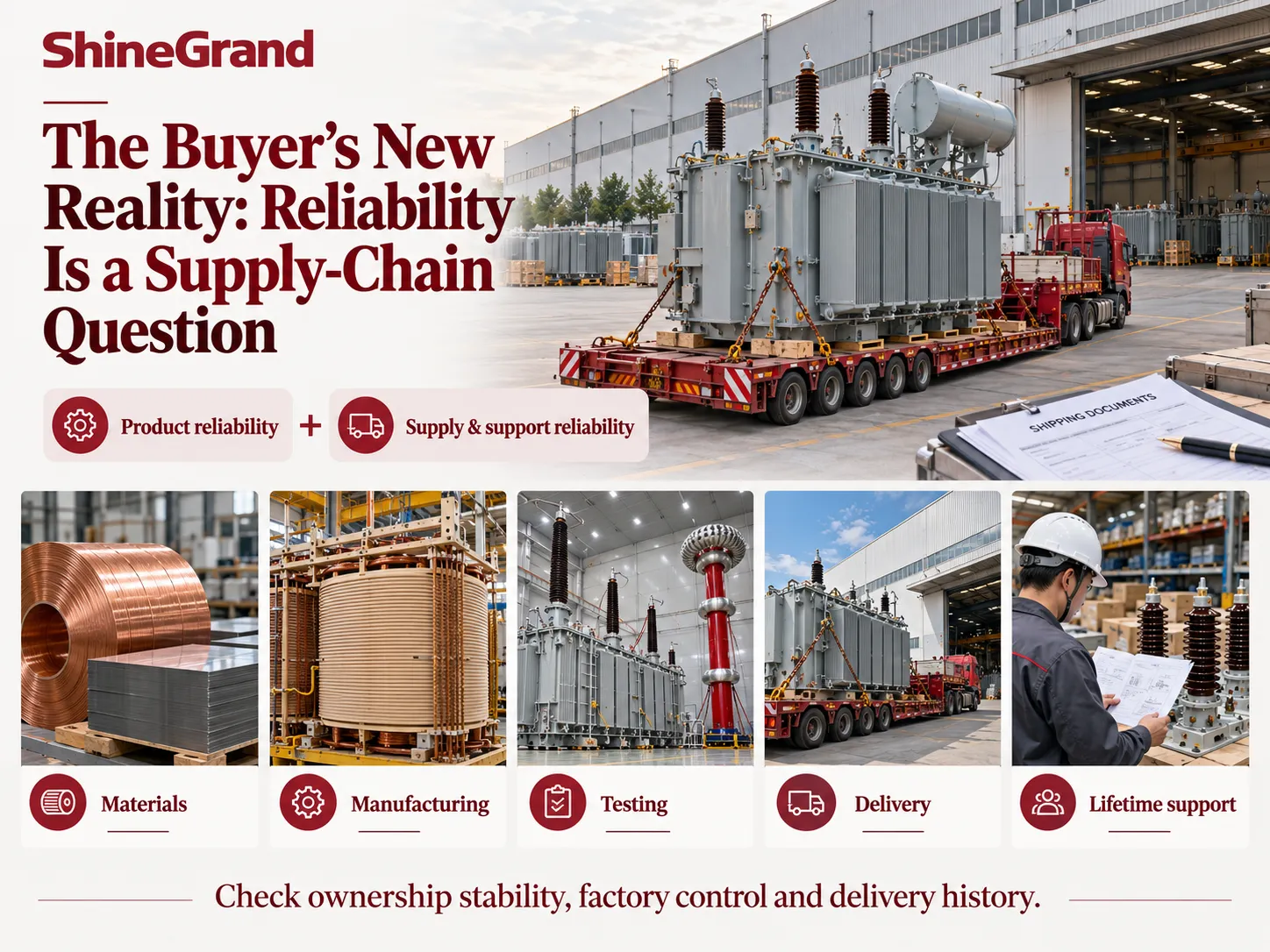
The Buyer’s New Reality: Reliability Is a Supply-Chain Question
There is a deeper conceptual shift happening here. For decades, people have looked at transformer reliability as an engineering attribute, quantified by insulation life, load capability, and mean time between failures. All of that is still important, but since 2021, there is now a second dimension that is often more important: supply chain reliability. When the best manufactured transformer is delivered too late or does not have the support staff available after an acquisition, it has let the buyer down just like a unit that has overheated. This is why procurement offices have started to consider ownership structure, factory ownership, and delivery history as significant criteria for selecting suppliers. The key question is not just going to be “Will this unit perform?” but also “Will this supplier be able to meet schedule and demand and be there for me with the support for 15 to 30 years during which I will own it?”
Looking Ahead: When Will the Market Normalize?
Ultimately, customers wish to find out whenever the supply constraints will end. Truth be told, the anticipated relief will arrive gradually. Both new and established companies invested a lot to be able to expand transformer manufacturing capacity. However, building and getting new production lines certified takes plenty of time, and the demand is still growing, as.Grid investments and electrification are moving forward. All of this entails the situation where the gap between supply and demand shrinks slowly instead of rebounding back, and while the lead times are improving in certain areas, the likelihood that they return to pre-2021 metrics is very low. The fact that there were many mergers in the industry will continue in the future, as along with smaller companies the market will have fewer players. The implications for customers are that the rules and regulations of the new market of transformers are not temporary measures, but rather the way procurement is done now.
Practical Advice for Buyers
To sum up all the discussed points above, here are some effective tips that make your projects safe and successful in the post-2021 market. First of all, make sure you order sooner than you think, making use of long-lead units during the design stage, rather than considering them as a late order. Next, make sure that you have a diversified supplier base so that the delay of any single manufacturer does not hinder your project. In addition to that, make sure the lead time and the obligations of the supplier have been recorded, not to forget asking details on the impact of ownership change. Finally, go for the suppliers who manufacture in-house and have proven records of deliveries in times of hardship. Follow this approach and look at the reliability of the supplier, opportunity to deliver, and to provide assistance with respect to the entire lifecycle of the unit you need, rather than only at the price tag.
Frequently Asked Questions
Why did transformer lead times get so long after 2021?
The higher requirement for grid innovation, renewable sources energy, data processing facilities, and electrification occurred together with a shortage of raw materials, such as grain-oriented electrical steel, copper, and aluminum and the impact of various geopolitical events. Consequently, the stresses placed on production capabilities resulted in long lead periods, reaching as far as a year and more for distribution units while it could take two to five years for bulky power transformers.
Why is there so much acquisition activity in the transformer industry?
Due to a combination of scarcity, leading to sustainable demand and pricing power, transformer producers became interesting targets for acquisitions. Private-equity firms bought them for long-term platform investments while strategic buyers combined capacities to guarantee their supply. Smaller producers merged under larger ones’ umbrella. This is what describes the ownership transition of reliable transformers.
Does a change of ownership make a transformer supplier less reliable?
Not automatically. A financially stable new owner can afford to put in place systems, test processes, and modernize in order to achieve reliability. The danger comes in the actual transition process, where different commitments and resources may be affected. Therefore, in this respect, ownership stability is definitely something that is to be evaluated by buyers.
What does “reliable” mean when choosing a transformer supplier today?
A reliable product is one that provides dependable supply and lead times. It allows for consistent quality with guaranteed testing and ensures stable after-sales assistance during many years of operation of the machine. All the characteristics combined together make ownership reliable.
How can I protect my project from transformer supply disruption?
By ordering long-lead units in advance, sourcing from several vendors, clearly specifying your lead-time and support conditions, sourcing from factory-direct vendors, and utilizing total reliability assessment instead of simple price comparison, you will be less vulnerable to problems caused by your supplier’s delays.
References
- U.S. Department of Energy — Grid and Distribution Transformer Supply. Background on transformer demand, supply constraints, and efficiency standards.
- IEC 60076 — Power Transformers. International performance and testing standards for transformers.
- IEEE — Transformer Standards and Loading Guides. Reference standards for transformer construction and reliability.
- International Energy Agency — Electricity Grids and Supply Chains. Analysis of grid investment and equipment supply pressures.
- Electrical Engineering Portal. Neutral educational resource on transformer selection and the power equipment market.
A Stable, Factory-Direct Partner in an Unstable Market
The change in the ownership of dependable transformers after 2021 has clarified one thing – in an environment of transforming ownership and lengthy lead times, having a stable and goal-oriented manufacturer is a big benefit. ShineGrand Electric is an independent transformer manufacturer and responsible for its production as well as testing. It can offer accurate delivery times, factory prices, and stable support. ShineGrand supplies a full range of power and distribution transformers, including the 6-10KV Oil-Immersed Distribution Transformer, the high-voltage 110-132kV Oil-Immersed Distribution Transformer, and the Three Phase Pad Mounted Transformer Series, all built to international standards. To secure reliable supply for your next project, explore the full transformer product range or contact the ShineGrand team for lead times and a factory-direct quote.