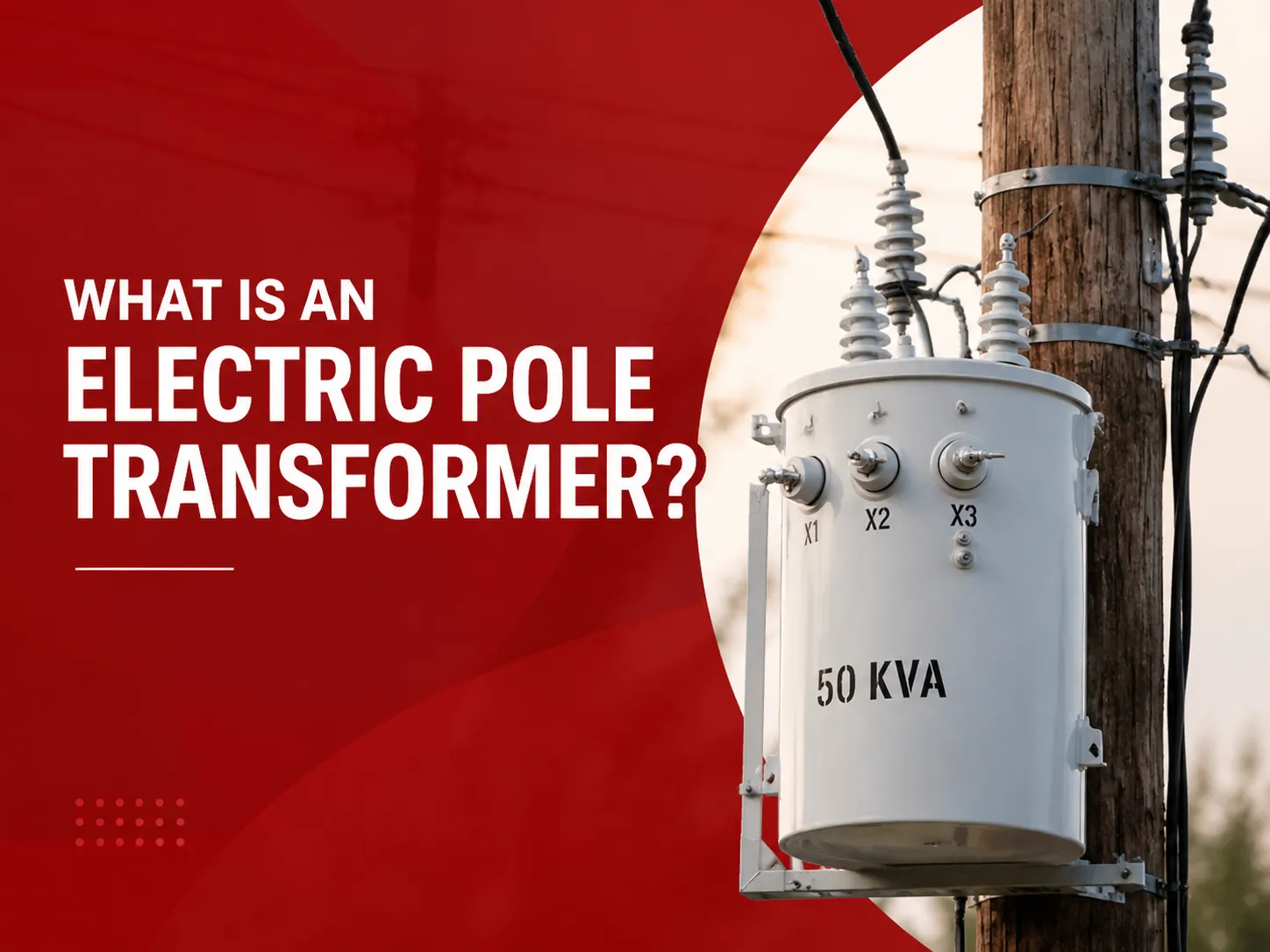
On a daily basis, countless people will look up at and around the utility pole located close to their house and look at the gray metal cylinder affixed to the top of the pole and not think twice about it. They assume it’s simply part of the scenery. But when something happens; for example, a storm that knocks out power to a community, or if a car were to hit the pole with the grey metal cylinder, suddenly there is an increased amount of attention placed on that grey metal cylinder on top of the pole. The cylindrical item is known as an electric pole transformer (a rugged durable oil-filled distribution transformer – a pole-mounted transformer) that converts high voltage (medium-voltage) electricity that is conveyed down the overhead lines into something useful in the home, basically taking an electrical distribution voltage like 10,000 volts and bringing that down to what is used in the home – 120/240 volts with a split phase. Electric pole transformers are considered one of the most commonly used and often overlooked types of electrical systems around the globe, but it is still vitally important to have information on what a pole-mounted transformer is, how it works, what it costs, and how to select one as it relates to electric utilities, electrical contractors and all those involved with rural and/or overhead electric utility distribution.
What Does an Electric Pole Transformer Do?
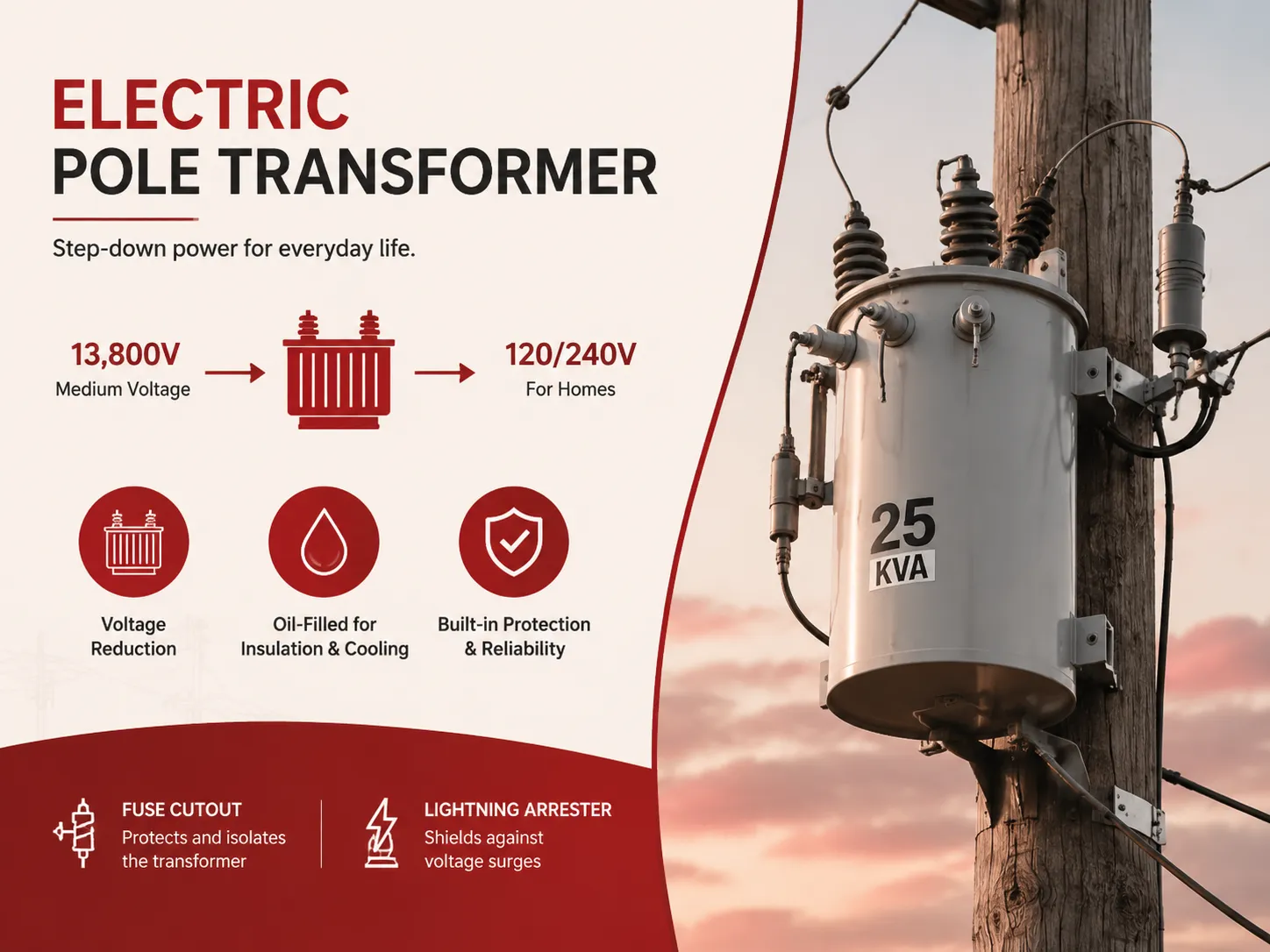
An electric pole transformer has one main job: to lower voltage. Electricity travels along utility distribution lines at medium voltage, which is typically a range of 7,200 volts to either 13,800 volts or 14,400 volts. Higher voltages offer greater energy efficiency by reducing the current required to move electrical energy, resulting in fewer energy losses during transmission. The voltage of electricity traveling on the power pole is too high for consumer goods, so the pole transformer reduces the voltage to 120V/240V, and provides that voltage to the home’s breaker panel. The pole transformer performs this voltage reduction using the principle of electromagnetic induction: the current flowing through the primary winding (which is connected to the high-voltage line) creates a magnetic field in the laminated steel core, which induces a proportional amount of voltage in the secondary winding (which runs from the transformer to the house).
A common pole transformer used at residences is a single-phase unit to the range of 10 to 167 kVA in size. An average transformer will typically supply from one up to approximately 12 homes, depending upon the density of the load served by the transformer. A typical transformer is filled with mineral oil as the electrical insulator and the cooling medium; the use of natural esters and/or silicone fluids as the cooling and insulator media is growing. The mineral oil used in the transformer circulates naturally, thus transferring heat from the windings to the walls of the transformer tank. The heat from the tank is then radiated into the surrounding air. This passive cooling of the pole-mounted transformers is why they can provide well over a 20-year life with virtually no need for maintenance.
A fuse cutout protect the high-voltage side of the transformer. This is a combination of a fuse and a switch that disconnects the transformer from the line if there is a fault or during maintenance. Lightning arresters are often used to take voltage surges to ground as well. Our article on how to get the best transformer quotation explains the accessories and test documentation that should accompany a utility‑grade purchase.
What Kind of Transformer Sits on a Power Pole?
Transformers located on power poles come in two variations; single-phase and three-phase. Most of those on residential streets are single-phase transformers supplying split-phase electricity at 120 or 240 volts (or both). In contrast, the three-phase supply is generally used in commercial or industrial areas; therefore, to provide three-phase power, three single-phase transformers might be connected together, or you could use a three-phase pole-mounted transformer. However, in practice, pad-mounted three-phase transformers are more commonly seen in this type of application.
Physical characteristics of a pole transformer design depend on the environment it will be placed in. A pole transformer needs to have a comparatively low bulk weight so a wooden or concrete pole can support it, have a small consumption factor so as to not interfere with other devices on the pole, and provide a sealed design against rain, dust, insects, and temperature variations. Typically, most transformer tanks are fabricated with carbon steel and coated to reduce the effects of weather. However, in areas where there are high levels of pollution such as coastal areas, some manufacturers may produce tanks made from stainless steel for a longer service life. The bushings connecting the lower side of a transformer to the low side of the electric circuit and the transformer to the high side of the electric system use porcelain or polymer materials to provide insulation for these voltage connections as they exit through the transformer’s wall. Each unit is expected to last between 25 to 30 years, although most transformers continue to function accurately after 40 years or longer.
Recognising the Symptoms of a Failing Pole Transformer
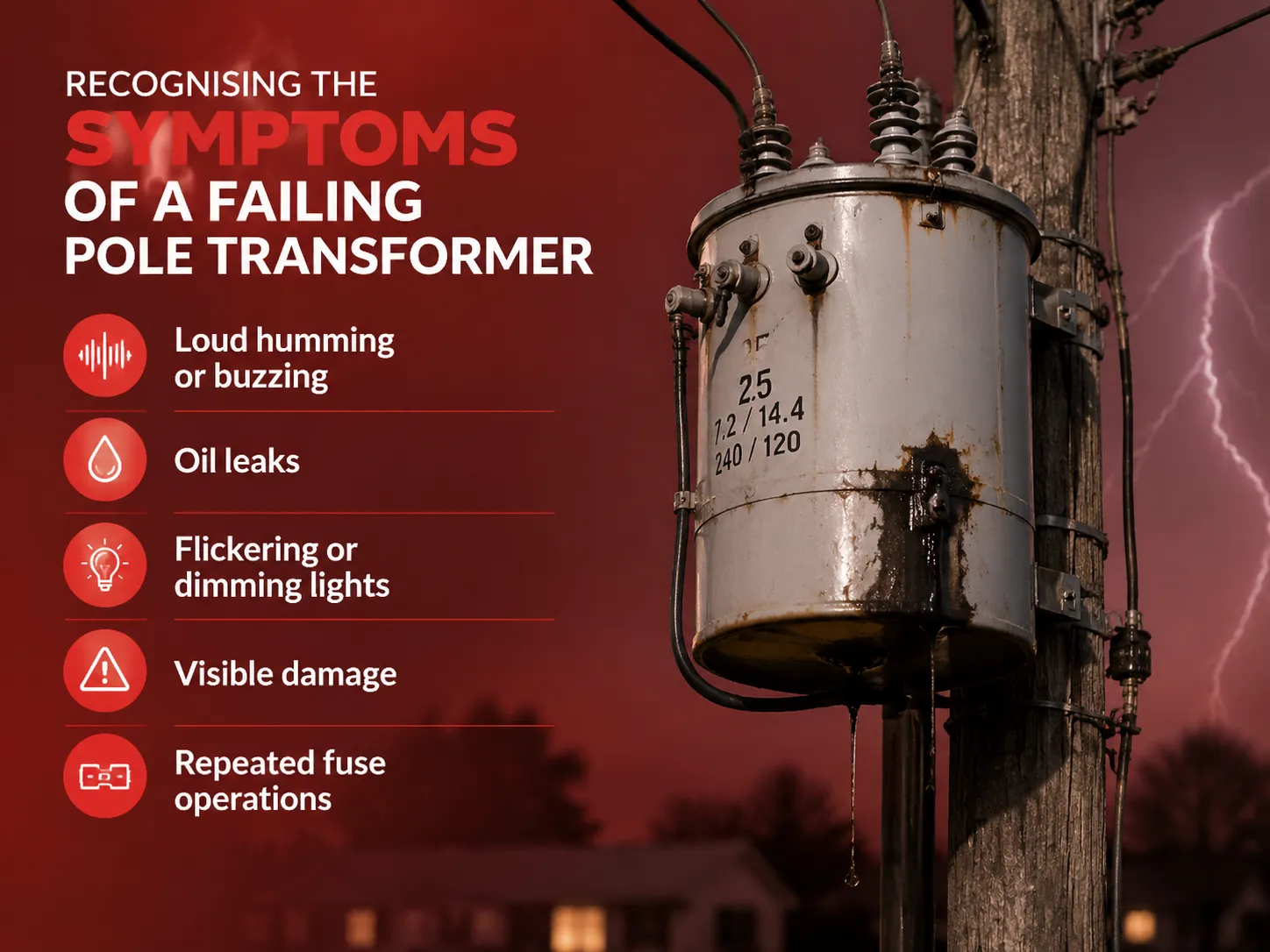
It is rare that a transformer mounted on a pole will fail without any indications of failing first. Many times, homeowners or utility crews have noted the following signs:
- Loud humming or buzzing: Magnetostriction in a transformer’s magnetic core will typically cause the transformer to generate a mild-sounding 60 Hz hum. If the hum changes significantly in intensity, or if a new sound appears in the hearing range (above normal), it may indicate that one or more of the core laminations is loose, or that there could be an internal fault with the windings.
- Oil leaks: A leaking gasket or a corroded tank can be seen in a leak mark on the tank or in leaks on the ground beneath the pole. The loss of oil results in no longer being able to cool and insulate properly, which will result in premature failure.
- Flickering or dimming lights in the served homes: Possible causes of intermittent voltage from the secondary side could include a failing internal connection, a failing bushing, or an overloaded transformer.
- Visible damage: Whether from an electric storm or the damage a vehicle does when it strikes a utility pole, all of these can cause physical harm to the transformer, as well as its bushing assemblies. If the transformer has any cracks, has been burned, or has any components displaced from their original position, this is an emergency.
- Repeated fuse operations: If a transformer that is not overloaded has its fuse cutout on the upstream side of the transformer blow repeatedly, then there is most probably a fault of some kind inside the transformer such as a short or a carbon track.
These symptoms must be reported to the utility as soon as possible. A transformer that is humming or leaking oil is not going to repair itself, and will eventually fail, usually during peak load when it’s most critical to have power available.
How Much Does a Residential Pole Transformer Cost?
Pricing Poles There are several factors that affect the pricing of a residential pole transformer, including the kVA Rating, Winding Material (Copper/Aluminium), Type of Insulating Fluid Used, Required Certification, and Size of Transformer. A residential, 10 KVA, Aluminum-Wound, Mineral Oil Insulated, Pole Transformer with Standard Porcelain Bushings typically costs between $800 – $1,500. The next size unit, which is a 50 KVA, will range in price from $1,500 – $3,000. The largest single-phase pole transformer commonly manufactured, a 167 KVA, will cost between $3,000 and $5,000. Examples of just some of the options that can increase the price of a residential pole transformer include:
– Copper Winding – up to 20 to 40% more than an equivalent Aluminum Winding
– Amorphous Core – up to 15 to 25% more than a Normal Core – to reduce no-load losses
– Stainless Steel Tank – for use in Coastal Environments
– Natural Ester Fluid – for added fire safety and biodegradability.
These prices are for ex-works, and do not include installation, freight, or cost of pole hardware associated with the transformer.
To determine the total cost of owning a transformer, the utility should include both the purchase price and the net present value of energy consumed over a 30-year period. The utility should also consider that a transformer with a higher purchase price may have less loss during use, thus making it a more cost-effective choice over its lifetime. Our transformer calculation table provides the full‑load current values for common kVA ratings, helping to correctly size a unit before pricing it.
Major Manufacturers of Pole‑Mounted Transformers
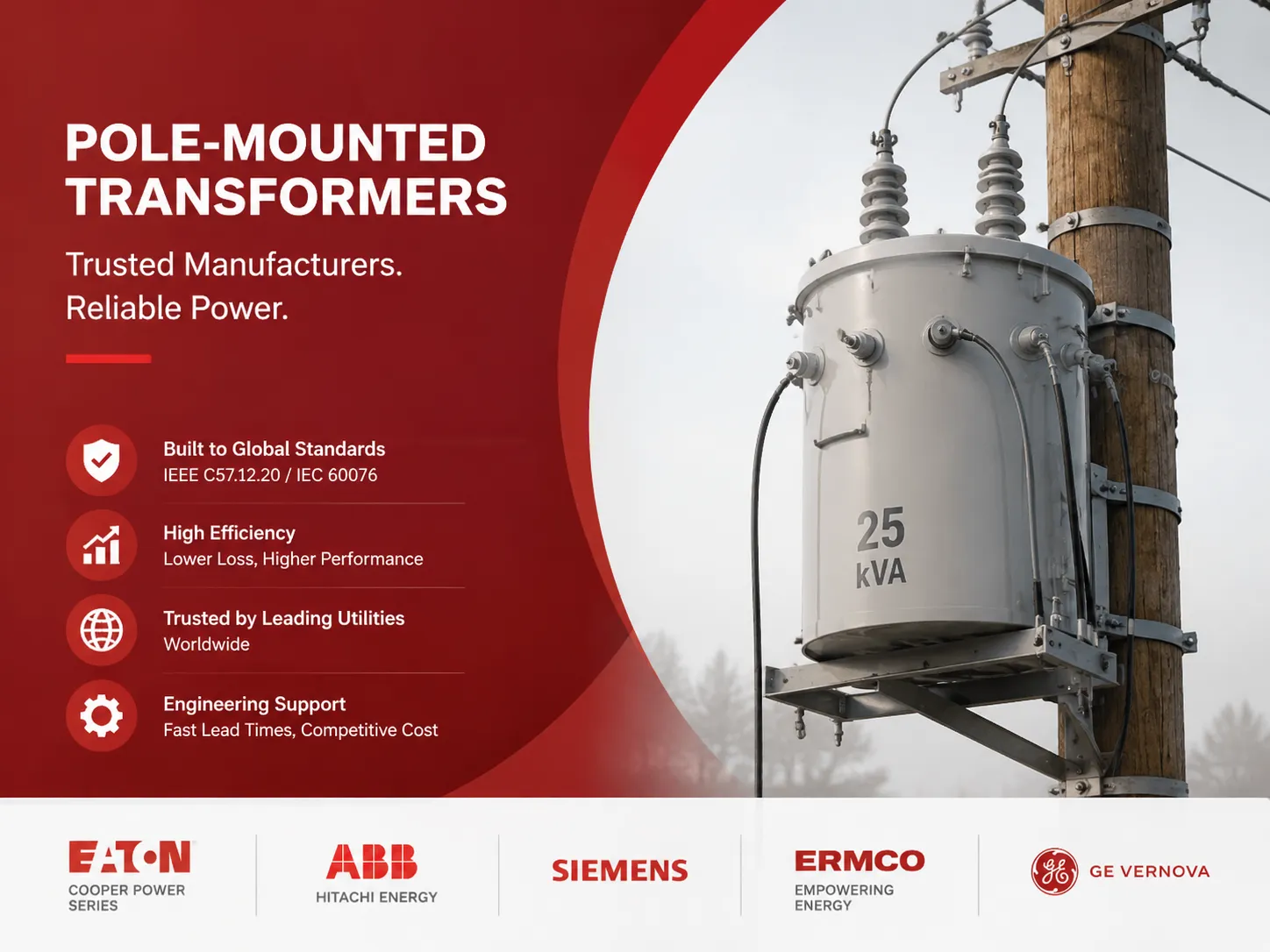
Multiple significant electrical manufacturers as well as numerous specialized manufacturers exist within the world-wide electrical industry of pole‐mounted transformers. The following are examples of some well-known and reputable pole-mounted transformer manufacturers;
- Eaton (Cooper Power Systems): A manufacturer in North America of single-phase and three-phase pole transformers with a wide variety of reliable products and a highly developed distribution system supporting its base of consumer and contractor customers.
- ABB (Hitachi Energy): Creates pole transformers for sale throughout the world, with a particular emphasis on high-efficiency designs that can use amorphous core technology as a means of reducing energy loss in its products.
- Siemens: Pub offers pole mounted transformers for both North America and international markets. Offering a wide variety of fluids and tank coatings to cater to a range of different environments.
- ERMCO: An American company that manufactures large quantities of distribution transformers, such as single-phase (or pole-mounted) transformers for utilities and rural utilities.
- General Electric (GE, now part of GE Vernova): Has been manufacturing and producing distribution transformers for the North American market for many years; including pole-mounted designs.
Like many global companies in this category, ShineGrand Electric is one of several niche manufacturers supplying pole transformers that also conform to the same IEEE C57.12.20 and IEC 60076 standards as well as provide direct engineering assistance, fast lead times and low costs associated with their products. ShineGrand’s pole‑mounted single‑phase power transformers are designed for 10‑kV to 35‑kV primary voltages and the kVA ratings that serve residential and light commercial overhead distribution. Each unit ships with routine test reports, and ShineGrand’s engineering team works with utility buyers to match the transformer’s impedance, insulation level, and accessories to the specific distribution system.
Installation, Safety, and Maintenance of Pole Transformers
A utility only will do the work associated with installing an electric pole transformer. The transformer is lifted into position using a bucket truck or crane before being mounted to a cross arm/platform on the utility pole and connected to high voltage lines via fuse cutouts and lightning arrestors. Following this, the secondary of the transformer will be connected to the service drop that connects to the customer. The work is being done by qualified lineworkers who are following safe work practices and are wearing the required PPE with the primary circuit being de-energized and grounded during their performance. No one unauthorized should approach the transformer or try to open the enclosure because even if the transformer is not making any noise, the high voltage bushings still have lethal voltages present.
Normal upkeep of a pole transformer is done through periodic inspections. An annual survey to check the transformer, as well as any connections and bushings, is performed by utility companies. In the event of a suspected problem, infrared thermography scans can be performed every few years to locate any hot spots around the connections. Additionally, insulating oil will be sampled once every ten years or following an event where the transformer experienced a fault to assess the amount of dissolved gas present.
As long as the unit is kept throughout its life cycle within its thermal limits (not exceeding 80% of the nameplate capacity) and is properly safeguarded against lightning strikes and any form of physical abuse, there is virtually no maintenance required for the first 20 or 25 years of operation. This is not, however, to say that maintenance should not be completed for transformers that have exceeded this timeframe and may potentially have some aging insulation or gaskets; instead, maintenance will be completed on a schedule for replacement and not on an event-based (or after failure) basis.
Frequently Asked Questions
What does an electric pole transformer do?
A transformer on utility poles converts medium voltage electricity — usually between 7.2 kV and 14.4 kV — into low voltage — 120 V and/or 240 V — for use in residential buildings. The electric pole transformer is the last point at which the medium voltage to low voltage conversion takes place before electricity is supplied to a dwelling.
What kind of transformer is on a power pole?
Power poles are outfitted mostly with single-phase, oil-filled distribution transformers. These transformers have a power rating between 10kVA and 167kVA and are intended for overhead installation. The transformers have a weather resistant enclosure (tank), external bushings (for connecting to conductor), and operate using passive oil cooling.
What are the symptoms of a bad power pole transformer?
Signs include very evident signs of broken equipment as well as excessive humming or buzzing noises, excessive visible oil leaks, flickering or dimming or very short duration (e.g., 5 to 10 minutes) lights on circuits supplying the home, repeated blowing of upstream systems due to overloaded circuits and lack of clear evidence of being an overload event.
How much does a residential pole transformer cost?
A 10-kVA unit is priced at approximately $800 to $1,500, while a 50-kVA unit may be priced at $1,500 to $3,000 respectively. A 167-kVA unit may be priced from $3,000 to $5,000. Pricing will vary depending on the winding material used, the core type and the fluid inside the transformer as well as any certifications that the transformer has received.
References
- Eaton (Cooper Power Systems) — Pole‑Mounted Transformers — Product range and technical documentation for single‑phase distribution transformers.
- Hitachi Energy (ABB) — Distribution Transformers — Pole‑mounted and pad‑mounted transformer solutions.
- Siemens Energy — Distribution Transformers — Medium‑voltage distribution transformer products.
- ERMCO — Distribution Transformers — U.S.‑based manufacturer of single‑phase pole transformers for utility applications.
An electric pole transformer is a quiet, hard‑working device that spends decades exposed to the elements, faithfully stepping down voltage for the homes below it. Its design is mature, its maintenance is minimal, and its role is indispensable. For a utility buyer, selecting the right unit means matching the kVA to the load, the winding material to the budget and loss requirements, and the tank and fluid to the environment. ShineGrand Electric manufactures pole‑mounted transformers that meet these requirements with the test documentation and the engineering support that a critical infrastructure purchase demands.