The noise created when a transformer blows can be startling and often results in an immediate power outage. A blown transformer can disrupt daily activities in a residential home or cause multiple days of lost revenue for a business; additionally, a transformer failure could put your life in danger. The first step toward addressing transformer failures and providing reliable electricity to your home or business is to understand what causes them. The following sections detail the most common reasons transformers fail, explain the specifics as to why transformers will explode, and provide specific actions to help safeguard your electrical systems.
Why Do Transformers Fail?
Transformers can fail for numerous reasons—external damage, internal damage caused by wear and tear, and overload. Below are the leading reasons transformers fail:
Overload (Usual Operation at or near Full Load)
Overloading is one of the most common reasons transformers fail. When a transformer is overloaded, the coil windings generate too much heat; the heat damages the insulation on the coil windings, eventually resulting in a short circuit in the transformer. This is very common for residential customers that have purchased new appliances (i.e., EV charging stations, HVAC, hot tub, etc.) and have not upgraded the transformer service to meet the new load. A 50KVA transformer rated for use in a small house may fail when the total load (new EV charging system and central AC) is 100KVA. By adhering to the 80% rule, which means never exceeding 80% of the transformer’s kVA rating, you can help avoid any of the issues described above.
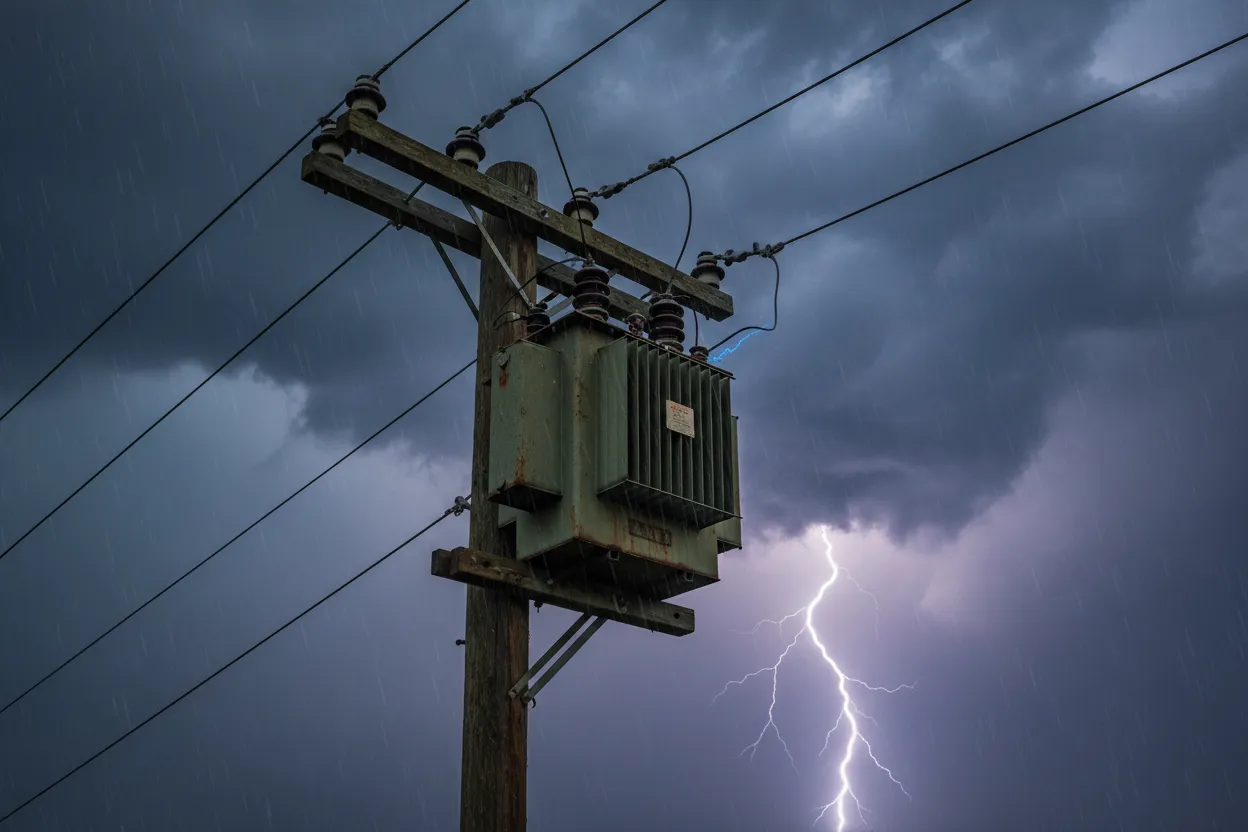
Transformers Can Be Damaged by Lightning Strikes and Power Surges
Transformers, particularly those mounted on poles, are highly susceptible to damage from both lightning strikes and power surges. When a transformer is hit directly by lightning or experiences a power surge due to a nearby lightning strike, thousands of volts will pass through the transformer, potentially overwhelming its protective devices and shorting out the windings. Indirect strikes can also cause damage through induced voltage spikes that will damage internal transformer components. Industrial transformers supplying power to sensitive electrical equipment are additionally very likely to be damaged by a power surge resulting from either grid fluctuations or lightning.
Transformers Will Fail Because of Insulation Breakdown and Aging
The insulation surrounding transformer windings will break down over time from exposure to excessive heat, moisture, and chemicals. The transformer insulation breakdown will then create potential grounds between windings, which may result in short circuits or overheating. While the average life span of a transformer is approximately 20 to 30 years, lack of proper maintenance and/or extreme environmental conditions can reduce the life expectancy to as low as 10 to 15 years. Transformers containing oil are particularly prone to insulation breakdown due to contamination from either water or debris, thus reducing the oil’s effectiveness to carry away heat and to insulate the windings.
Oil Leaks and Contamination of Oil in Transformers
Transformers filled with oil require the use of insulating (non-flammable) oil for cooling and preventing electrical arcing between windings. Should a transformer experience an oil leak, the unit could overheat and/or ignite. Additionally, if either water, dirt, or sludge contaminates the insulating oil, it could also impede the oil’s ability to carry heat away and insulate the windings, resulting in internal arcing and, ultimately, loss of the transformer. Common signs of an oil leak are puddles beneath a pad-mounted transformer or oil-stained residue on a pole-mounted transformer.
Defective Manufacturing and/or Installing of Transformers
Defects in the design and/or manufacture of a transformer can be responsible for transformer failure. Transformers can fail prematurely due to poor-quality insulating materials, bad soldering, and defective protecting devices. Improper installation is also a common reason for transformer failure and can be the result of incorrect wiring, looseness of connections, and/or inadequate ventilation. However, when transformers become overheated or have a blowout, it is often the cause of one of these three issues. When installing your transformer, be sure to choose a reputable manufacturer and hire a licensed electrician for your installation. In doing so, you will greatly reduce your chances of a transformer failing prematurely.
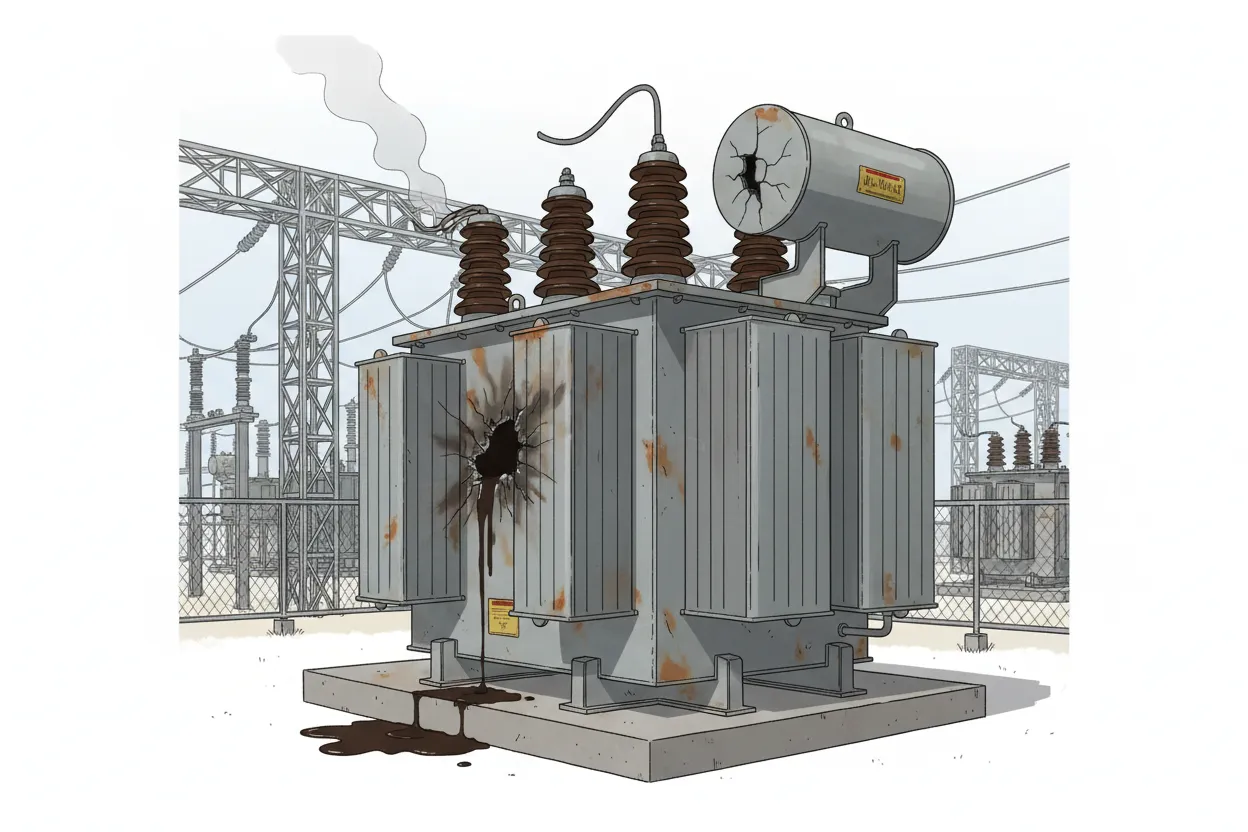
Transformer Failures – What Causes Transformers to Explode?
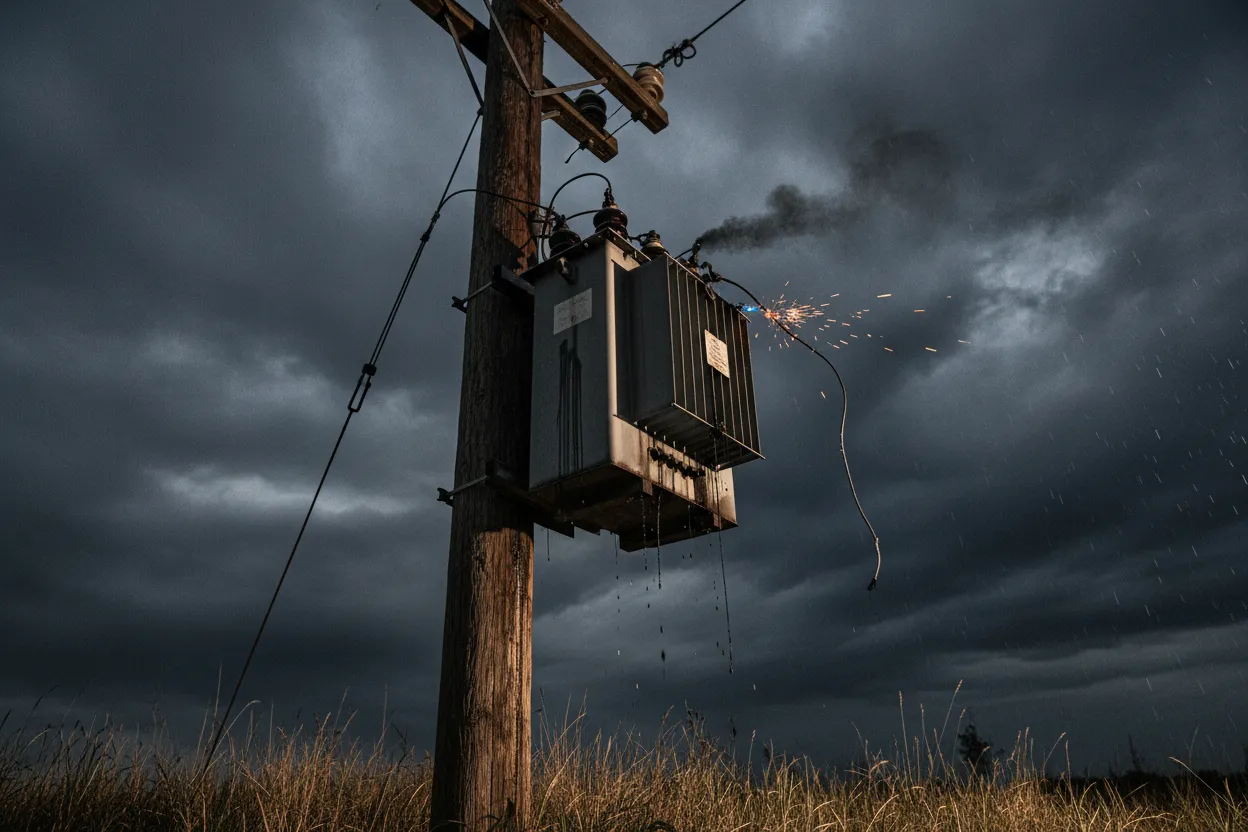
Most transformer failures are due to the loss of power, but there are some that result in catastrophic explosions. Catastrophic explosions occur when either internal arcing or excessive heating occurs and the insulating oil vaporizes quickly. This causes extreme pressure to build up within the transformer casing, which can burst the transformer tank, causing the oil and debris to be expelled from the tank. A dry-type transformer can also become so hot that the solid insulating materials combust, thus producing toxic fumes and ultimately resulting in an explosion in extremely rare situations. The majority of transformer explosions occur on older poorly maintained transformers or on transformers that are heavily overloaded.
Transformer Explosions – How to Protect Against an Explosion
There are a number of proactive maintenance techniques you can take to help prevent transformer failure:
Do Not Over-load the Transformer: Calculate the total electrical load requirements and note that transformers need to be sized properly to handle that total load with an additional 20% safety margin (the 80% rule). Upgrading to a larger transformer should also be done if you add high-load appliances or expand an existing business.
Use Surge Protectors and Lightning Arresters: For both residential and commercial transformers, the installation of lightning arresters and surge protectors to protect against voltage spikes is essential. However, in many cases, a facility can also use special surge protection devices specifically designed for protecting sensitive electronic equipment.
Schedule Regular Maintenance: Use a licensed electrician to inspect the transformer on an annual basis. This consists of inspecting oil levels and conditions (in oil-type units), making sure connections are secure, cleaning any air-circulating openings, and testing insulation resistance.
Check for Warning Signs: Look for any signs of harm before they happen, such as loud buzzing or humming sounds, burning smells, oil leakages, or frequent power outages. If any of these signs are present, immediate action should be taken to avoid an explosion or blowout.
Select High-Quality Transformers: Purchase transformers from known, reliable manufacturers like Siemens, ABB, or Eaton. These companies utilize high-quality materials and perform rigorous testing, reducing the likelihood of defects.
How to Pick an Appropriate Transformer
The main thing you need to do when choosing an appropriate transformer is to ensure that you have selected correctly to minimize the chances of failure or explosion. Consider the following factors:
Calculate Your Load: Count up the total wattage of all appliances, equipment, and electrical circuits in your home or business. To determine the minimum kVA amount for your transformer, divide the total by 0.8.
Oil-Filled Transformers Work Outdoors: If you need to use a transformer outside in an area with moderate climate conditions, an oil-filled transformer is your best choice. If you need a transformer for indoor settings, such as in a hospital or data center where fire risk is a concern, a dry-type transformer is the better option.
Look for Certified Products: Ensure any transformers you purchase are certified by agencies such as Underwriters Laboratories (UL) or the Institute of Electrical and Electronics Engineers (IEEE). These certifications ensure that the transformers meet safety and performance standards.
Transformer Frequently Asked Questions (FAQ)
What problems cause transformers to blow?
Many issues could lead to the blowing of a transformer, including overloading, lightning strikes, insulation degradation due to aging, oil leaks, manufacturing defects, and improper installation. Environmental factors such as extreme temperature changes, humidity, and corrosion caused by moisture can also contribute to failure.
If a transformer blows, how long will it be before the power is back on?
Power is typically restored within a few hours for residential customers fed by small transformers. For larger residential transformers, restoration might take up to 24 hours. For commercial and industrial situations, outages may last between 4–8 hours or potentially longer depending on the size of the transformer and the complexity of the removal and replacement process.
What reasons are there for frequent transformer failures in my area?
Frequent transformer failures might be attributed to aging infrastructure, increased electrical load demand (e.g., more EV chargers), poor maintenance by the utility company, or repeated lightning strikes. Contact your local utility company to investigate and determine whether upgrades are necessary.
How long does it take to repair a blown-up transformer?
Fixing a blown transformer usually involves replacing the entire unit. Residential transformer replacements typically take 2–4 hours, while commercial replacements take 4–8 hours, and industrial replacements may require 1–3 days or longer, depending on the availability of replacement parts.
Will homeowners’ insurance cover a blown transformer?
In general, homeowners’ policies cover transformer failure caused by covered perils, such as lightning strikes or vandalism. However, damage caused by general wear and tear or overloading is usually not covered. Commercial property insurance typically covers transformer failures if they are due to a covered peril, such as fire or wind damage.
Being aware of what causes transformer failures will help you avoid costly power outages and threats to safety. The most common causes of transformer failures include overloading, lightning strikes, degraded insulation, and poor maintenance. Explosions are usually caused by excessive internal pressure. By using the 80% load rule, installing surge protection, conducting regular maintenance, and choosing high-quality transformers, you can minimize the risk of failure. If you notice warning signs such as unusual sounds or oil leaks, contact a licensed electrician immediately. Proactively maintaining your transformer ensures reliable power supply and peace of mind for both businesses and homes.