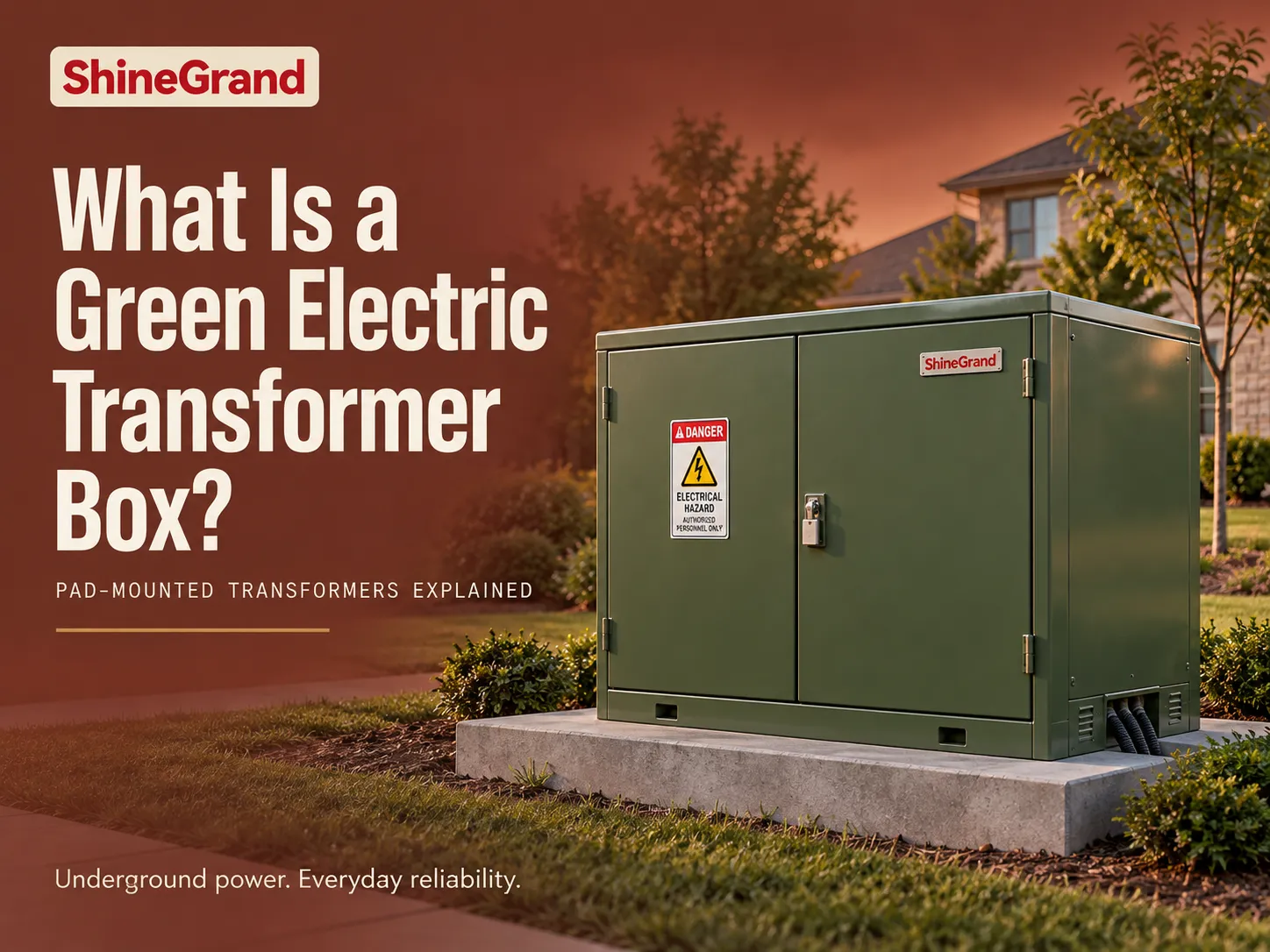
You have likely seen one: a short green metal box, about the size of a small fridge, located in someone’s front yard, or on the street corner nearby. Many people never think about it until they start wondering about its purpose, whether it poses any danger, and why it is found on their property. That box is a green electric transformer box, which is small but crucial for the operating of power grid. This article tells more about what it does, why it is painted green, if it is safe or not, and what is permissible to do around the transformer.
Basically speaking, the function of green electrical transformer box is that of the transformers installed on transformer stations: it connects with underground electrical lines to receive high-voltage electricity and convert it to a lower voltage electricity for usage.
In short, a green electric transformer box can be understood as a distribution transformer that lowers high voltage electricity to the voltage level of electricity used by homes and companies connected to underground wires. It is painted in green color to match the landscape of lawn and trees. The box is considered safe as long as it is closed and locked, but it contains high voltage equipment, which means that no one is allowed to open, touch, climb, or disturb the box. An electric utility company is supposed to have a clear space of about ten feet in front and a few feet on the sides of the box so it should never be obstructed by plants or buildings.
What Is a Green Electric Transformer Box?
A green electric transformer box is simply another name for a pad-mounted transformer, which is a kind of distribution transformer placed on the ground surface on a concrete base. Simply put, it is a locked steel cabinet that contains the devices for converting power from high voltage as delivered by the distribution system to the low voltage used safely by appliance and outlets. As the transformer connects to cables that are buried underground, it has become the number one choice for modern subdivisions and communities where utilities are placed underground in a bid to enhance aesthetics and safety from adverse weather conditions.
In terms of the functions, the transformer is the same as the gray can-shaped units that traditionally rest on wooden poles above the ground. The only difference is their place of installation and connection.
What Does the Green Transformer Box Do?
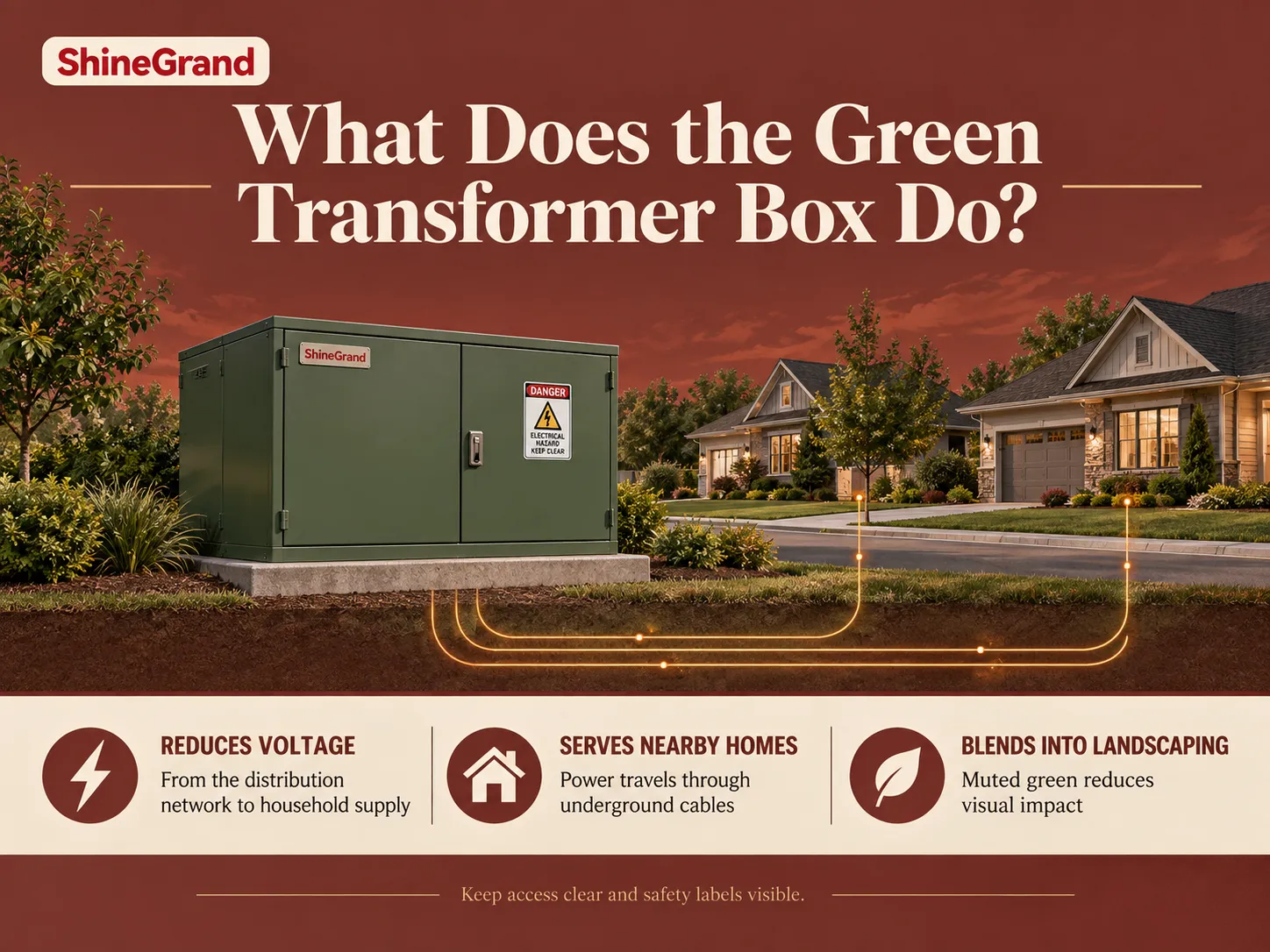
The core job of the green electric transformer box is voltage reduction. Electricity traveling through a neighborhood travels at a voltage which is too high to be brought into a house as it usually travels several thousands of volts. In the box, a distribution transformer transforms the voltage into the standard electricity that is being used in houses. The voltage electricity then runs through underground wires to different houses and buildings served by this box. Generally, one box serves several houses something explained by the fact that one box can be located at the boundary of several yards.
Why Are Transformer Boxes Green?
chance. Transformer boxes are painted in green most commonly so that they get camouflaged. A muted green color reduces the visual effect of a box that acts as an industrial cabinet placed in the front yard. The shade can change depending upon the utility company and local rules, and one may find the boxes in some other neutral colors too. The main goal is to make the equipment as unobtrusive as possible while being reachable for the maintenance crews. The finishing also contains the safety marking which is among the many reasons why the box can’t be repainted.
Why Is There a Green Box in My Yard?
Finding a green electric transformer box on your property often raises questions, but its placement follows the logic of the underground network. These containers have been arranged in a manner that allows them to function effectively for groups of residences, which means they are typically found along property borders and utility easements enabling the cables to split and serve more than one home. In the case that your area has underground utility service, the provider must position its boxes on the ground at some point, and they usually do this at the front of the properties. In nearly all instances, the area on which the container is located has utility easements that give the power company access rights in order to be able to install their devices. It is for these reasons that property owners cannot just get rid of or move the boxes by themselves.
Is a Green Electric Transformer Box Dangerous?
This is the question that most people are concerned about, and the answer to it gives one peace of mind provided this comes with a warning. A green electric transformer box is generally safe to stay near when it is closed and locked, and this is what it normally is. It is made in such a way as to be completely safe to operate and incapable to be touched by accident. However, it still contains very dangerous high-voltage equipment – the voltage is usually measured in thousands of volts – so that the safety of the neighboring area will depend on the transformer box being intact.
That is why there exist strict rules regarding this electrical appliance and people have to follow them, especially children. One should never touch the transformer box, climb on, sit or play on it, or consider it as a bench and a piece of equipment for playing. One should never try to open it or put fingers, sticks, or any objects into the gaps, cracks, and openings. It should never even be approached.
Clearance Rules: How Much Space Does It Need?
Utility teams should be able to access a green electric transformer box quickly and safely for either electrical service repairs or during power outages. In order to access the cabinet, workers need a clear area. Generally speaking, the utility companies ask for at least ten to twelve feet of empty space in front of the doors, where the workers can open the cabinet and use the long insulated instruments, and for three to five feet of space on both sides and behind. There is more space in front, as workers feel safer when they have more room to operate on live equipment, and some space on the sides and rear because this way air can circulate and keep the machine cool. Remember that keeping this space clear is not just an option, in fact, blocking it can slow down power restoration for the entire street and endanger employees.
Landscaping Around a Green Transformer Box: What Is Allowed
Most homeowners have the desire to conceal their green boxes, however, they should be careful with landscaping, or not do anything at all. Shrubs, hedges, or trees should not be planted nearby as they hinder access, and roots may disrupt underground lines or even move concrete pad thus damaging high-voltage connections. Mowing the grass around the box occasionally is acceptable since the system is earthed, although the required clearance must be maintained. There are some other important points: 1) never dig near the box without calling the dig-safe line to get the location of underground lines; 2) it is not recommended to cover the green electric transformer box, since painting prevents the staff from reading the safety signs and may damage the weather-resistant coating and entail loss of a utility contract.
When to Report a Problem With the Green Box
Householders are frequently the primary individuals who detect an issue, so being aware of the instances in which to contact the utility is crucial. You should reach out to your electricity company if you notice that the electrical box is open, has an open or broken opening, is leaning, is damaged as a result of being hit by a car or lawnmower, has a missing or broken lock, or is cracked and exposes the contents of the box. If you hear any unusual noises, have a burning smell, see sparks, or notice any kind of fluid leaking from the box you should report it and keep your distance. A damaged green electric transformer box can expose live, high-voltage components, so prompt reporting protects both you and your neighbors.
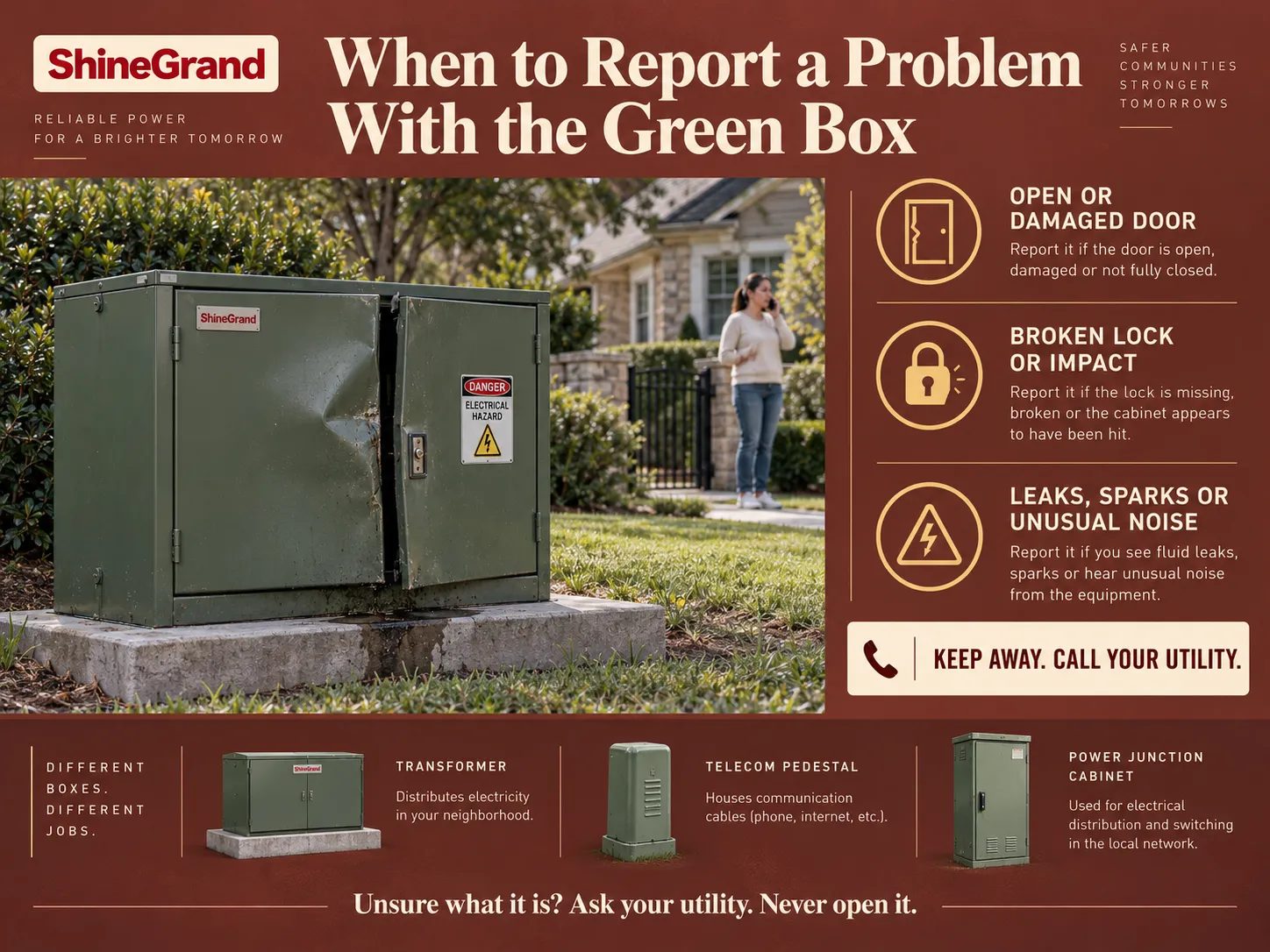
Green Box vs Other Utility Boxes in Your Yard
Not all boxes found outdoors are transformers, and knowing what differentiates them from each other helps you understand how cautious you should be with them. In places with underground utilities, there are several different types of ground boxes. The green electric transformer box is the biggest, is on a large concrete slab, is locked, and has labels warning of high voltage. Small green and gray pedestals in close proximity are often used for phones, TV, or internet and are low in voltage. There are also transformer boxes that direct electricity through the network without changing it. If there is doubt, any cabinet that is locked should not be touched; however, the biggest, the one on a cement slab and that indicates that it has high voltage is the transformer. In case of doubt about its identity, call the utility company.
What Is Inside the Green Electric Transformer Box?
Despite its dramatic voltage, the inside of a green electric transformer box is surprisingly straightforward: underground cables enter the cabinet, connect to the pad-mounted transformer that steps the voltage down, and then leave again to carry the lower-voltage supply to nearby homes. The real engineering is in building that transformer to operate reliably for decades while sealed safely inside a compact, tamper-resistant enclosure. This is exactly the kind of equipment ShineGrand Electric manufactures. The Three Phase Pad Mounted Transformer Series is designed for the ground-level, underground-fed installations these green boxes represent, while related units such as the 6-10KV Oil-Immersed Distribution Transformer and the overhead Pole-Mounted Single-Phase Power Transformer serve the other parts of the same distribution network.
Frequently Asked Questions
What is the green box in my yard?
It is a green electric transformer box, also called a pad-mounted transformer. It lowers high-voltage electricity from underground power lines to the safe level used in homes, and it usually serves several nearby properties. It does the same job as the transformers on utility poles.
Are green electric transformer boxes dangerous?
Being shut and secured, these boxes are mostly safe; but, however, they have some high-voltage technology. It is essential not to touch, break into, climb upon, or interfere with the boxes and to keep children and animals away. In case you see an open box or notice a damaged one, inform your operator right away.
Why are these transformer boxes green?
They have the color green to conform with landscaping and minimize the impact on the surroundings. The precise color may differ depending on the locality and the utility. The factory coating is also equipped with useful markings that is the reason why the box should not be re-painted.
Can I plant flowers or shrubs around the green box?
Only with care. Utilities need clear access, typically about ten to twelve feet in front of the doors and three to five feet on the sides. Keep plantings well back, avoid trees and large shrubs whose roots can damage cables, never dig without calling the dig-safe line first, and never paint or cover the box.
Who owns and maintains the green transformer box in my yard?
The company responsible for maintaining the property generally does so on the basis of an easement granted in regard to the property on which that box is placed. You should not try to change the location of the box or touch it in any way; whenever you have questions regarding the meter, call the utility.
References
- IEEE C57.12.34 — Requirements for Pad-Mounted, Compartmental-Type, Three-Phase Distribution Transformers. The standard defining requirements for the pad-mounted transformers these green boxes contain.
- IEEE C57.12.28 — Pad-Mounted Equipment Enclosure Integrity. The standard covering the tamper-resistant enclosures used for pad-mounted equipment.
- Electrical Safety Foundation International (ESFI). Public safety guidance on staying safe around electrical utility equipment.
- Electrical Engineering Portal. Neutral educational resource on distribution transformers and power systems.
- Distribution Transformer — Wikipedia. General reference on distribution transformers, including pad-mounted types.
Reliable Pad-Mounted Transformers From ShineGrand Electric
The unassuming green box in your neighborhood depends on a well-built transformer sealed safely inside it. ShineGrand Electric Co., Ltd. designs and manufactures a complete range of power and distribution transformers, including pad-mounted, pole-mounted, oil-immersed, and dry-type designs, along with high-voltage fuses, surge arresters, and disconnect switches. Whether you are a utility building an underground distribution network, a developer planning a new community, or an engineer sourcing dependable equipment, explore our full transformer product range or contact the ShineGrand team for expert guidance tailored to your project.