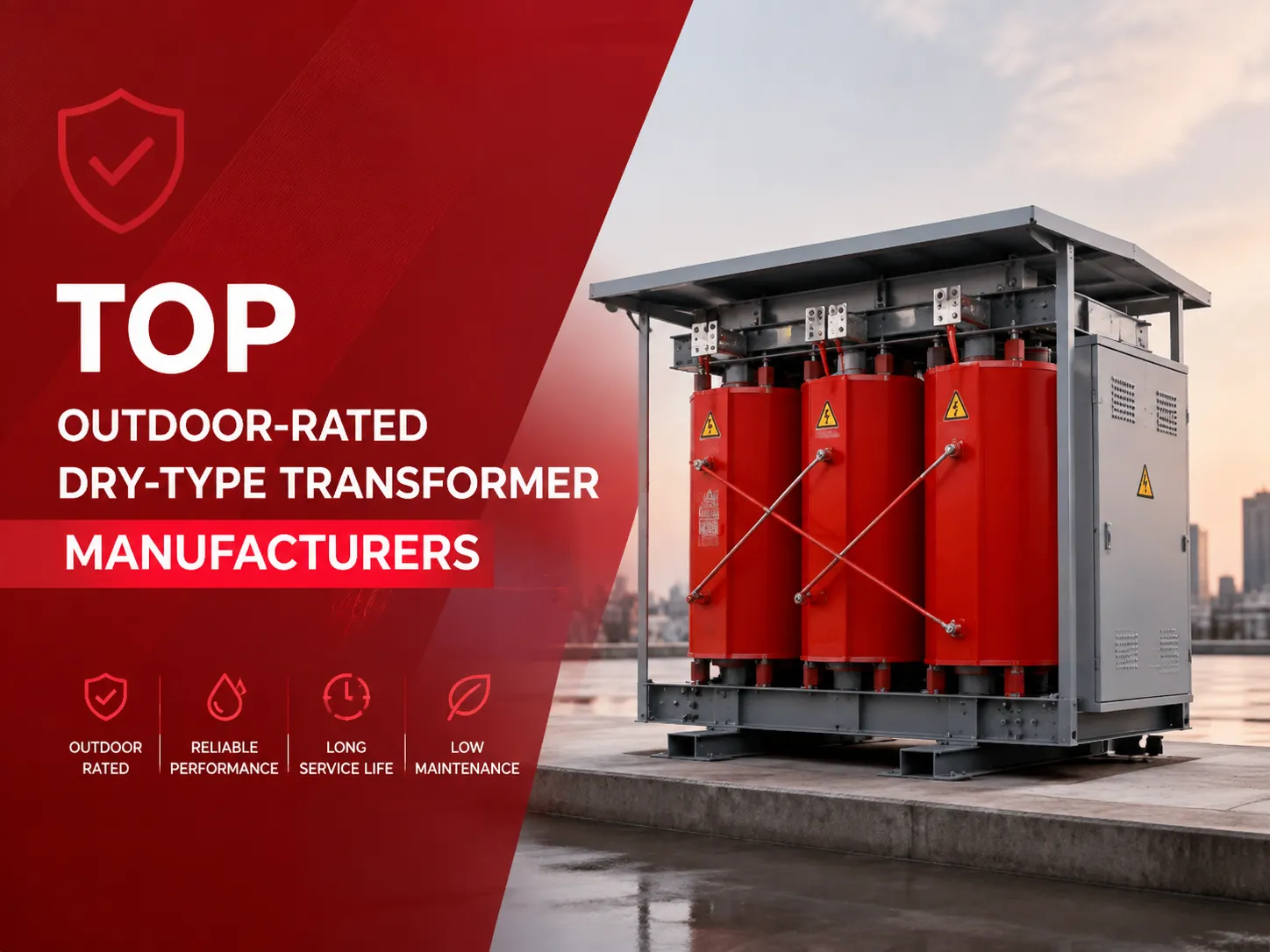
In Norway, a utility engineer selected a transformer for an outdoor substation located above the Arctic Circle, and his list of requirements was succinct but uncompromising. The transformer had to reliably start at -40 °C without using oil heaters, it needed to have no containment pit for rain, snow, or salt spray, and it needed to provide at least 10 years of reliable service without requiring dissolved gas analysis. The only transformer technology that met all three requirements was a custom built outdoor rated dry type transformer, specifically a cast coil unit with NEMA 3R enclosure (outdoor rated) and Class H insulation. His list of dry type transformer manufacturers that could deliver verified and certified outdoor transformers was short. This guide reviews the primary would-be manufacturers (and specifications for outdoor service) and provides information on how an outdoor transformer can/cannot be rated. It also describes how buyers can use this information to evaluate proposals against the specific requirements of outdoor installations.
What Makes a Dry‑Type Transformer Suitable for Outdoor Use?
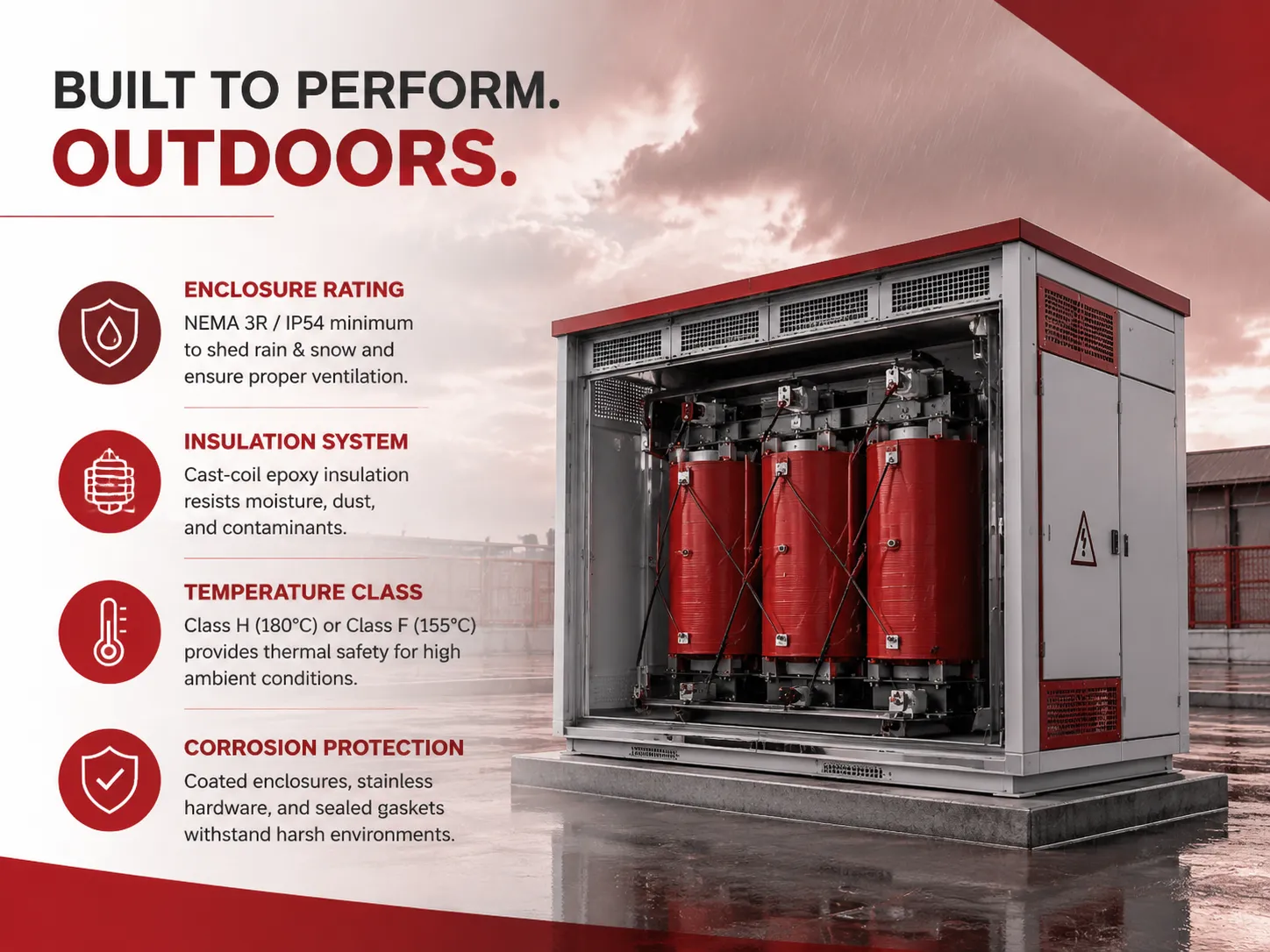
A dry-type transformer designed for use indoors must be able to tolerate moisture, dust, exposure to extreme temperatures, and exposure to ultra-violet (UV) rays without the benefit of an oil-filled container like those found in vertical liquid transformers. The characteristics that make a dry transformer acceptable for outdoor service are:
- Enclosure rating. The minimum acceptable rating for use in an outdoor environment is a NEMA 3R or IP54 rated enclosure. The enclosure should have the ability to shed rain and snow and allow for ventilation of air-cooled windings. If using in a marine/coastal environment, it may be necessary to use a NEMA 4X or a stainless-steel enclosure.
- Insulation system. The cast-coil winding, consisting of conductors fully encapsulated in epoxy resin, is impervious to moisture and contamination from the atmosphere. Therefore, this type of winding is best suited for outdoor dry-type applications. Although VPI (vacuum pressure impregnated) windings can be applied for outdoor use, they will require a more careful design of the enclosure if used in outdoor environments because of the less demanding nature of their application.
- Temperature class. Class H (180°C) and Class F (155°C) insulation systems offer the thermal safety margin required for outdoor solar loading and operation at high ambient temperatures when combined with the proper temperature rise above ambient.
- Corrosion protection. The enclosure and structure that a vehicle is built to withstand need to be built to meet the particular environment in which they will be located; e.g. coastal marine-type environments with salt spray or industrial weather exposure with acid rain or agricultural environments with ammonia. Common specifications include stainless-steel hardware, epoxy-coated tanks and sealed gaskets.
For a deeper understanding of how cast‑coil construction achieves the moisture and chemical resistance that outdoor service demands, our overview of dry‑type transformer types including cast resin and VPI explains the technology distinctions.
Leading Outdoor-Rated Dry-Type Transformer Manufacturers
Siemens (Germany) — GEAFOL Cast‑Resin
Core strength: GEAFOL Cast Resin Transformers manufactured by Siemens are among the most widely used dry transformers in the world. GEAFOL Transformers utilize proven epoxy resin encapsulation to resist moisture, dust, and chemical exposure; therefore, GEAFOL Transformers have become the preferred specification for all outdoor industrial and utility applications. Siemens offers NEMA 3R and higher-rated enclosures and has a worldwide service network.
Typical customers include utilities, industrial plants, and large-scale infrastructure projects seeking procuring internationally recognized companies with an extensive library of type tests.
Pricing is positioned as premium due to the company, engineering history, and worldwide support capabilities.
Hitachi Energy (ABB, Switzerland/Sweden) — RESIBLOC
Core strength: The RESIBLOC cast resin technology developed by Hitachi Energy was designed to be mechanically robust and withstand severe environmental conditions such as seismic activity and outdoor installations in coastal and industrial environments. The wound encapsulation has been successfully used in offshore platforms, mines and outdoor substations. Who typically buys this product?
Typical purchasers of this product will be heavy industrial, offshore oil and gas, as well as utilities engineer who needs documented evidence of outdoor usage under extreme climate conditions. How is this product priced?
The price for this product is considered to be at premium in addition to having strong performance capabilities in harsh environmental and seismic conditions.
Schneider Electric (France) — Trihal Cast‑Resin
Core strength: The Schneider Trihal cast resin transformer is manufactured to use as little energy as possible and have a small footprint (the overall exterior dimensions of a piece of equipment). The Trihal is also made with an outdoor enclosure that meets NEMA 3R and IP54 rating. The ECOstruxure platform by Schneider connects the transformer to a larger-building/treehugger based power control system.
Typical customer: Typical customers include commercial and light industrial facilities, data centres, and projects where energy efficiency and appreciation of smart-building type technologies are important in conjunction with outdoor weather conditions.
Price Positioning: The Schneider Trihal has an average price range to high price range compared to large global manufacturers of similar products.
Eaton (Ireland/USA) — Power‑Cast and VPI
Core strength: The North American market includes cast-coil and VPI Dry-Type Transformers manufactured by Eaton, with various outdoor housing types available. Eaton’s distribution system, their knowledge of the standards for utilities in North America, and their capacity to produce both technologies from one source are areas of strength.
Buyer focus: North American utilities, contractors building commercial vehicles, and facility managers running factories looking for local sources and manufacturers with extensive experience producing dry-type transformers.
Pricing: Moderate pricing as a mainstream North American manufacturer.
MGM Transformer (USA)
Core strength: MGM is a U.S.-based dry type transformer manufacturer. They specialize in the construction of dry type transformers with outdoor custom engineered units. Their strength is in their ability to respond quickly to requests for non-standard specifications and in their willingness to create one-off units for unusual outdoor applications. Larger manufacturers tend to refuse to build smaller quantities of custom transformers for these applications.
Typical customers include specialty industrial customers and utility customers that are looking for a custom designed outdoor dry type transformer, and who appreciate the accessibility to the engineering staff.
Pricing: Their pricing falls within the mid range of the industry. It is competitive with respect to both custom-built and special use units.
ShineGrand Electric (China) — Vacuum Cast‑Coil and Amorphous Core
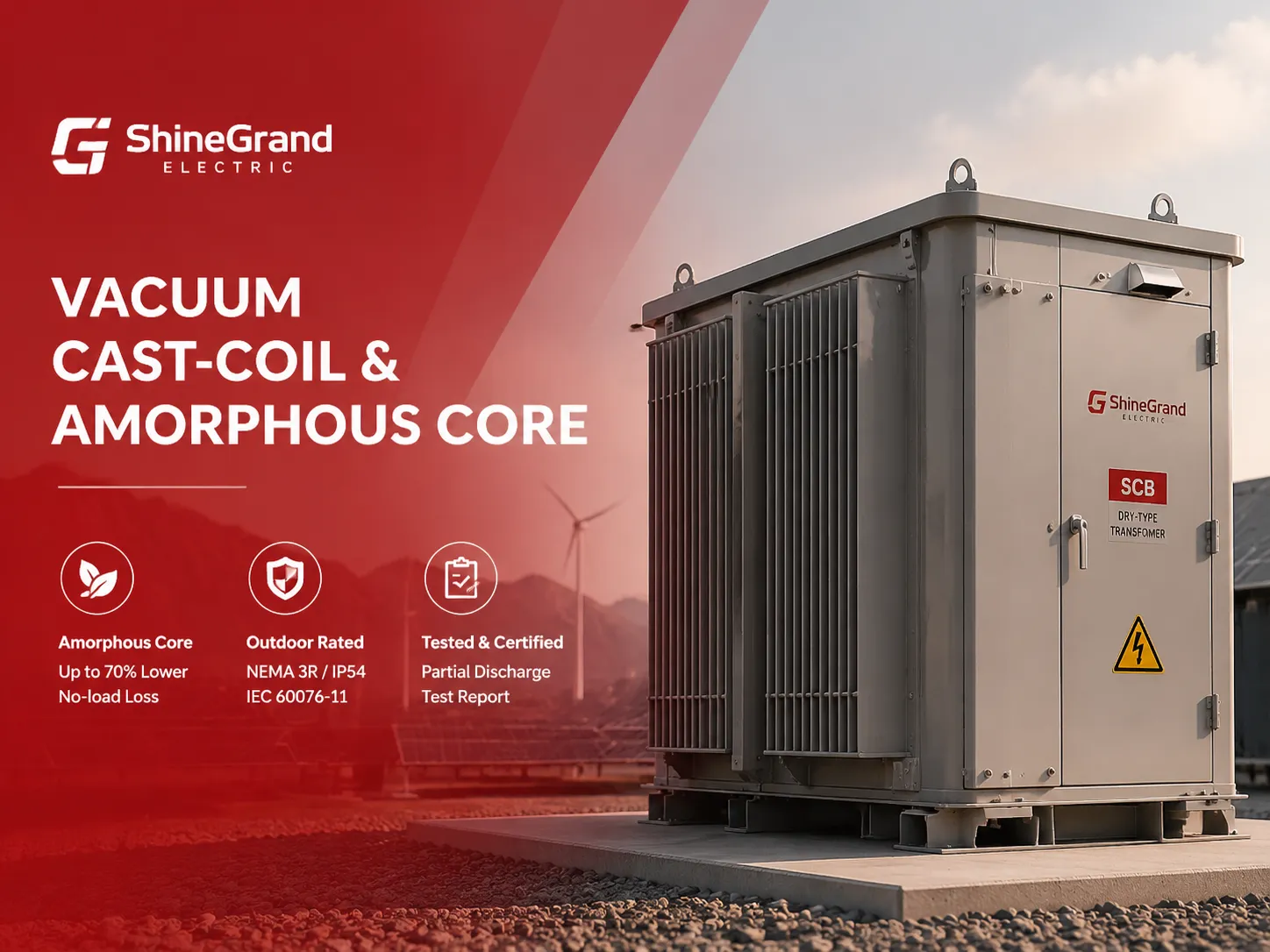
Core strength: ShineGrand Electric manufactures outdoor‑rated dry‑type transformers with cast‑coil windings, built to IEC 60076‑11 and IEEE C57.12.01 standards. For outdoor installations, ShineGrand offers NEMA 3R and IP54 enclosures, stainless‑steel hardware for coastal environments, and an optional amorphous alloy core that reduces no‑load losses by up to 70% — a feature that is particularly valuable for an outdoor transformer that is energised 24 hours a day. Our SCB series epoxy cast‑coil transformers are designed for indoor and outdoor service, with the ventilation, corrosion protection, and temperature rise that outdoor locations require. Every ShineGrand transformer ships with its routine test report, including partial discharge measurement, and the engineering team works directly with buyers to match the enclosure, the cooling, and the insulation class to the specific outdoor environment.
Typical buyer: Utilities, renewable energy developers, and industrial buyers who need an IEC‑compliant, competitively priced outdoor dry‑type unit with documented test data and a direct engineering interface.
Price positioning: Competitive mid‑range — certified quality and outdoor‑rated construction at an accessible price point.
What an Outdoor-Rated Dry-Type Transformer Costs
The cost of an outdoor‑rated dry‑type transformer reflects the kVA rating, the voltage class, the enclosure material, and the level of environmental protection. The table below provides indicative ranges for cast‑coil units with NEMA 3R enclosures, FOB factory, mid‑2025 pricing.
| kVA Rating | Primary Voltage | Typical Price Range (USD) |
|---|---|---|
| 100–300 kVA | 4160–13,800 V | $8,000–$22,000 |
| 500–750 kVA | 4160–13,800 V | $22,000–$50,000 |
| 1,000–2,500 kVA | 13,800–34,500 V | $50,000–$120,000 |
Options that increase the price include a stainless‑steel enclosure, a forced‑air cooling package, an amorphous alloy core, and a higher BIL rating. The cost of the enclosure alone can add 20–40% to the base transformer price, a premium that outdoor service cannot avoid. For help sizing the unit before requesting a quote, our transformer calculation table provides full‑load current values for all common kVA ratings.
How to Choose the Right Manufacturer for Your Outdoor Dry‑Type Transformer
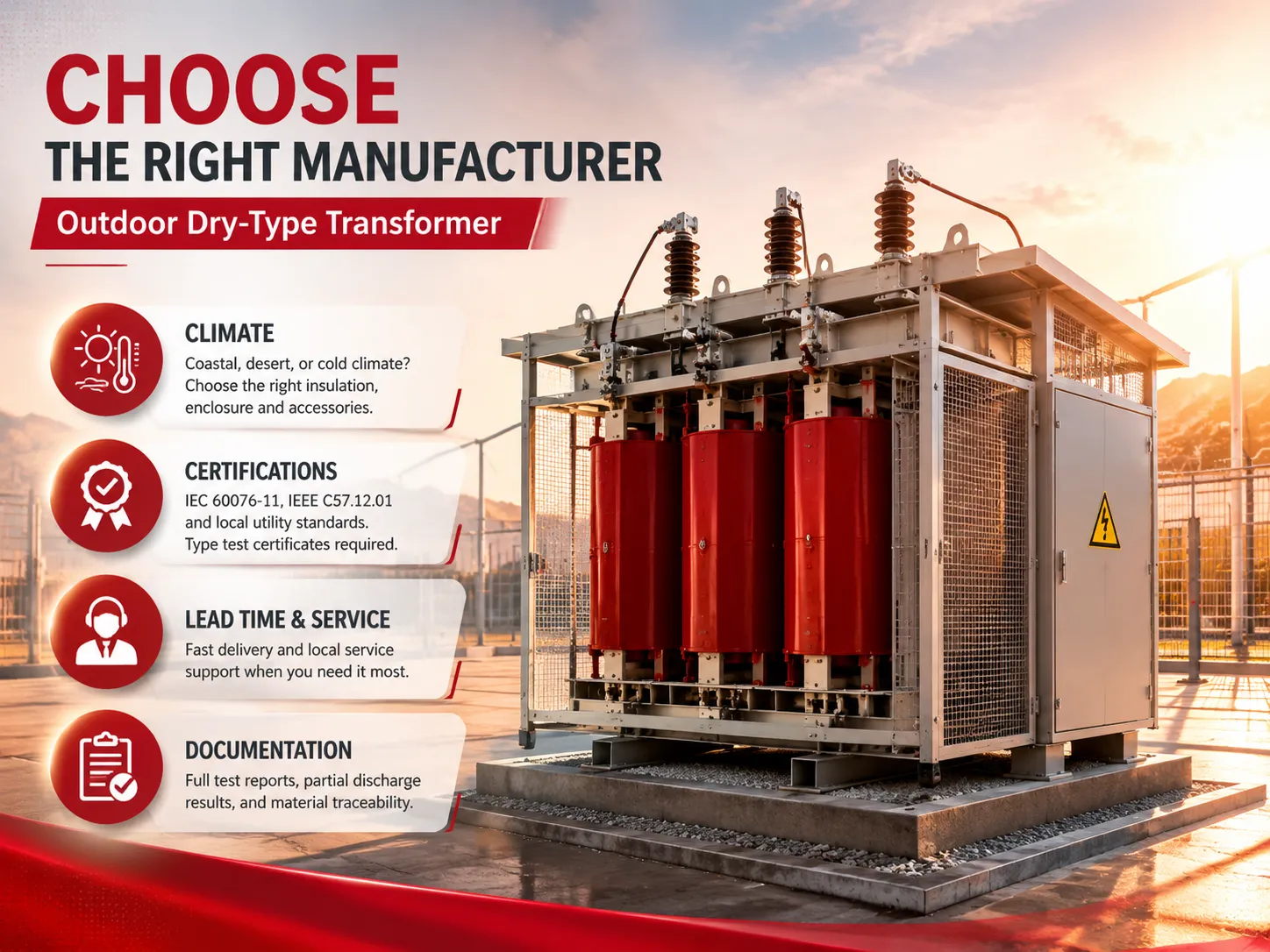
Choosing from the best outdoor-rated dry-type transformer manufacturers involves aligning the manufacturer’s design to the requirements that pertain to the site. These are the key questions for evaluating:
- What is the climate? Coastal installations will require corrosion-resistant cages/enclosures and an appropriate set of hardware. In a desert environment, we would need a high-temperature insulating system, and mitigation for solar loading. On the other hand, cold climate sites may require anti-condensation heaters or a lower rise in ambient temperature.
- What certifications are required? The design and manufacture must comply with IEC 60076‑11, IEEE C57.12.01 and applicable local utility standards. The manufacturer shall provide type test certificates and not merely a statement of conformity
- What is the lead time, and where is the nearest service support? An outdoor substation transformer that malfunctions in an isolated location should not be delayed several weeks waiting for a technician to travel from a long distance customer service facility.
- What documentation is included? Standard documents for test results, partial discharge measurements and material traceability should be available from all manufacturers. If a company does not freely provide test data, they should be removed from the list of considered vendors.
Frequently Asked Questions
What is the difference between an indoor and an outdoor dry‑type transformer?
In order to be deemed “outdoor rated”, dry type transformers must have a weatherproof enclosure (minimum NEMA 3R/enclosure – IP54), corrosion proof hardware, and an insulation system designed to withstand not only moisture, but also exposure to dust and Ultraviolet Light (UV). In contrast, an indoor transformer would generally be of a simple ventilated enclosure construction (no weatherproof); therefore, if exposed to rain or snow would likely be damaged very quickly.
Can a cast‑coil transformer be installed outdoors without a shelter?
A cast coil dry type transformer with a proper outdoor enclosure (NEMA 3R, IP54 or better) is intended to be directly installed outdoors without using a weather shelter. Cast Coil transformers use epoxy to encapsulate the windings (with the help of automated processes), thus creating a moisture-resistant winding that is an advantage of cast coil construction when compared to VPI windings for outdoor applications.
How long does an outdoor dry‑type transformer last?
A properly sized and maintained dry-type outdoor transformer typically has a service life of between 25 and 35 years, while many units can be reliably operated for 40 years or longer. The exterior of the unit and the thermal margin of the insulation system are the major contributing factors to reliability.
What maintenance does an outdoor dry‑type transformer require?
The annual upkeep of these systems includes cleaning out all the ventilation grilles and air-filter type devices, examining the other parts of the unit to ensure they are not corroding or having any issues with the sealants, making sure fans are working, and meggering the windings. A thermal imaging scan of the enclosure is done every couple of years, and this method can identify areas that may be hotter than expected at various connection points. There are no oils to sample and no gasses to analyse, which is one of the main benefits of dry-type technologies.
References
- Siemens Energy — GEAFOL Cast‑Resin Transformers — Manufacturer information on outdoor‑rated cast‑resin distribution transformers.
- Hitachi Energy — RESIBLOC Cast‑Resin Transformers — Dry‑type transformer technology for harsh and outdoor environments.
- Schneider Electric — Trihal Cast‑Resin Transformers — Low‑loss cast‑resin transformers with outdoor enclosure options.
- Eaton — Dry‑Type Distribution Transformers — Cast‑coil and VPI transformers for North American outdoor applications.
- MGM Transformer Company — Custom‑engineered dry‑type transformers for specialty outdoor applications.
The top outdoor‑rated dry‑type transformer manufacturers share a common capability: they can encapsulate a winding, enclose it in a weather‑resistant housing, and guarantee that the combination will survive rain, salt, dust, and temperature extremes for decades. The difference among them is in the depth of their type‑test library, the responsiveness of their engineering team, and the transparency of their factory test data. ShineGrand Electric builds outdoor cast‑coil transformers that meet these criteria, with the test documentation, the enclosure options, and the direct engineering support that turn a specification into a reliable, long‑term installation.