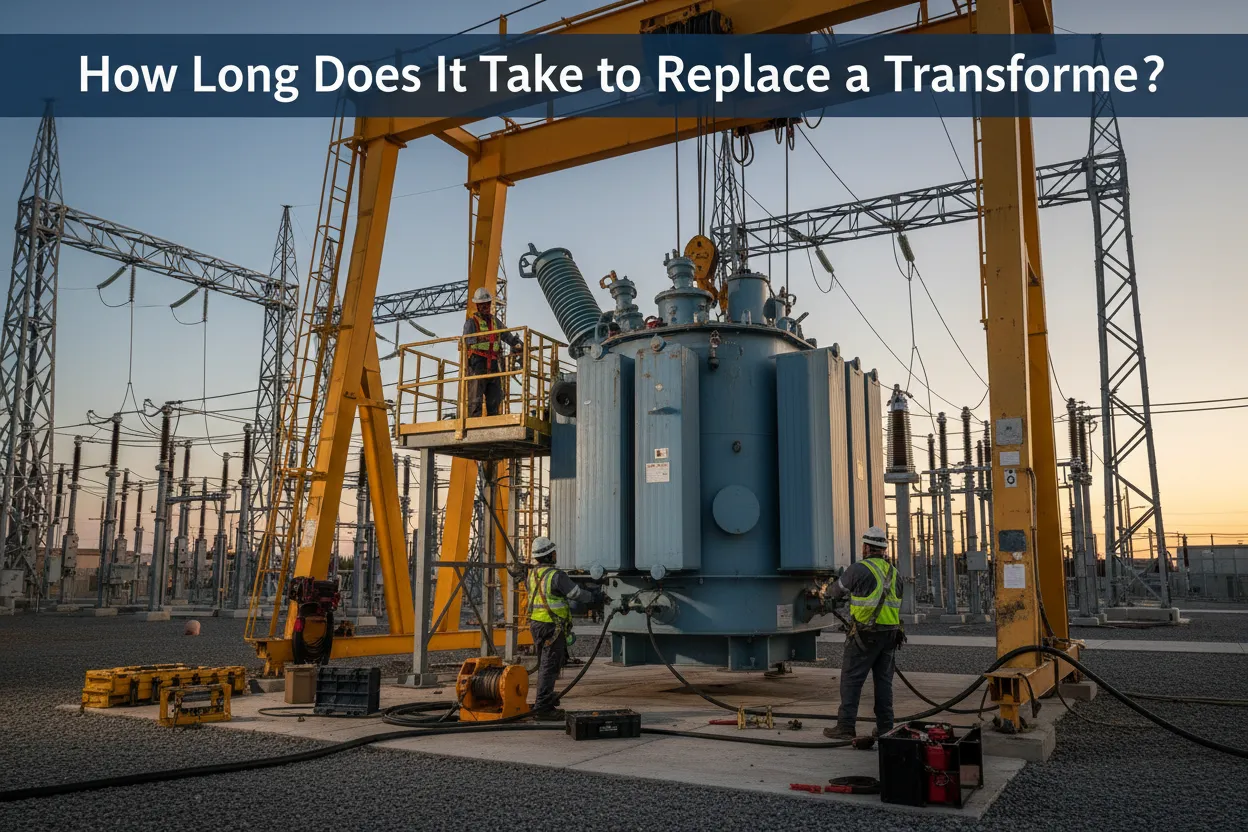
Would you want to wake up or come into work at an establishment where it is dark because power is out from a possible faulty transformer? You may wonder, “How long will it be until I have lights back on?” Answers will vary depending on the below items:
- Size of the Transformer
- Geography in which located
- Availability of Transformer Replacement Parts
Below is a description of Transformer Replacement Types (Size & Replacement Time, Signs of Replacing, Frequently Asked Questions; Homeowners & Commercial Owner).
Transformer Replacement Time Varies by Type & Size
Depending on the Size of the Transformer (Small or Large), there is an example of what to expect for the time needed to replace those Transformers below:
Residential Transformers (10-100 kVA)
Residential Transformers are typically supplied on a pole or in some cases are pad-mounted and serve a single residence or neighborhood. The time required to complete the replacement of Residential Transformers will take approximately 2–4 hours. At the conclusion of the job, you will have found that you have disconnected and removed the previous unit; connected the new unit; tested connections; restored power. However, if there are unique elements to delivering your residential unit (e.g., underground, or specialty equipment is needed), the job completion time could take all day.
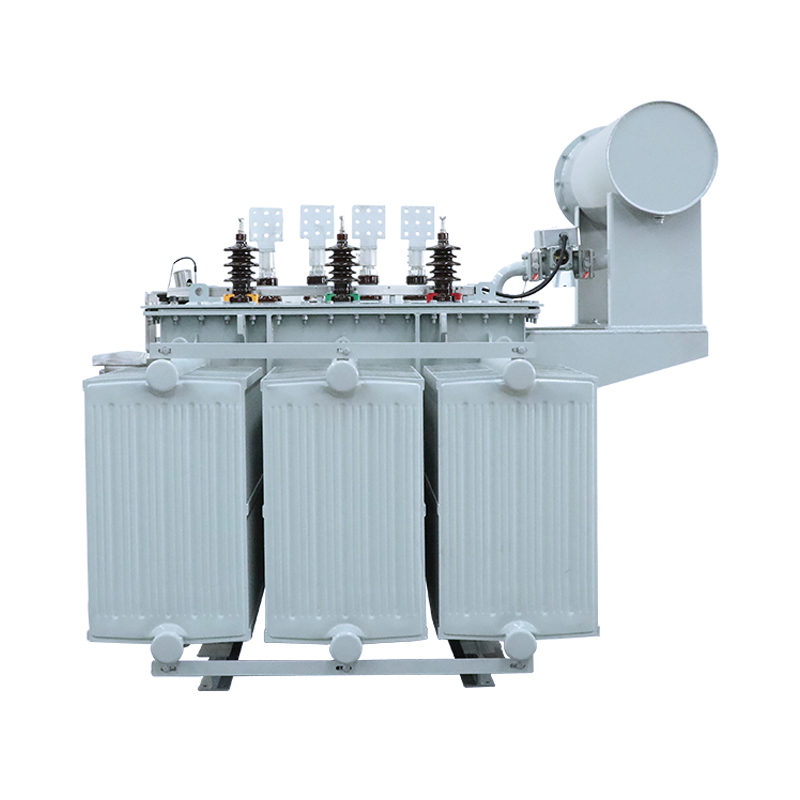
Commercial Transformers (50-500 kVA)
Commercial office buildings, retail establishments, and small factories utilize medium-sized transformers to provide power to light fixtures, HVAC systems, and equipment. The time required to replace Commercial Transformers will be approximately 4–8 hours. Transformer units that operate at a high capacity are often much larger and heavier than standard transformer units, with most requiring a crane for installation. In addition to the size of these units, the amount of cabling and safety protocols associated with an installation are also much more complicated, adding to the length of time it takes to install these units. Should replacement parts need to be ordered, this process could take anywhere from 1–2 business days.
Industrial Transformers (500+ kVA)
Manufacturing plants, data centers, and other industrial facilities typically rely upon industrial transformers that can weigh in excess of several tons and can deliver an enormous surge of power (500+ kVA). The replacement of an industrial transformer is a huge project that usually can take 1–3 business days to complete. Replacement time includes all preparation on the new site (including, for example, pouring a new pad, if required), coordination of delivery and installation of heavy equipment, and extensive testing of the new transformer to confirm its ability to meet the facility’s demand for electrical power. Depending on how fast it takes to build a custom high-capacity transformer, it may take weeks or longer to obtain a replacement transformer if the replacement parts are not on hand when needed.
Key Considerations That Increase Transformer Replacement Time
The replacement of an existing transformer can be delayed because of a number of factors that can negatively impact the replacement process (even for the same type of transformer). The most common factors impacting the replacement process include:
Replacement Part Availability: Most standard-sized transformers are kept in stock at local suppliers. However, if a transformer is custom-sized or a unit with a higher capacity, then the lead time to obtain replacement transformer parts can be as much as 3–10 business days. If the location of the transformer is rural, shipping times could also further delay the replacement process.
Site Accessibility and Weather Conditions: Site access and weather conditions frequently affect the installation of a replacement transformer. If the transformer is located in a confined space, such as a narrow alley or a basement, or heavy precipitation (rain, snow) or high winds are present when installation begins, the process will take much longer than would normally be the case. Transformers installed underground also require excavation work and restoration of site condition, which can add time to the schedule.
Permitting and Regulatory Approvals: Most commercial or industrial projects require obtaining permits from utility and/or building departments. Permitting can usually take 1–3 business days to obtain approval. Depending on the installation type, such as for high voltage systems, it can take longer.
Testing and Commissioning: Electricians must perform extensive testing to ensure proper safety and operation after installation of a new transformer. Additional testing is generally required with industrial transformers, including load testing and insulation resistance tests, which might take hours to complete.
When to Replace a Transformer: Signs of Damage & Life Expectancy
Knowing when to replace a transformer can help you prevent unexpected outages. The expected life of transformers is at least 20–30 years for residential applications and 15–25 years for commercial/industrial applications depending on maintenance and use. Here are some warning signs that indicate you may need to replace your transformer:
- Repeated power interruption from your home or building (trips of your circuit breakers).
- Unusual noises (buzzing, humming, or clicking) occur from your transformer.
- Visible exterior damage to the transformer (leakage of fluid, rust, or bulging of the case).
- Overheating of the transformer (burning smell or discoloration of the paint near your transformer).
- You are at the end of your transformer’s life; replacing it afterwards can be costly due to emergency repairs.

How to Extend the Life of Your Transformer: Maintenance Practices
Proper maintenance can greatly extend the life expectancy of a transformer and decrease the rate at which you must replace it. These four suggestions are recommended to maintain your transformer:
Follow the 80% Rule: To avoid overheating, a transformer should never be loaded beyond 80% of its rated capacity. For example, a 100 kVA transformer should not carry more than 80 kVA of continuous load.
Schedule Annual Inspections: Plan for an annual inspection of your transformer’s connections, oil level (if an oil-filled unit), and temperature by hiring a licensed electrician. A qualified electrician can identify small issues before they become larger problems.
Keep the Area Clear: It’s important to keep the area around the transformer clear of any vegetation, debris, or leaves to allow proper ventilation. Blocked airflow can result in a transformer overheating.
React Immediately to Unexpected Conditions: If you notice any unusual behavior or damage to your transformer, contact a qualified electrician for repairs right away. Addressing small problems promptly can prevent complete transformer failure and extended outages.
Choosing the Right Transformer: Cost & Capacity Guide
When selecting a replacement transformer, the size (capacity) and transformer style (single-phase or three-phase) will dictate the transformer’s long-term reliability. The factors to consider are:
Calculating Transformer Capacity: Use the 80% Rule to calculate the correct transformer capacity. Add the wattages of all your electrical devices to get the total amount of power you are using (this is your total load). Next, divide by 0.8, and this number will give you the minimum capacity needed for your new transformer.
Type Selection: Oil-filled transformers can be used for outdoor applications and typically last longer than dry-type transformers, which are better suited for use in indoor applications where there may be a fire hazard (such as data centers or hospitals).
Cost Range:
- Residential: $1,000–$3,000 for the unit, plus an additional $1,000–$3,000 for installation.
- Commercial: $5,000–$20,000 for the unit, plus $5,000–$20,000 for installation.
- Industrial: $20,000 to over $100,000 for the unit, with installation costs of $20,000 to over $100,000 depending on complexity.

FAQ: Common Questions About Transformer Replacement
How long will I be without power if the transformer blows?
For residential applications, power is usually restored within 2–4 hours once the replacement begins. For commercial and industrial applications, outages can last from 4 hours up to 3 days, depending on the size of the transformer and site conditions. In some instances, utility companies provide temporary generators to minimize time lost during critical operations.
What is the 80% rule for transformer loading?
The 80% rule states that you should not load a transformer beyond 80% of its rated kVA capacity. This provides a safety buffer to prevent overheating, reduce wear, and extend transformer lifespan. For example, a 200 kVA transformer should not carry more than 160 kVA of continuous load.
Is it easy to replace a transformer?
Replacing a transformer is not a DIY project. It requires working with high-voltage electricity, which is extremely dangerous without proper training and equipment. Only licensed electricians or utility company professionals are qualified to undertake transformer replacement safely and efficiently.
How long does it take to connect a new transformer?
Connecting a new transformer to the power grid typically takes 1–2 hours for residential units and 2–4 hours for commercial units. Industrial transformers may take 4–8 hours, as they require more complex wiring and testing to ensure full compatibility with the facility’s power system.
What causes a transformer to fail?
Common causes include overloading, lightning strikes, aging insulation failure, oil leaks, poor ventilation leading to overheating, and corrosion caused by exposure to moisture or chemicals. Regular maintenance can help prevent many of these issues.
The actual transformer replacement process can take anywhere from a few hours to days based on several factors (the size of the transformer, the location where it must be replaced, and the availability of new components) to perform the replacement. In most cases, residential customers will have their electricity restored within one day after replacement. However, large-scale and industrial transformer replacements may take significantly longer.
To minimize downtime and extend the lifespan of your transformer, follow the guidelines listed above: load your transformer at no more than 80% of the rated capacity, schedule annual inspections, and repair any damage immediately. When it comes time to replace a transformer, always hire licensed electrical contractors or utility personnel to ensure the job is done safely and efficiently. Understanding the replacement process and investing in routine maintenance will give you peace of mind, knowing that your home or business will have reliable electrical service for years to come.