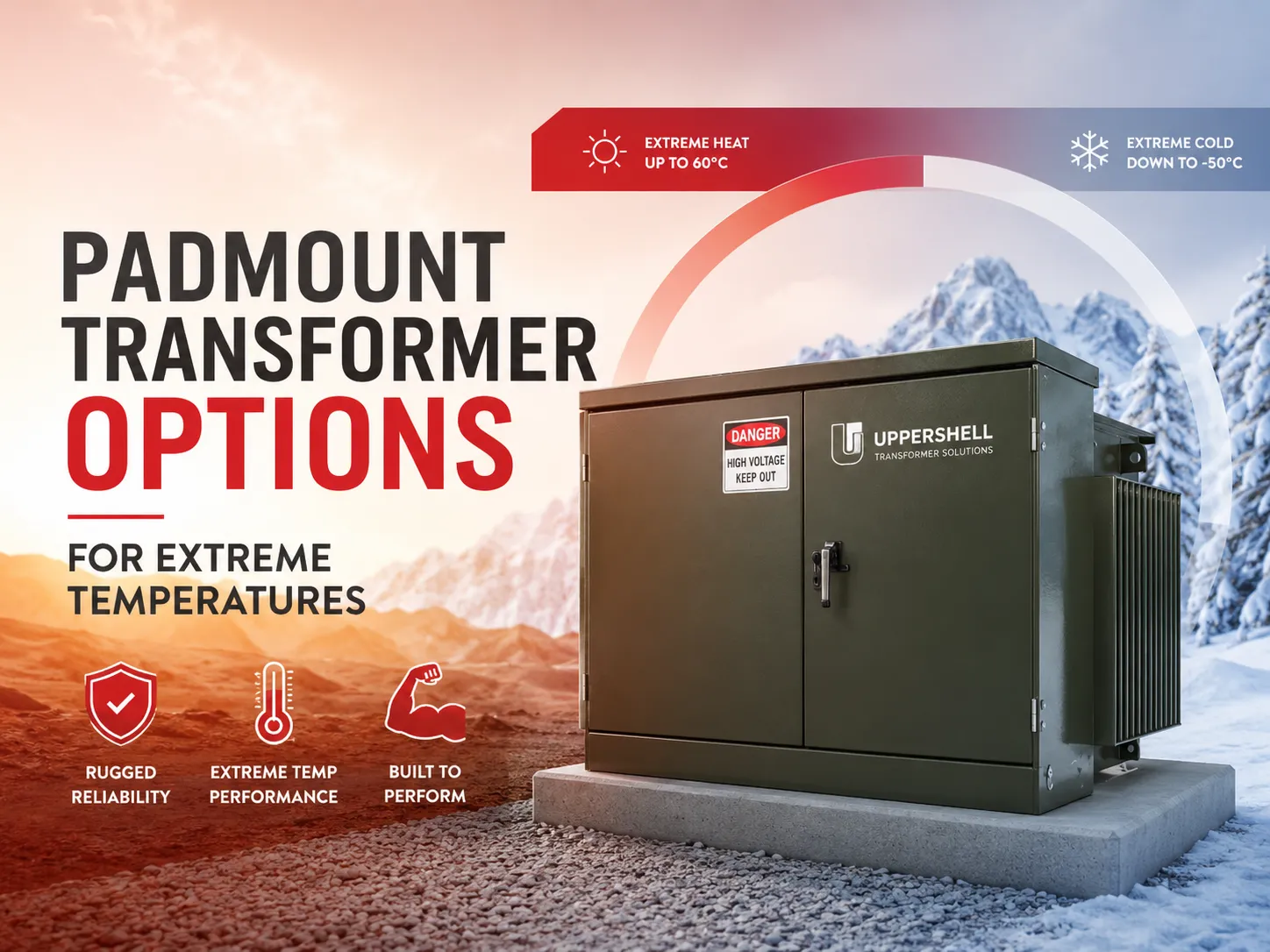
It is easy to specify a padmount transformer for a typical suburban subdivision; however, this is no longer the case when the same equipment has to survive the extreme heat of a desert solar farm or the extreme cold of a northern mining operation. Engineers take an entirely different approach when writing their Engineering Brief for an equipment selection when operating under extremely high or low temperature conditions as they will be evaluating extreme environmental temperatures from an operational perspective. The extreme temperatures experienced at the operating environment will attack the transformer from the inside out (i.e., breakdown of insulation and change in viscosity of the cooling fluid); the transformer will also experience accelerated aging processes for all chemical components due to the extreme temperatures. Therefore, when selecting the proper padmount transformer for use in these types of operating environments, it is critical to align the type of cooling technology, the specific insulation system, and any protective devices to meet both the worst-case ambient temperature experienced at the transformer and the rise in heat generated inside the transformer.
Understanding the Temperature Challenge for Padmount Transformers
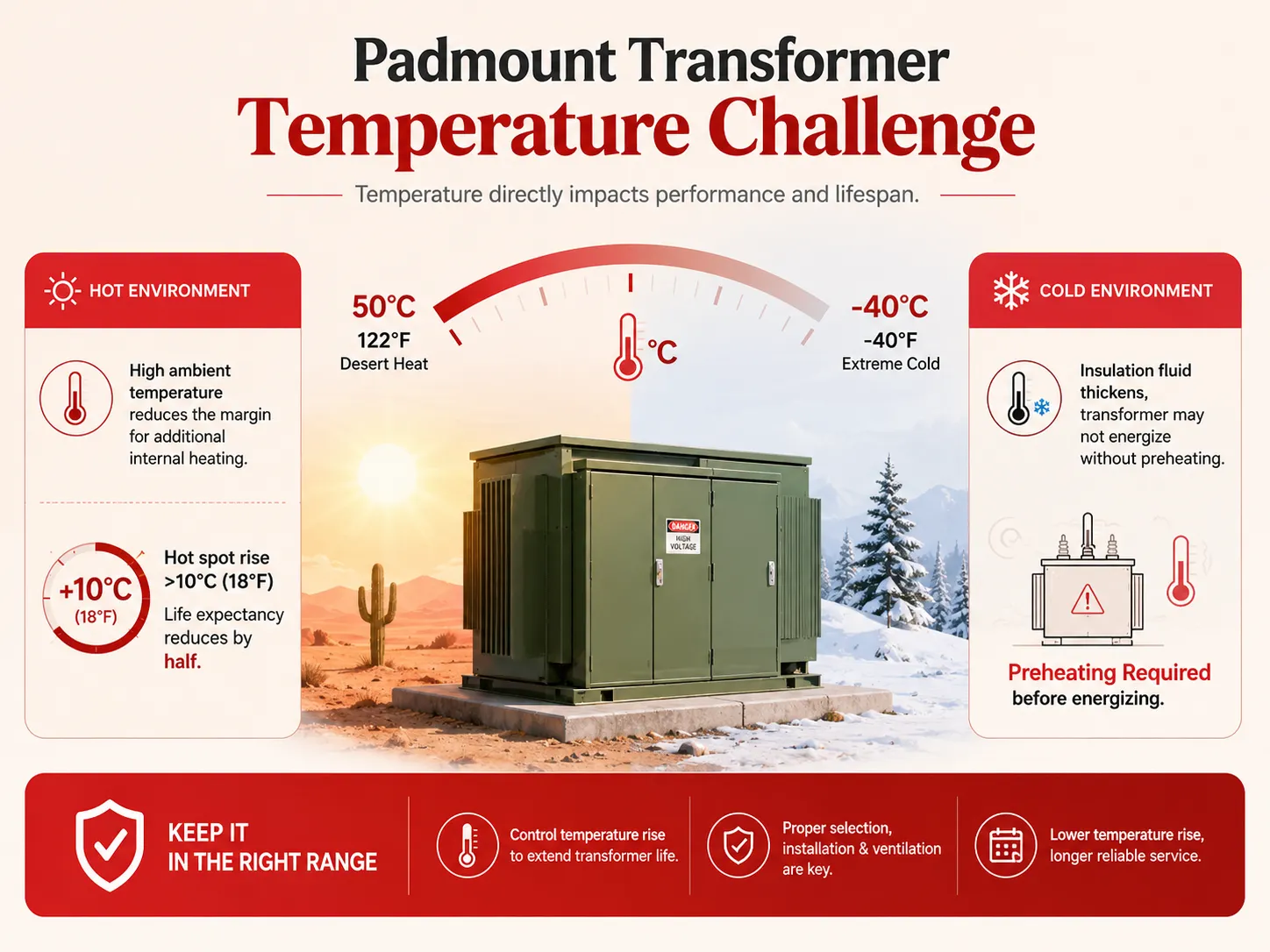
A transformer that is mounted on the ground (such as a pad mounted transformer) uses either an oil or dry type construction (cast coil). The transformer operates at an ambient air temperature and the temperature rise due to the electrical load. The electrical load temperature creates a heated spot temperature based on ambient air temperatures. For example, if the electrical load causes a heated spot temperature to exceed 10 degrees Celsius (°C) or 20 degrees Fahrenheit (°F), that will reduce the expected life of the transformer by half. If you are using a transformer in a desert where the ambient temperature is 50 degrees Celsius (°C) or 122 degrees Fahrenheit (°F), the potential for additional internal heating decreases. However, if you are using a transformer that has an insulation fluid filled inside, and you are in an ambient temperature of -40°C (-40°F), the insulation fluid will begin to thicken to a point where the transformer cannot energize until the transformer has been preheated.
Padmount Transformer Cooling and Insulation Options for High-Heat Environments
If passive air cooling isn’t effective in maintaining temperatures above 40C, you can use mechanical methods for cooling. There are many options to design for long-term hot operation.
- Typical mineral oil has a flashpoint of about 150 degrees Celsius (°C); however, for applications where extreme temperature exposure occurs, either synthetic esters or natural (vegetable) oils are preferred because they not only provide much higher flash.net and fire points than mineral materials, but also have greater capacity to absorb moisture without affecting dielectric strength. In addition to the aforementioned fluids. silicone fluids may also be used based on their superior thermal stability.
- Improved Fin & Fan Cooling: You can add larger radiator panels or forced fan cooling to liquid-filled padmount transformers so they lose heat at an increased rate. This increases complexity, but keeps internal temperatures inside design limits.
- Cast-coil dry-type technology: For applications where liquid containment is undesirable (such as near sensitive water supplies or in high-fire-risk zones), a dry-type transformer using cast-coil windings is a premium alternative. The epoxy-encapsulated windings offer inherent moisture and chemical resistance and can be built with Class H insulation (180°C rise) that withstands hotter internal temperatures. For a deeper look at why cast-coil units are increasingly chosen for harsh indoor and outdoor applications, our guide to best rated cast-coil dry-type transformer suppliers details the manufacturing and performance criteria that separate premium suppliers from the rest.
Cold Climate Solutions: Keeping a Padmount Transformer Operational at -40°C
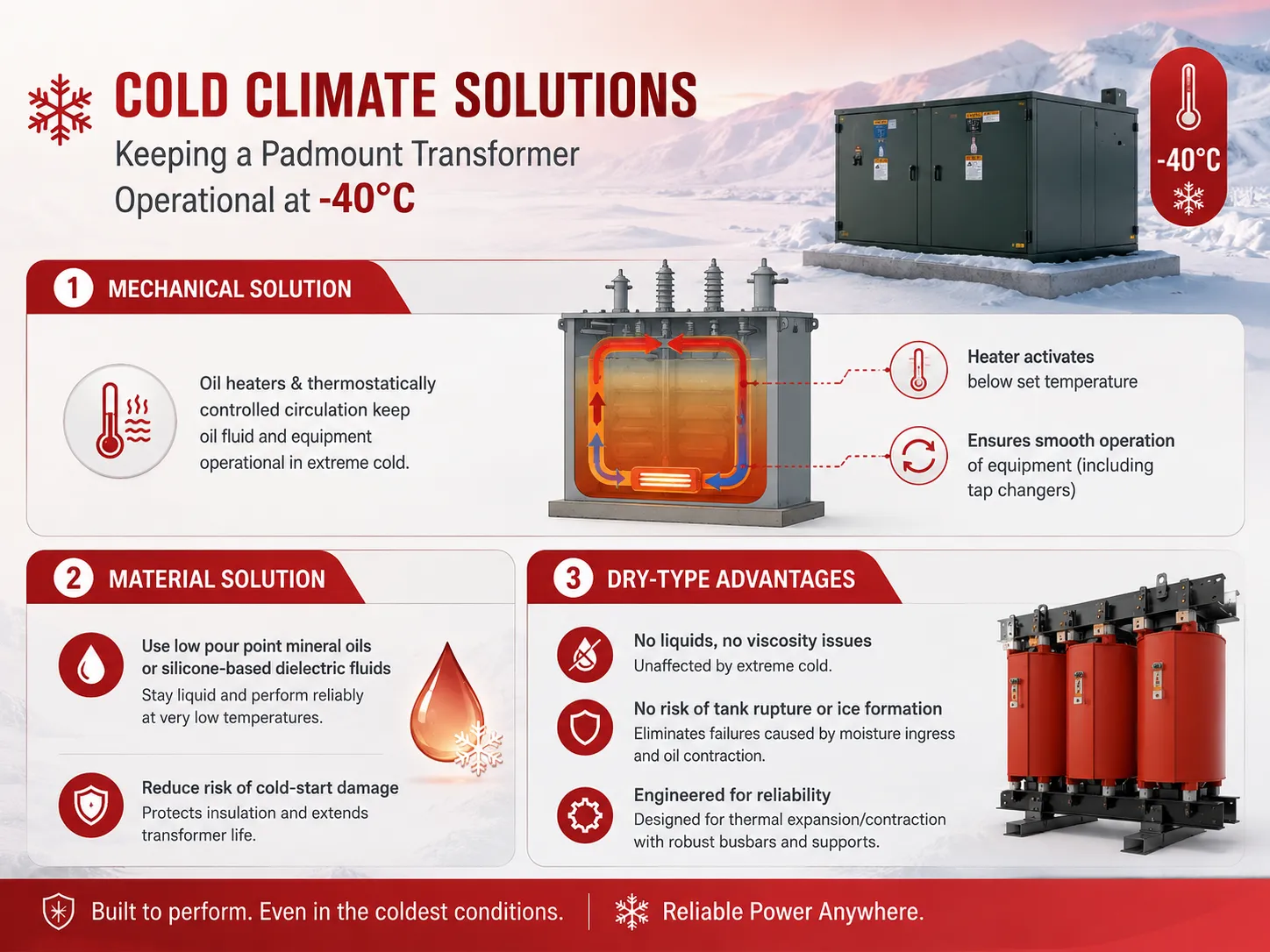
Severe cold has additional risk. Because the insulating oil in a traditional padmount transformer can thicken to the point where there is no longer sufficient cooling line to keep the machinery on (including tap changers) operational, there are two solutions: mechanical and material.
- Oil heaters & thermostatically controlled circulation (i.e., an element that heats oil in the tank) are set to operate when the oil temperature falls below a predetermined threshold. This practice is common for transformers that provide power to pumping stations located in arctic regions.
- Cold-start damage may be avoided by using special mineral oils that have a low pour point (for their intended use) or silicone-based dielectric fluids that continue to remain in the liquid state at very low temperatures.
- Due to the use of no liquids in dry-type transformers, there are no viscous issues. In addition, since there is no liquid in a dry-type transformer, there is no possibility of the tank rupturing as a result of cold contraction or ice forming as a result of moisture ingress, which is often an unnoticed cause of failure in badly sealed in liquid transformers. Dry-type transformers are also susceptible to thermal expansion and contraction of solid parts and compatible design of the busbars and their supports will be engineered by sufficiently experienced manufacturers.
Material and Design Upgrades for Extreme Thermal Cycling
Day-to-night variations between 30°C (or greater) create extreme thermal cycles experienced by all components. The mechanical fatigue generated can loosen connections and cause seals to crack. When specifying a padmount transformer designed to withstand extreme conditions, you must consider craftsmen as well as nameplate ratings:
- Thermal protection against a few years of overloaded use and extreme environmental conditions are given by Class F (155 degrees) and Class H (180 degrees) insulated systems.
- Stainless steel tanks and components provide a more durable solution in highly corrosive environments (such as coastal and industrial) because 316L stainless steel tanks will last as much longer as painted carbon steel in terms of the resistance to pitting.
- Flexible connectors and internal braces: They will accommodate repeated expansion/contraction, while not allowing for the loosening of bolted connections or fatigue in the bus work.

Monitoring Strategies for Unattended Extreme-Location Transformers
When a padmount transformer sits in a remote substation or at the edge of a solar array, frequent manual inspection is unrealistic. Integrating a remote terminal unit (RTU) that reports oil temperature, winding temperature, and pressure back to a SCADA system enables condition-based maintenance. For high-heat locations, dissolved gas analysis (DGA) devices can be mounted directly on the transformer to detect incipient thermal faults before they cause an unplanned outage. If you suspect your existing unit is already showing signs of thermal distress, our article on why transformers blow covers the early warning signs and the operating conditions that push a transformer beyond its thermal limits.
Sizing for Extreme Environments: Applying the 80% Rule
In any location where ambient temperatures are outside the standard 30°C average assumed by many sizing tools, the 80% rule becomes especially important. A transformer should not carry a continuous load exceeding 80% of its nameplate kVA. This headroom absorbs the extra thermal stress of a hot climate and the harmonic heating from modern non-linear loads. When in doubt, our transformer calculation table provides the full-load current numbers for common kVA ratings, making it easier to cross-check your load estimate before you specify.
How ShineGrand Supports Extreme-Environment Padmount Specifications
ShineGrand Electric routinely creates custom padmount transformer designs for difficult thermal conditions. We can design an ester-filled padmount transformer that uses forced-air cooling in a high ambient temperature, an anti-condensation heater-equipped dry-type cast-coil padmount transformer for use in a low ambient temperature, or a padmount transformer designed to operate within a 316L stainless steel enclosure in a highly corrosive coastal environment. With the site-specific data provided regarding the ambient conditions and loading, our engineering team provides the most suitable transformer design to accommodate the requirements of an extended safe thermal envelope. Our factory test reports provide temperature-rise data based on simulation to provide documented assurance that your transformer will operate as expected at the installation site.
Frequently Asked Questions
What is the maximum temperature for a transformer?
The maximum temperature allowed depends on the insulation class of the transformer. For standard liquid-filled (padmount) transformers, the maximum temperature rise of the hottest winding is 65°C above a 40°C ambient temperature (relative to an ambient temperature of 105°C). However, new thermally engineered transformer designs can accept higher temperatures. For dry-type cast-coil designs with Class H insulation, the maximum permitted temperature rise of the transformer is 180°C (thereby permitting the internal temperature to reach 220°C) before the design exceeds the safety factor. Always check the transformer nameplate. The maximum ambient temperature for most designs is rated at 40°C, but transformers designed for extreme environments may be suitable for higher ambient temperatures with appropriate derating.
What are common problems with Padmount transformers?
Typical problems with electrical equipment are the failure of gaskets to maintain their view and electric power loads exceeded the maximum allowed load (80%). Other contributors to electrical equipment failure include animal intrusion, which leads to short-circuiting the equipment. In extreme temperatures, there are also additional problems, such as a thickening of the insulating oil due to low temperatures, preventing the unit from energizing safely unless it has been preheated, and high temperatures accelerating the aging of the insulation, causing internal pressurization within the equipment. Thermal imaging and laboratory analysis of the oil contained in the equipment can typically identify potential failure points prior to complete equipment failure.
What is the NEC code for pad mounted transformers?
In the US National Electrical Code NEC Section 450 governs Transformers with Sections 450.21 through 450.27 addressing specifically Padmount Transformers. These Sections address clearances, fencing and access to pads. When it comes to Installation Outdoors in extreme temperatures, Local Authorities can impose additional Utility Standards due to NEC 110.3 (B), which requires you to install Equipment per the Listing, so use the Manufacturers ambient temperature range as guide.
What is the 80% rule for transformers?
A practical way to load a transformer continually is to not exceed its rated capacity on a consistent basis by 80% of its nameplate kVA rating. An 80% operating reserve protects the transformer insulation from premature thermal breakdown due to overheating, accommodates load growth or increases in current flow from harmonics (when current waveforms are not pure sine), and provides extra capacity to handle hotter than normal operating conditions due to very high ambient temperature levels during the hottest days of the year. When the unit will be operating in extreme temperature environments, compliance with the 80% rule becomes even more critical because the baseline ambient temperature would already be elevated.
Specifying padmount transformer options for extreme temperatures is not a matter of choosing a standard catalog number with a slightly higher kVA rating. It requires a deliberate analysis of the cooling medium, the insulation system’s thermal class, the tank and hardware materials, and the monitoring infrastructure that will track the unit’s health when it sits in a remote, harsh location. By matching the transformer’s thermal envelope to the site’s worst-case conditions — and then building in margin — you secure reliable performance for decades. ShineGrand Electric brings the engineering focus and manufacturing discipline to deliver padmount transformers that perform when the weather is anything but standard.