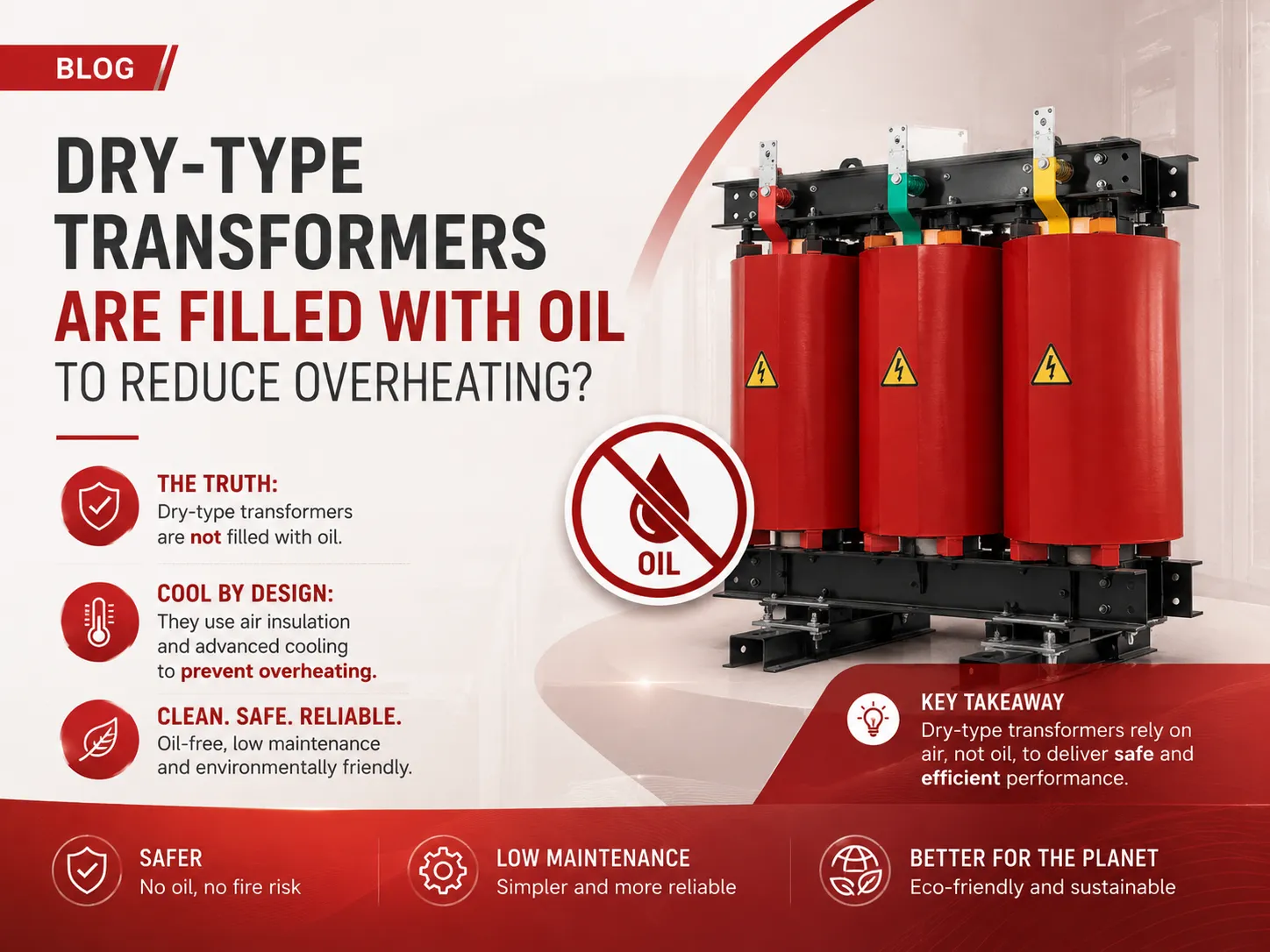
Anyone who has worked with electrical devices has heard the common myth that dry transformers contain oil in order to cool the unit down. For many people, this seems reasonable since a large number of conventional-style transformers utilize an oily-type substance as a method to provide cooling. The fact is that a dry transformer will NOT contain any form of liquid oil. The cooling method for the windings of a dry transformer is the ambient air at the time of operation and not a fluid dielectric. Understanding this will affect not only how the equipment will be classified from a fire safety standpoint, but also how the equipment will be installed, as well as what types of maintenance are required for you to provide or perform on the unit.
Why Do People Confuse Dry-Type and Oil-Filled Transformers?
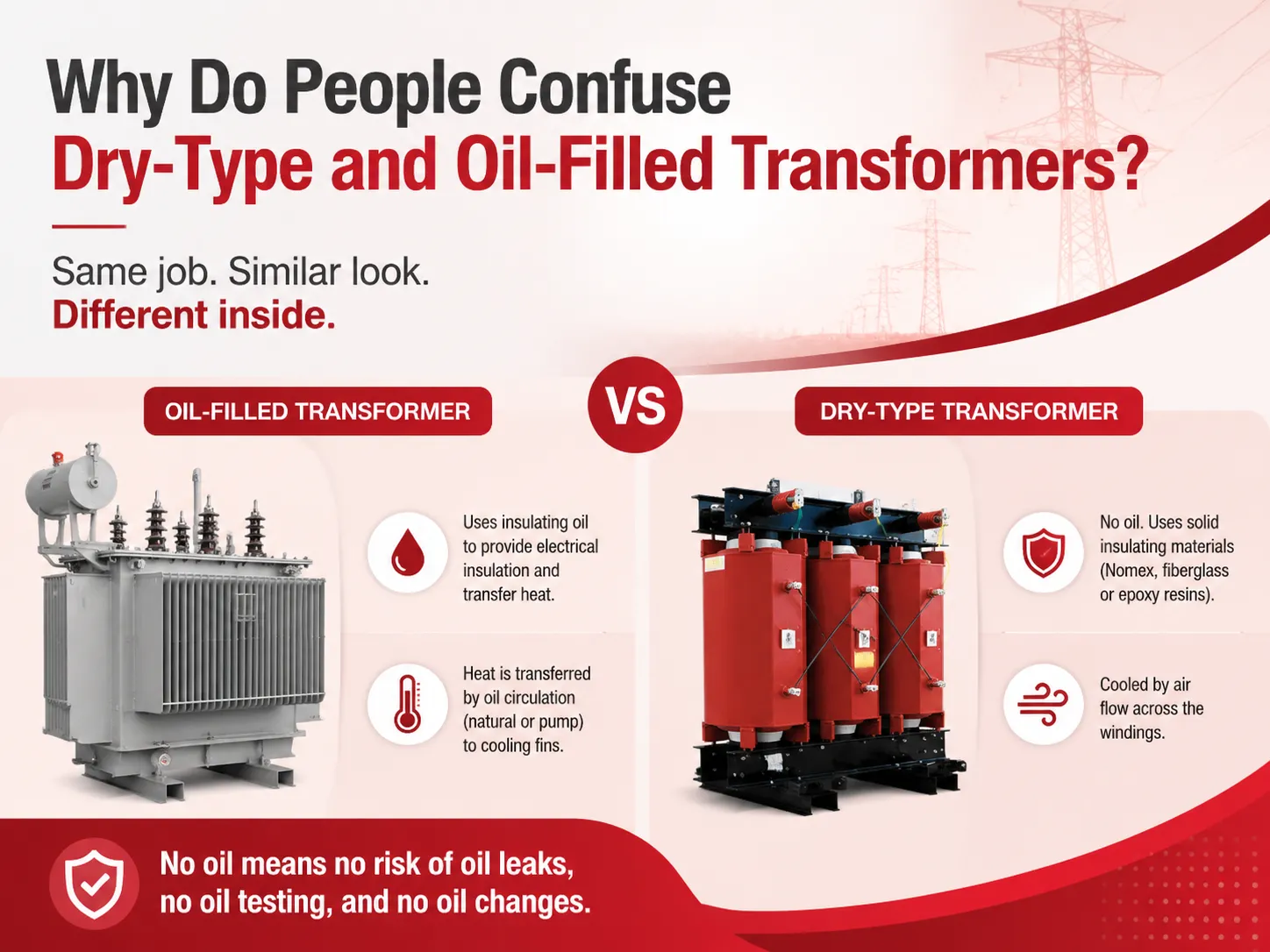
Both types of transformers have the same basic operating principle, that is to step voltage up or down, as well as being very similar from a physical standpoint; in most cases both are an all-metal enclosure with either ventilated openings (made up of cooling fins) or a form of gas or forced air cooling. What makes them differ from each other is their internal components. An oil-filled transformer submerges the transformer core and windings in electrically-insulating oil, which has two functions: to provide electrical insulation and provide for the transfer of heat. The oil will circulate either naturally by gravity or by circulating pumps, transferring heat from the transformer windings into the transformer tank and to the heat sinks outside of the transformer. A dry-type transformer does not have any oil since it relies on the insulating materials used to mechanically insulate the individual transformer windings (e.g., Nomex, fiberglass or epoxy resins) and for cooling, air flowing across the outside of the transformer windings. Thus, there is no chance for there to be any possibility of an oil leak or for any oil to need to be tested and/or changed. The fact that there is no oil in a dry-type transformer is the entire reason that dry-type transformers are designed that way.
How Are Dry-Type Transformers Actually Cooled?
Since a dry transformer does not have any oil to conduct heat away from it, the way that a dry transformer uses air for cooling and the thermal design of the windings is what determines how well it will cool. The primary methods of cooling a dry transformer are as follows.
- natural air convection (also called nat. conv.); This is the simplest technique to move air through an enclosure(s). The enclosure contains ventilation openings at the top and bottom. Cooler ambient air enters through the bottom of the enclosure(s) and flows over the hot windings as it exits through the top of the enclosure(s). There are no fans or moving parts used in this method. It is used primarily in small- to medium- kva-sized units that are operated in indoor, clean, and dry environments.
- The heat transfer rate of a transformer is increased significantly by using fans attached to the outside or close to the inside of the transformer, to blow air through the coils. The kVA rating of a transformer will be based on two ratings; one for natural cooling and another for using forced air. For example, a 500 kVA AA / 625 kVA FA indicates that the transformer can carry 25% more load with the fans on than when they are off.
- The encapsulation of cast coils, aka ‘total encapsulation’, uses a form of dry type transformer technology that is considered ‘premium’. High voltage windings are fully 100% encapsulated in epoxy resin to avoid a potentially dangerous situation due to moisture or other environmental contaminants. The resin is solid (no voids) which means that the resin provides an excellent medium for heat transfer from the conductors to the exterior of the coil and the very large ducts containing the vertical baffles ensure that the flowing air removes the transferred heat from the exterior of the coil to the atmosphere surrounding the transformer. Encapsulated dry type transformers are used in industrial applications, commercial & residential applications where fire codes are extremely restrictive with respect to smoke and flames (hospitals, data centers, subway systems & etc..).Our article on the best rated cast-coil dry-type transformer suppliers explains what separates a quality cast-coil unit from a commodity dry-type design.
What Is the Purpose of a Dry-Type Transformer?
A dry-type transformer provides voltage transformation without fire risk and without liquid confinement. Because it does not use oil, there is no leakage risk to the ground, no need for a containment pit or bund, and no potential for ruptured tanks to leak hot oil into the surrounding area. This makes dry-type transformers the preferred choice for indoor installations, especially in high-rise buildings where oil-filled transformers must be installed only in dedicated fire-rated vaults or in locations with strict environmental requirements. Additionally, maintenance is easier because there are no annual oil sampling requirements, no need for dissolved gas analyses, and no issues with moisture getting into the transformer through desiccant breathers. For a deeper comparison of transformer construction technologies, our overview of dry-type transformer types including cast resin and VPI lays out the full family of non-liquid-cooled designs.
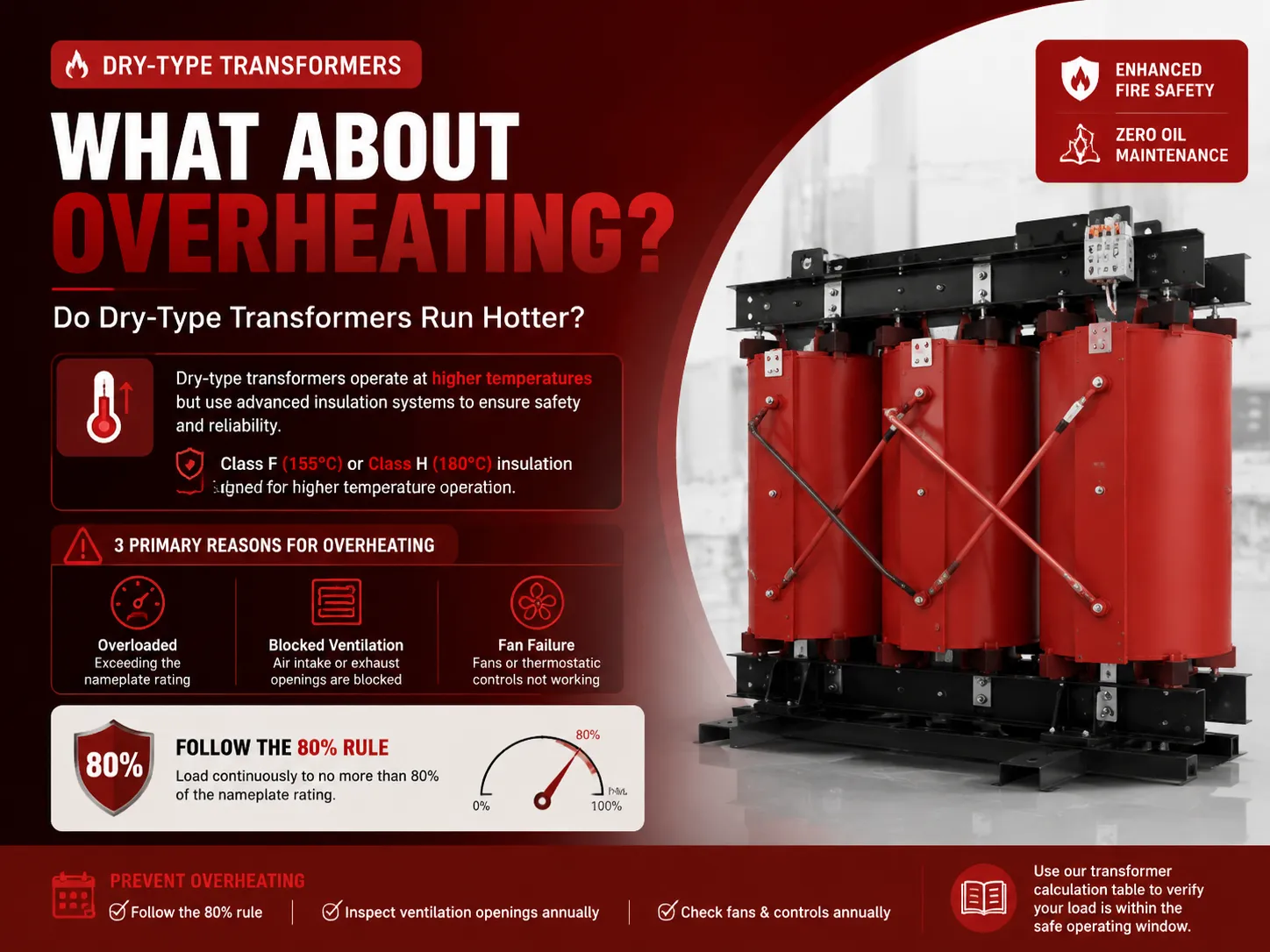
What About Overheating? Do Dry-Type Transformers Run Hotter?
Transformers that do not use oil for thermal absorption and transfer have been proven to operate at higher temperatures within the transformer than equivalent kVA oil-filled transformers. Therefore, the insulation system used on those types of transformers is specifically designed to withstand the higher temperature operation of dry-type transformers. Today, Class F (155C) or Class H (180C) insulation systems are used on most modern dry-type transformers, allowing the dry-type windings to operate safely at temperatures where the cellulose insulation in the oil-filled transformer would be deteriorated. The trade-off higher operating temperature for zero oil maintenance and enhanced fire safety, is one that many engineers are willing to accept, especially when the design of fire suppression systems for indoor installations is based around the operation of dry-type equipment.
There are three primary reasons for overheating in a dry transformer: the transformer has been overloaded beyond its nameplate rating, there are blocked ventilation openings, or there has been fan failure in a forced-air cooled unit. By following the 80% rule – which states that you should load your transformer continuously to no more than 80% of the nameplate rating — you will likely avoid the first issue. One way to help avoid the second cause of overheating is to perform a visual inspection of the air intake and exhaust grilles at least once per year. Finally, an annual inspection of the fans and the operation of the thermostatic controls for each fan will assist in identifying if the third occurrence is present. Our transformer calculation table gives you the full-load current numbers to verify that your load is within the safe operating window.
Oil-Filled Transformer Cooling: A Brief Reference
In addition to understanding dry-type transformers, it is also important to know about oil-filled transformers. Oil-filled transformers can use mineral oil, natural ester oil (vegetable-based), or synthetic ester fluid as the insulating medium. Mineral oil is the most common and is low cost, providing excellent dielectric strength and good heat transfer. Natural esters have a higher fire point and are biodegradable, making them useful in outdoor applications near other environmentally sensitive items. Silicone fluids are very thermally stable and can be used in high-temperature applications. All of these fluid options have no application in a dry-type transformer, and the presence of a fill port or drain valve means it cannot be a dry-type transformer, no matter what the manufacturer’s label may say.
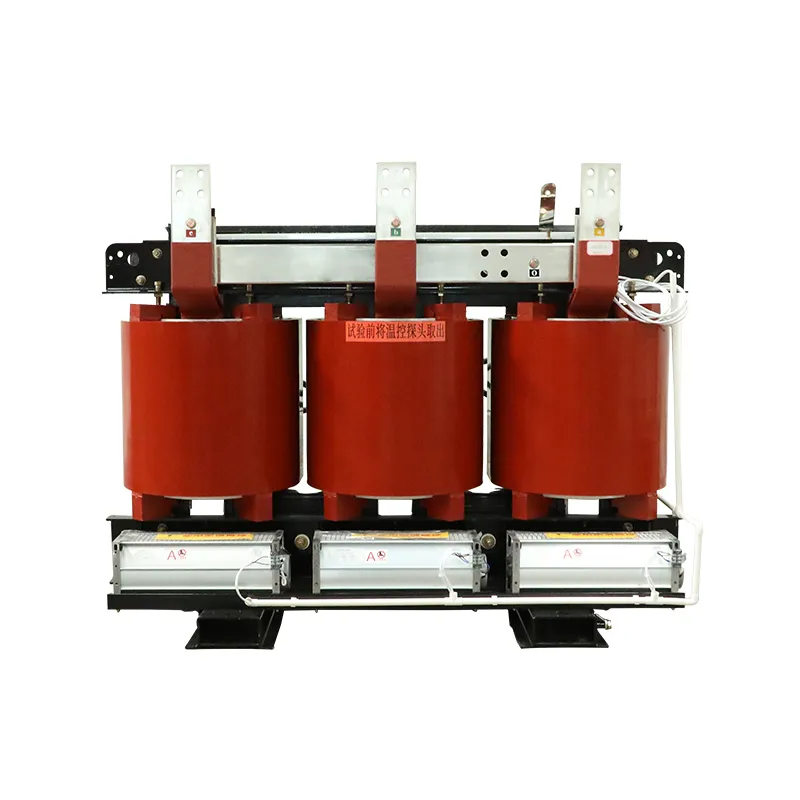
How ShineGrand Helps You Match Cooling Technology to Your Application
The manufacturing of dry-type transformers (including cast-coil and VPI) as well as liquid-filled transformers is done by ShineGrand Electric and our engineering team will assist you in selecting how best to implement your installation. In the case of an indoor application or where occupancy is present in close proximity or where fire safety considerations and zero liquid containment are critical; we will guide you toward selecting an air-cooled dry-type transformer with the appropriate insulation class, ventilation requirements and optional forced air cooling. On the other hand, if your load profile has an increased thermal mass or overload capability that can only be offered by means of a liquid-filled transformer, we will design your unit for the proper tank configuration and selected fluids. Regardless, our recommendation will be based solely on available facts (and the facts are that dry-type transformers have never been manufactured with any type of fluid to prevent overheating.)
Frequently Asked Questions
Are dry type transformers filled with oil to reduce overheating?
There are no oils used in dry-type transformers. Dry-type transformers are an air-cooled device, either through natural convection or forced air from the use of fans. The term “dry-type” specifically refers to insulating the windings with solid materials (epoxy resin, Nomex, fiberglass) and relies on air for cooling rather than using a liquid dielectric to perform the same function. The notion that “dry-type transformers are filled with oil to prevent overheating” is incorrect; an oil-filled transformer is not considered a dry-type transformer due to its use of an oil in its structure.
How can dry type transformers be cooled?
Transformers that use air for cooling are called dry-type transformers. Smaller dry-type transformers rely on natural convection (the normal movement of warmer air rising) to cool them. However, larger dry-type transformers typically use fans to force air past the transformer winding and cool the transformer via forced-air cooling.
In cast-coil dry-type designs, the heat flows through the epoxy encapsulation and to the surface of the coil, where built-in cooling ducts permit air to flow through them to dissipate the heat. Adequate ventilation of contained units is a must; blocked air intakes/exhausts will result in overheating regardless of the impairment or method of cooling employed.
What is the purpose of a dry type transformer?
A dry-type transformer serves the purpose of providing electrical transformers in geographic areas where fire safety, environmental concerns, and minimal maintenance are given top priority. Dry type transformers do not have insulating oil making them free of oil leaks. This provides zero containment and does not have to worry about containing the transformer; therefore, there is significantly less fire load associated with dry-type transformers compared to oil-filled transformers. Because of these facts, dry-type transformers have become the transformers of choice for indoor applications such as high-rise buildings, hospitals, data centers, and/or environmentally sensitive locations.
What type of oil is used in transformer cooling?
In oil-filled transformers, the insulating fluid can be mineral oil, natural ester (vegetable-based) oil, or synthetic ester. Of these fluids, mineral oil is the least expensive and most widely used. Both natural esters and synthetic esters have high fire points and are biodegradable. However, silicone fluids are used in some specialized applications because they have good thermal stability. Whereas oil-filled transformers use some type of liquid to cool them, dry-type transformers only use air to cool down.
The idea that dry-type transformers are filled with oil to reduce overheating is a persistent but entirely false statement. Dry-type means exactly what the name implies: no liquid dielectric, no oil sampling, no containment requirements, and cooling provided by air moving over solid‑insulated windings. Understanding this distinction correctly informs every decision downstream — from where you can install the unit to how you maintain it over its decades of service. At ShineGrand Electric, we build both dry-type and oil-filled transformers with the same commitment to transparency, so you get a transformer matched to your application, supported by clear factory test data, and designed to stay within its thermal envelope without relying on any mythical hidden oil.