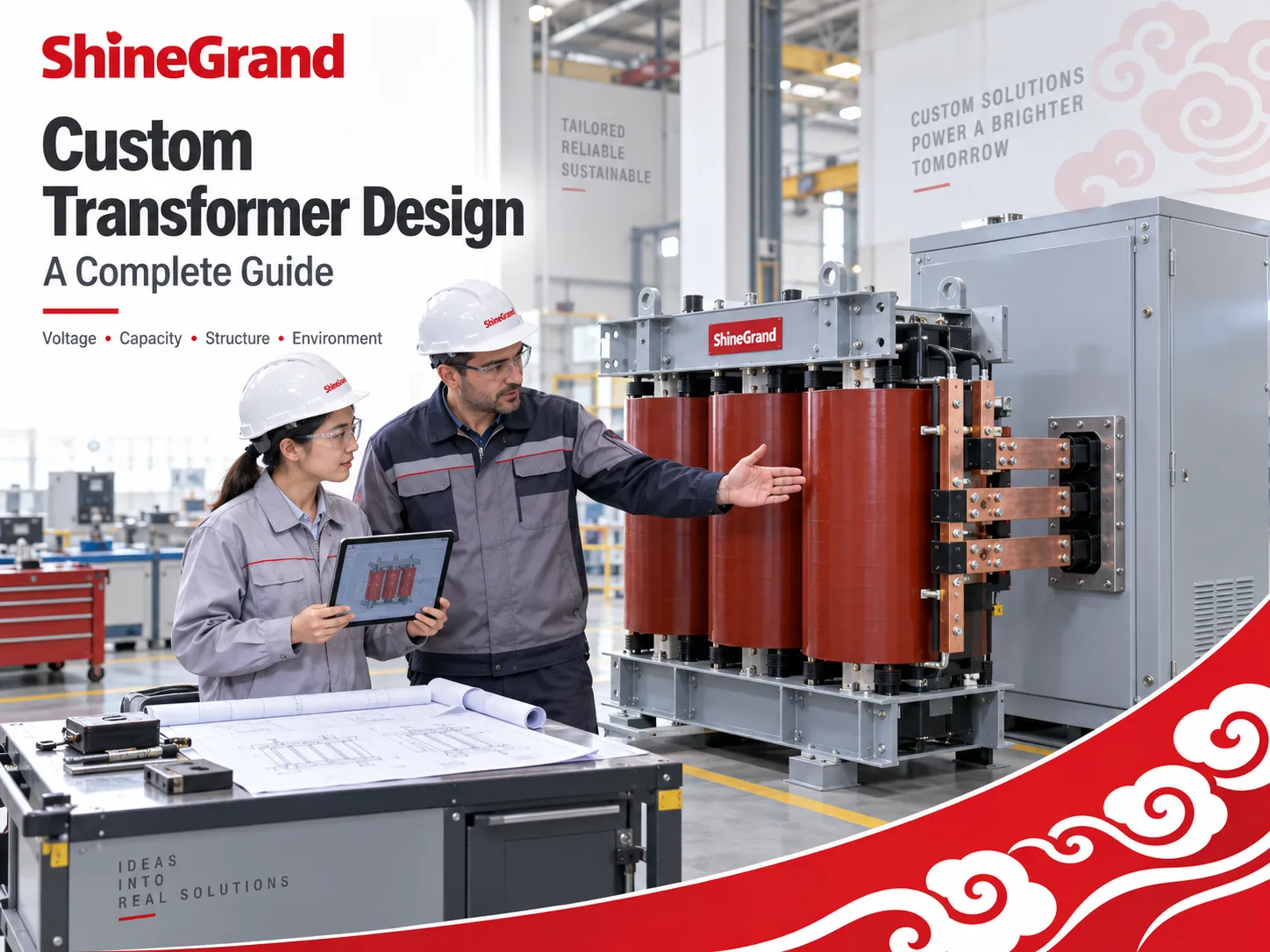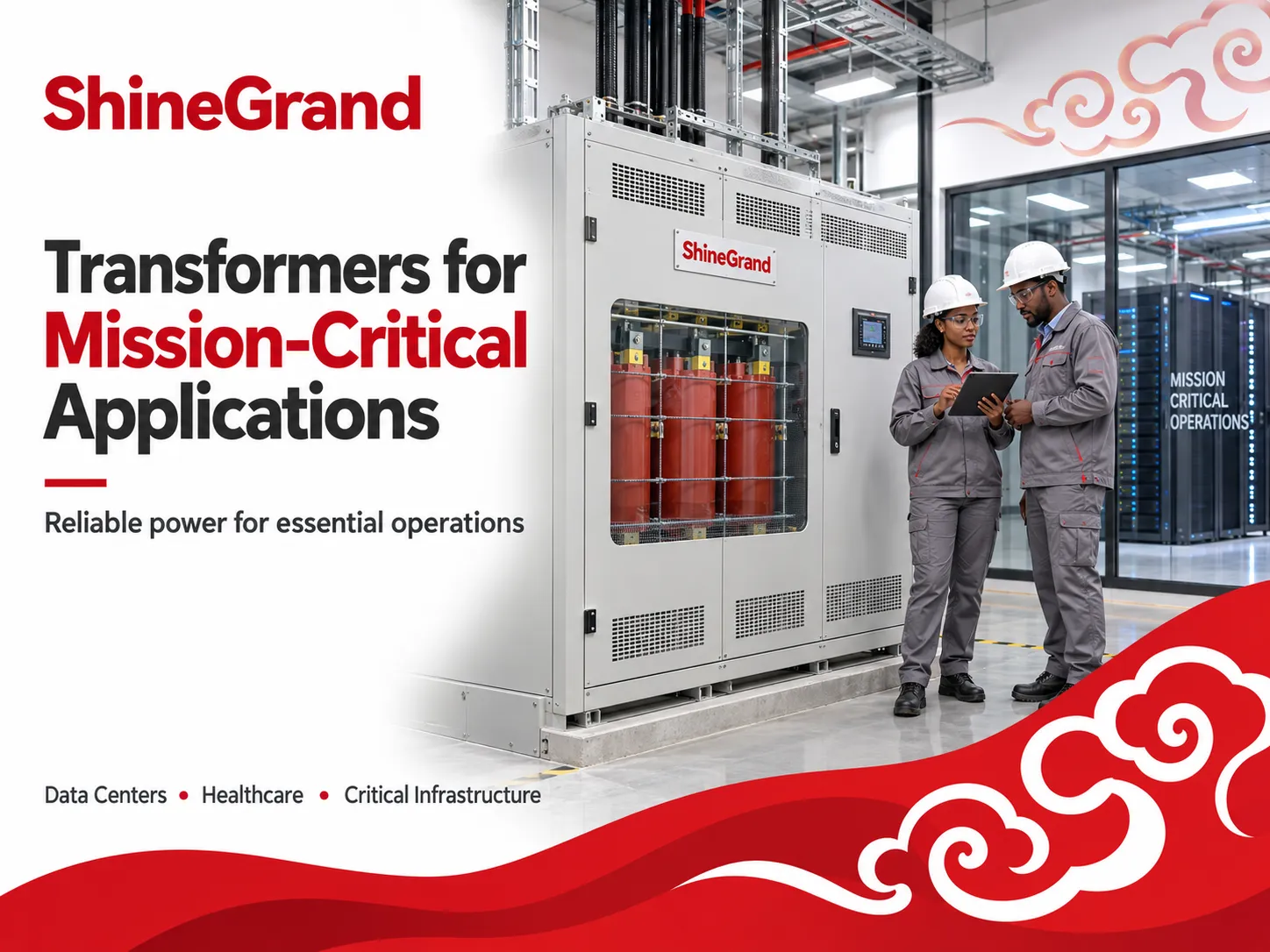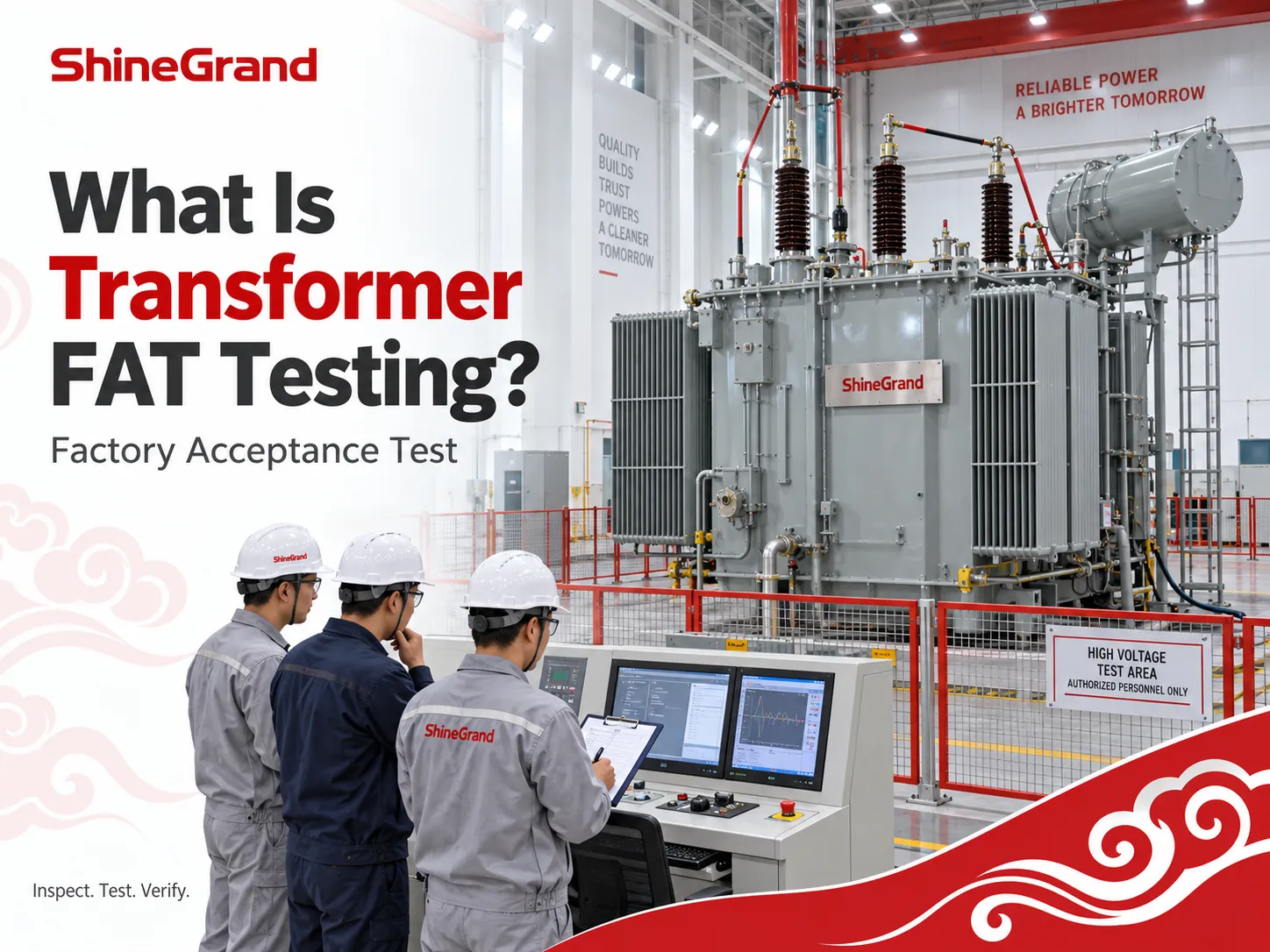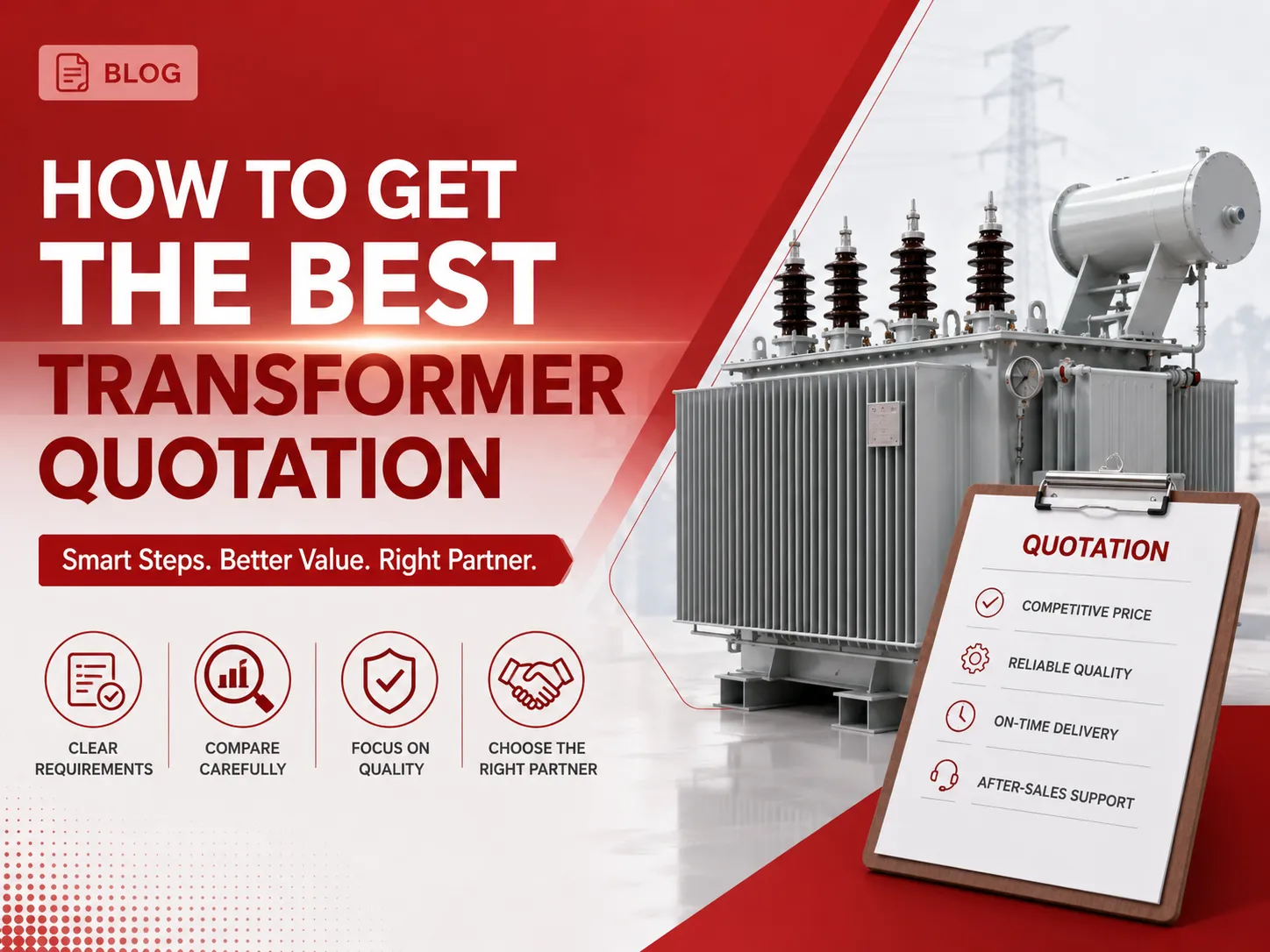
Getting a cost estimate for a transformer can sometimes feel like sending an e-mail out into the nothingness of cyberspace and hoping for answers. However, receiving an estimate that will provide reliable comparing of all bids, as well as having confidence when budgeting, will result from submitting an adequately detailed request for a quote from potential vendors so they can use the same technical solution in developing their bids for you. Whether you’re buying just one commercial dry-type transformer or an entire oil-immersed fleet for a utility company, being well-versed on what impacts transformer pricing and how to frame a request will ultimately save you both money and unpleasant surprises when the product is received on site.
What a Useful Transformer Quotation Includes
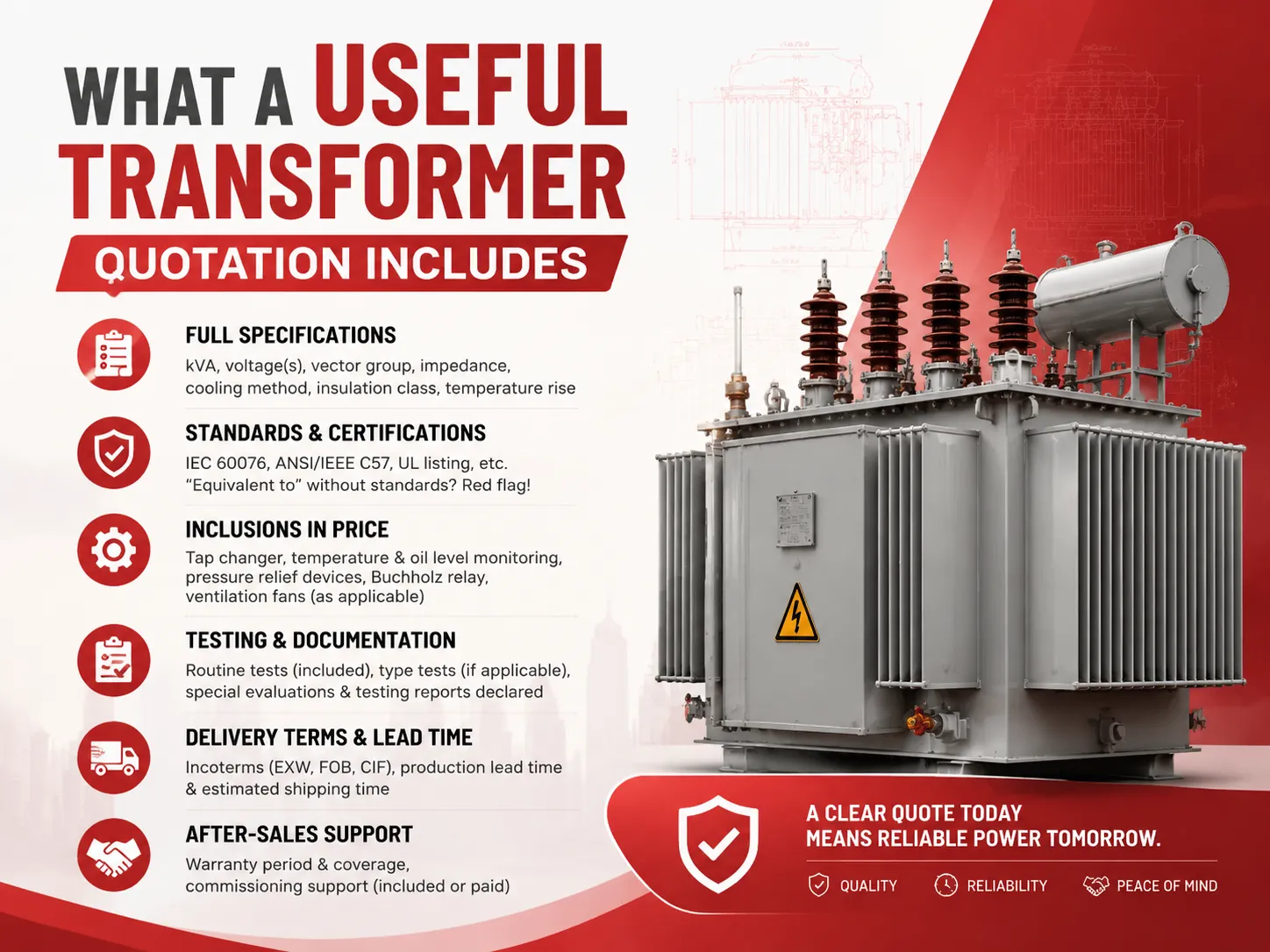
When evaluating a transformer proposal, serious consideration will generally extend beyond just the price of a single unit. It should at least contain the following minimum components:
- Full specifications of the transformer include: kVA rating; primary and secondary voltage(s); vector group; percentage impedance; cooling method; insulation class; and rise in temperature. If the quote does not contain all of these, then the vendor has likely assumed different from what you asked for.
- List of applicable standards and certifications: IEC 60076, ANSI/IEEE C57, UL listing, or whatever you require. If it says “equivalent to” without specifying the applicable standards, that’s a red flag!
- Included in price are Tap changer (off, on and load); temperature of windings measurement; level of oil; pressure relief devices; Buchholz relay (for oil-filled transformers); ventilation fans (for forced-air cooled transformers). Often listed separately as a line item.
- Evaluation and documentation: routine tests (part of standard), type tests (if applicable at an extra expense), and any special evaluations. You must declare in the quotation what testing report is included.
- Delivery term & lead time: Incoterms including EXW, FOB & CIF. Must also provide estimated production lead time & estimated shipping times. A low unit price with no delivery terms will often mask high freight & insurance costs associated with the low unit price.
- After‑sales: Warranty period, warranty coverage, warranty coverage for commissioning support or if this service must be paid separately.
Key Factors That Drive Transformer Cost
Understanding what moves the price of a transformer helps you evaluate whether a quotation is competitive or simply incomplete. The major cost drivers are:
| Cost Driver | How It Affects Price |
|---|---|
| kVA Rating | The single largest factor. Price increases roughly linearly with kVA up to a point, then steps up as the design moves to a larger frame size. |
| Voltage Class | Higher primary voltage requires more insulation, larger clearances, and more expensive bushings. A 35 kV unit costs substantially more than a 10 kV unit of the same kVA. |
| Cooling Type | Oil‑filled units are generally less expensive than dry-type transformers for the same kVA. Within dry‑type, cast‑coil commands a premium over VPI. Forced‑air cooling adds cost but may allow a smaller base kVA rating. |
| Material Costs | Copper windings are more expensive than aluminum but offer smaller size and lower losses. Core steel (silicon steel vs. amorphous alloy) directly affects both price and no‑load loss economics. |
| Efficiency Level | Higher efficiency (lower losses) increases upfront cost but reduces total cost of ownership. Some markets mandate minimum efficiency standards (e.g., DOE in the US, EU Ecodesign Tier 2). |
| Special Requirements | Harsh environment enclosures, seismic qualification, low‑noise designs, or specific paint specifications all add engineering and material cost. |
How to Prepare a Request for Quotation That Gets Accurate Responses
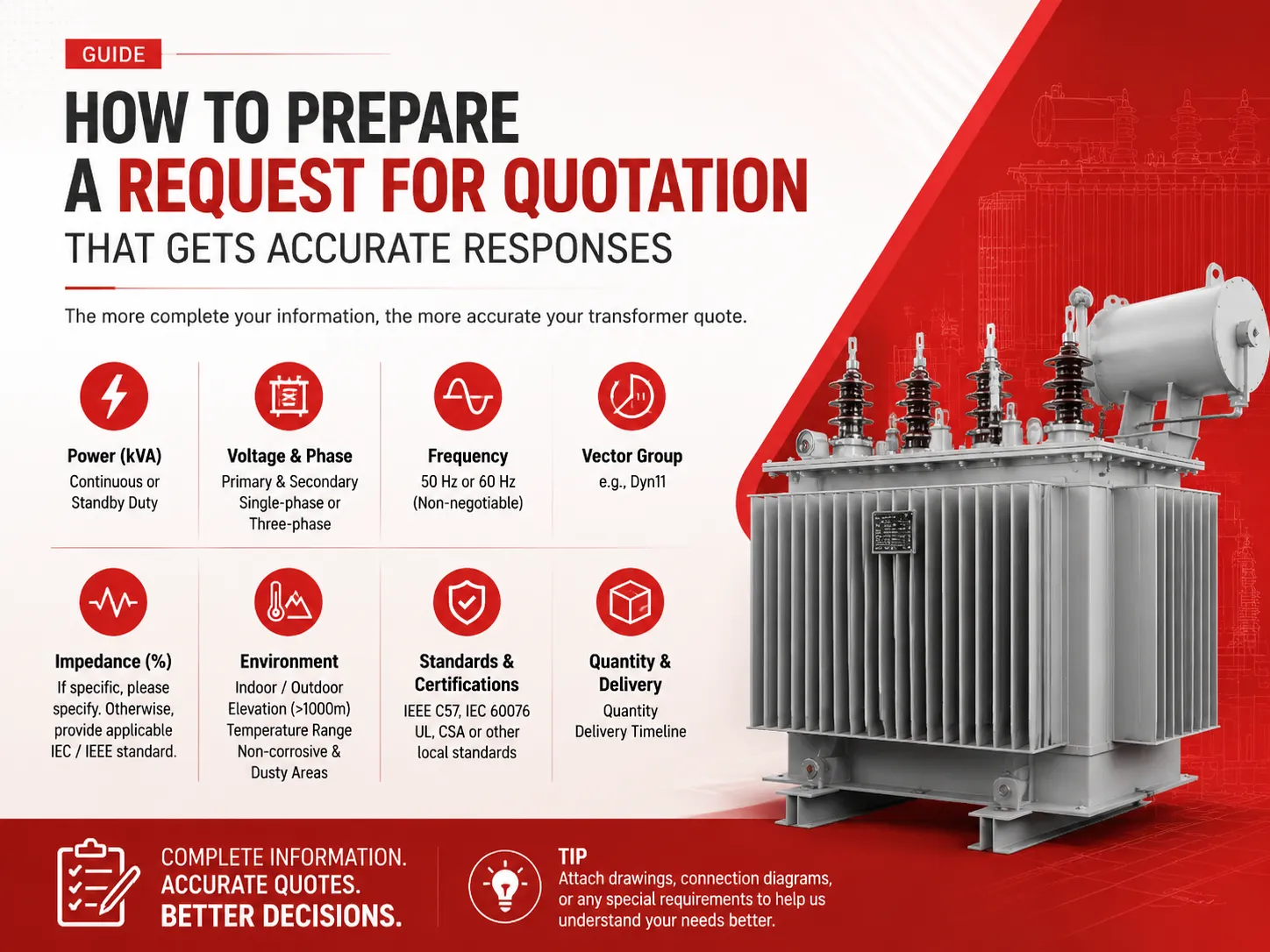
The level of quality in your transformer quote is directly related to the quality of information you supply. Make sure you’re prepared to provide the following details before sending any inquiries.
- Nominal power (kVA) and whether it’s continuous or standby duty.
- Primary and secondary voltage, and whether the system is single‑phase or three‑phase.
- Frequency: 50 Hz or 60 Hz — this affects core size and is non‑negotiable.
- Vector group: e.g., Dyn11 for distribution transformers.
- If you have specific requirements for impedance (%), please let us know. Otherwise, please provide the IEC or IEEE standard for the appropriate kVA and voltage class.
- Environmental conditions: Indoor / Outdoor, elevation(if over 1000m or higher), temperature range of non-corrosive environments & dusty areas.
- Applicable standards include:
IEEE C57, IEC 60076, specific local utility standards, and whatever certifications are required, including UL and CSA among others. - Quantity and delivery timeline.
If you’re uncertain about sizing, our transformer calculation table provides full‑load current data for common kVA ratings, making it easier to confirm your load estimate before you request pricing.
Comparing Transformer Quotations Beyond the Unit Price
If two transformers are rated for the same kVA and voltage rating and quote the same price, there may be a significant difference in price between them even though this won’t be evident until you look inside. This will be due to something that you cannot see right away:
- The transformer will cost more initially, as it has higher efficiency (lower no‑load and load losses). During its 20 to 30 years of life, the transformer will recover these costs through reduced monthly electric bills. You should ask the manufacturer for the guaranteed loss values (no-load watts, load watts at 75°C) and calculate the NPV of the difference. Many utilities provide a loss capitalization formula you can use.
- When choosing winding material, copper and aluminum are the two most common materials. Copper is more expensive than aluminum, but it has a smaller footprint and lower losses than aluminum winding. It’s worth checking the winding material if a quote seems unusually inexpensive.
- Most suppliers offer monitoring equipment and/or accessories and/or auxiliary equipment as part of their standard package, and others may include them as optional extras. Be sure to pay close attention to the accessory list from two different suppliers and compare them side by side.
- Routine tests are considered typical, while Type tests and special tests (such as measuring partial discharge for cast-coil dry-type units) cost extra. You should verify who pays.
How ShineGrand Helps You Get a Clear, Competitive Quotation
At ShineGrand Electric, we approach transformer quotation preparation as a technical exercise, not a sales pitch. Our application engineers review your specification and propose a design that matches your actual operating conditions — not a generic rating that happens to be close. Whether your project calls for a 6‑10kV epoxy resin cast‑coil dry‑type transformer for an indoor substation, a three‑phase pad‑mounted transformer for outdoor distribution, or an amorphous alloy core dry‑type unit where low no‑load losses are critical, we provide a line‑by‑line quotation that details exactly what is included — from the core steel grade to the paint specification to the test reports you’ll receive.
Our product range extends from 20‑35kV cast‑coil dry‑type transformers for heavy industrial loads, through 20kV oil‑immersed distribution transformers for utility networks, to specialized units like our submersible transformer series and buried transformers for underground substations. For projects where voltage transformation must be combined with a compact outdoor footprint, our pole‑mounted single‑phase power transformers serve overhead distribution networks efficiently.
What About Instrument Transformers? CTs and VTs
Instrument transformers will need to be included with the transformer quotation as part of a major substation or switchgear acquisition, and therefore you should be aware that a current transformer (CT) converts the primary current into a standardized secondary current (usually 5A or 1A), allowing for appropriate metering and protection relays to be used. In addition, a voltage transformer (VT), also referred to as a potential transformer, converts the primary voltage to a standardized secondary voltage for use with the same relays. While these devices are separate from the power transformer itself, many times they will be included in the scope of work for the same project. If you are requesting a quotation on any instrument transformers, please specify the CT ratio, accuracy class, burden, and VT primary and secondary voltages, and accuracy class. Many power transformer manufacturers such as ShineGrand, can provide a complete set of power transformer and instrument transformers and make the procurement process easier for you by providing a single point of interface for both products.
How to Do Costing of a Transformer
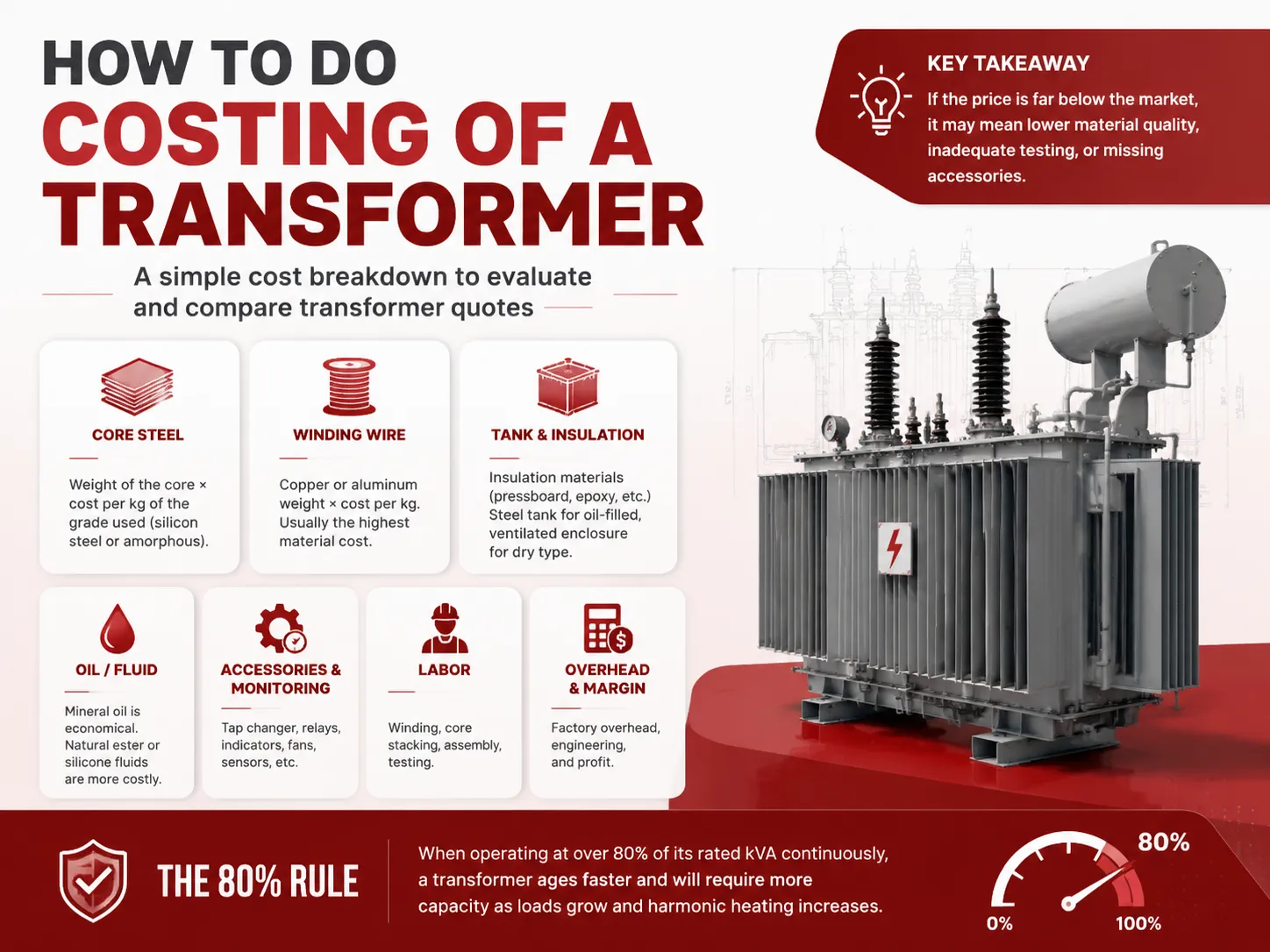
For those who are buying a transformer and want to know if the price for the transformer they received was fair and comparable with other quotes they received, you can create a simple cost breakdown of the transformer into the major materials and labor associated with the transformer.
- Core steel: Weight of the core × cost per kg of the grade used (silicon steel or amorphous).
- Winding wire: Copper or aluminum weight multiplied by cost per kilogram usually represents the highest cost from a materials standpoint.
- Tank/enclosure/Insulation type consists of insulated species (pressboard & etc) and also insulating layers (epoxy resin). For oil filled tanks use a steel enclosure and for dry use a ventilated enclosure.
- Mineral oil is typically one of the cheaper options but natural ester or silicone fluids are generally more costly than mineral oil.
- Accessories and monitoring: Tap changer, relays, indicators, fans.
- Labor: Winding, core stacking, assembly, testing.
- Overhead and margin: Factory overhead, engineering, and profit.
While providing detailed design information would not help determine an exact build‑up; this framework will assist in identifying a quotation for a transformer that is way too low from a technical credibility point of view. When a price is significantly below the market, it typically indicates the manufacturer has reduced costs by either; (1) using inferior or less expensive materials, (2) performing less than adequate testing, or (3) not including the required accessories to ensure the transformer meets industry standards for safety and will remain maintainable throughout its normal operating life. Just a reminder: remember the 80% rule – when operating at over 80% of its nominal kVA on a continuous basis, a transformer will age its insulation at an accelerated rate and hence create a need for increased capacity as loads expand and additional harmonic heating occurs.
Frequently Asked Questions
What is the 80% rule for transformers?
According to the 80% limit, you should avoid loading transformers to more than 80% of their rated kVA capacity for extended periods of time; this allows for insulation breakdowns, maximizes insulation life, and gives you room to accommodate future energy demands and/or harmonic transmissions. By applying the 80% rule when choosing your transformer, you’ll receive an estimate for a transformer that can deliver reliable operation for many years rather than one that’s peaked out at thermal capacity on its first day of operation.
What is the average cost of a transformer?
Due to the variance in price from thousands of dollars for small dry transformers to over one million dollars for large transformers, there is no standard average price of transformers. The typical small, 25 kVA, single-phase pole-mounted transformer will run about $1000-3000 while larger, 1000 kVA, cast-coil transformers will vary between $15,000 and $40,000 depending on the voltage, the impedance, and the expected efficiency of the transformer. The best way to estimate your purchase will be by obtaining a quote for your specific kVA, voltage and application requirements.
What is a CT and VT?
CTs are transformers that reduce the current from a high primary amount to a standard, low second amount (typically 5 A or 1 A) for measurement and protection. VTs, also known as voltage transformers or potential transformers, reduce the voltage from a high primary amount to a standard low second amount (e.g., usually 110 V or 120 V) for both the purposes of measurement and protection. The use of both CTs and VTs is essential to accurately measuring electrical power, as well as to deliver safe, isolated signals to relays and meters. Although CTs and VTs are not part of the power transformer, they are usually included in a comprehensive quotation for substation purchases.
How to do costing of transformer?
To perform an approximate cost analysis of a transformer, first divide the transformer into material components such as the weight of steel in the core multiplied by the price per kilogram in the market (or whatever other materials are used); the weight of the wire conductors (either copper or aluminum) multiplied by its price per kilogram; insulation; the weight of steel for the tank/enclosure; insulation oil (if needed) and accessories; and finally add up the labor hours for winding conductors, stacking core, assembling transformer and testing transformer. Once these have been added together, include overhead cost from factory plus a reasonable markup. This bottom-up approach enables you to evaluate if a quote for transformer is technically viable or if it is not.
Getting the best transformer quotation is not about finding the lowest number. It’s about providing enough technical detail that every supplier you contact is bidding on exactly the same specification — same kVA, same voltage, same efficiency, same accessories, same testing scope. When you do that, the quotes become genuinely comparable, and the final decision can be made on total cost of ownership, manufacturing quality, and the supplier’s ability to support you after delivery. ShineGrand Electric builds its quotations on that principle: clear specifications, documented test procedures, and a product range that covers the full spectrum from compact dry‑type transformers to high‑capacity oil‑immersed power units — so the quote you receive reflects exactly what you need, nothing more and nothing less.