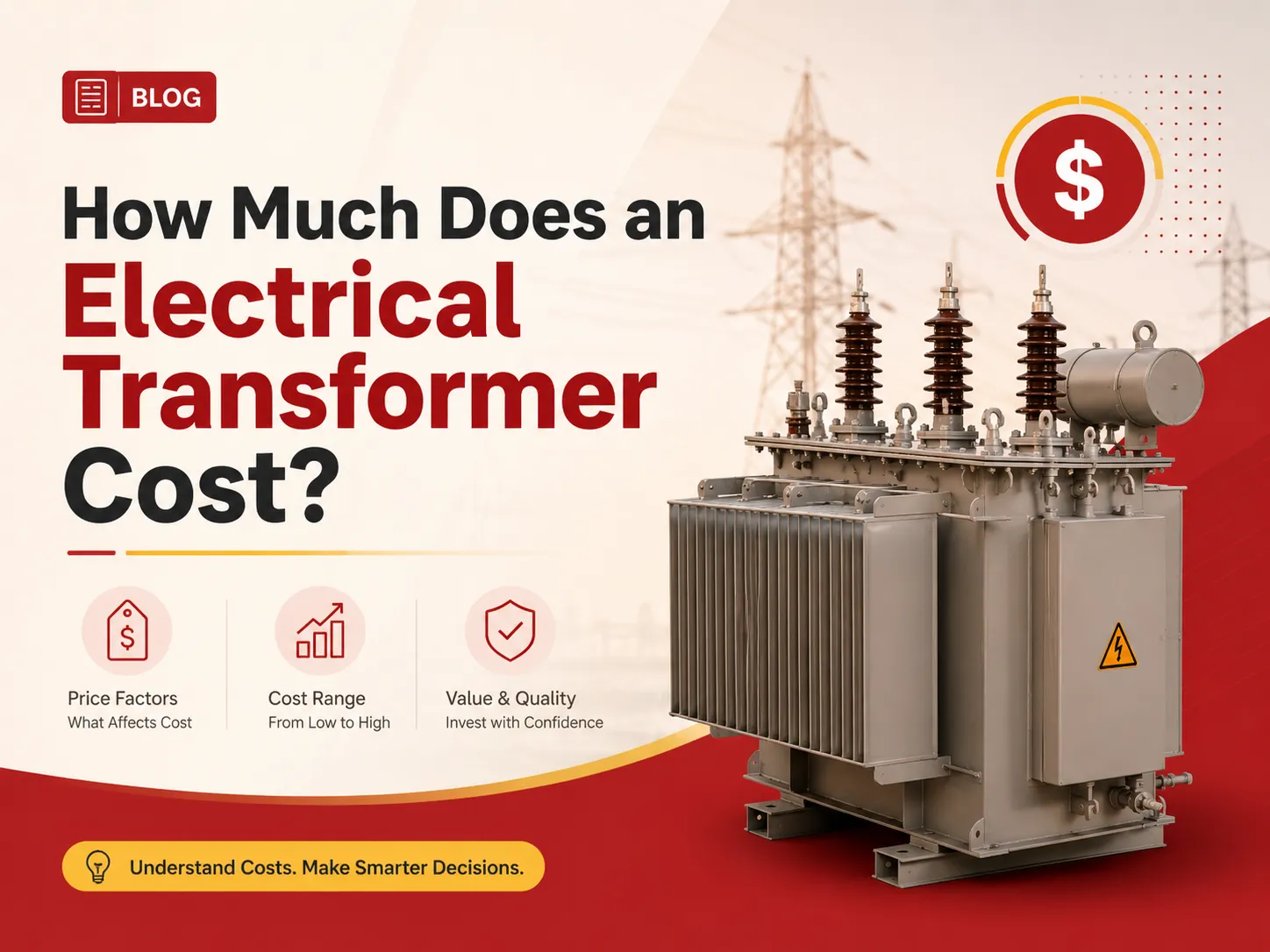
“How much does a electrical transformer cost?” is the question that starts every substation budget and every facility upgrade plan. The honest answer is that a transformer can range from under $1,000 for a small single‑phase pole‑mounted unit to well over $1 million for a large power transformer. The price tag is tied to the kVA rating, the voltage class, the cooling technology, the materials inside, and the regulatory environment of the country where it will be installed. This guide breaks down the cost of the major transformer types, explains why two units with the same kVA can differ in price by a factor of three, and shows how to think about cost in terms of total ownership, not just the purchase order number.
Transformer Cost by Type and Size
The transformer market segments roughly by application, and each segment has its own price logic. The ranges below reflect global averages for units built to international standards (IEC 60076 or IEEE C57) from reputable manufacturers. Prices are indicative and assume copper windings unless noted otherwise.
| Transformer Type | Typical kVA Range | Approximate Price Range (USD) | What the Price Includes |
|---|---|---|---|
| Single‑Phase Pole‑Mounted | 10–167 kVA | $800–$5,000 | Basic unit, mineral oil, porcelain bushings. Add $200–$500 for amorphous core or higher efficiency. |
| Three‑Phase Pad‑Mounted (Oil‑Filled) | 75–5,000 kVA | $3,000–$60,000 | Loop feed or radial, mineral oil. Stainless steel tank, fluid options, or higher efficiency add 15–40%. |
| Dry‑Type (VPI, Ventilated) | 15–1,000 kVA | $800–$25,000 | VPI windings, indoor enclosure. Cast‑coil construction adds 30–60%. Forced‑air cooling adds $500–$3,000 depending on kVA. |
| Dry‑Type (Cast‑Coil) | 100–5,000 kVA | $5,000–$120,000 | Epoxy encapsulated windings, Class F or H. Premium for fire safety and moisture resistance. |
| Oil‑Immersed Distribution (Industrial) | 100–10,000 kVA | $4,000–$80,000 | Mineral oil, ONAN cooling. Natural ester fluids or hermetically sealed tanks add 20–35%. |
| Power Transformer (Substation Class) | 5,000–100,000+ kVA | $50,000–$1,500,000+ | Custom‑engineered. Price driven by voltage (up to 345 kV+), impedance, LTC, and loss capitalization value. |
These are ex‑works (EXW) estimates. Freight, installation, commissioning, and any site‑specific civil works are additional. For a full breakdown of what a formal quotation should contain, our guide on how to get the best transformer quotation explains what to request so you can compare offers on a true like‑for‑like basis.
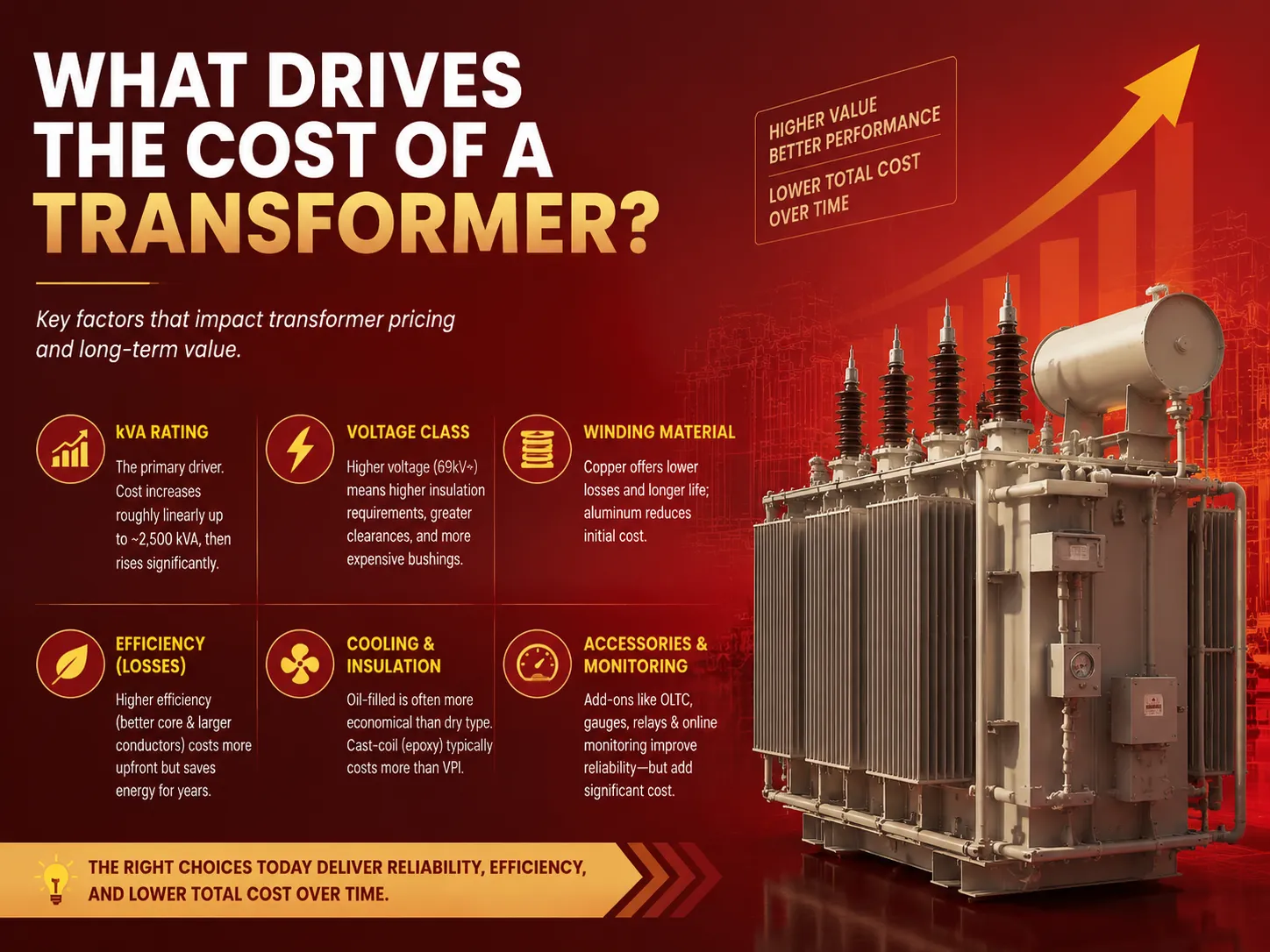
What Drives the Cost of a Transformer?
Two 500 kVA transformers can carry wildly different price tags. Here’s why:
- kVA Rating: Cost is primarily driven by the amount of kVA you purchase. The price increases in a relatively linear fashion for kVA up to about 2,500kVA, after which there will be a significant increase in price as the frame size has to grow accordingly.
- Voltage Class: An insulation requirement of the 35 kV primary winding, along with greater clearance distances and significantly higher cost of bushings than for the 10 kV insulation system is one of the significant differences between the two systems; thus, moving from medium voltage to high voltage (69kV or higher) also adds significantly to the cost.
- Winding Material: Although copper is more expensive than aluminum per kilogram, it can be designed in smaller sizes and should result in lower losses and typically a longer life than aluminum items. Copper is required by many utility companies; however, many commercial customers may consider using aluminum instead of copper to reduce initial expenditures.
- Efficiency (Losses): A higher efficiency transformer gives you lower no-load losses (from the material used in the core, like amorphous alloy) and smaller load losses (from increased conductor cross-section). Manufacturers will manufacture these types of transformers, even though they have higher manufacturing costs, because you’ll receive enough of a return on your utility bill to cover that extra cost over time. In locations with minimum efficiency standards set by the Department of Energy (DOE) in the United States and Ecodesign Tier 2 in the European Union, you’re automatically receiving the benefit of paying for a baseline efficiency.
- Cooling and Insulation: Transformers, especially in the case of oil-filled devices, will often cost less than their dry type counterparts (equally kVA rated). Of the two dry types, cast-coil is generally more expensive than VPI because cast-coil transformers are shaped using an epoxy material and thus require more expensive manufacturing processes than VPI transformers, which use a vacuum process. In some instances, adding forced-air fans to dry-type transformers may result in a lower base kVA rating.
- Accessories and Monitoring: The costs associated with an on-load tap changer for a transformer can easily reach into tens of thousands of dollars. In addition to the cost of the transformer, there are costs associated with things like winding temperature indicators, oil level gauges, and Buchholz relays as well as online dissolved gas analyzers. These additional costs give visibility into how the transformer is performing and can help prevent catastrophic failure.
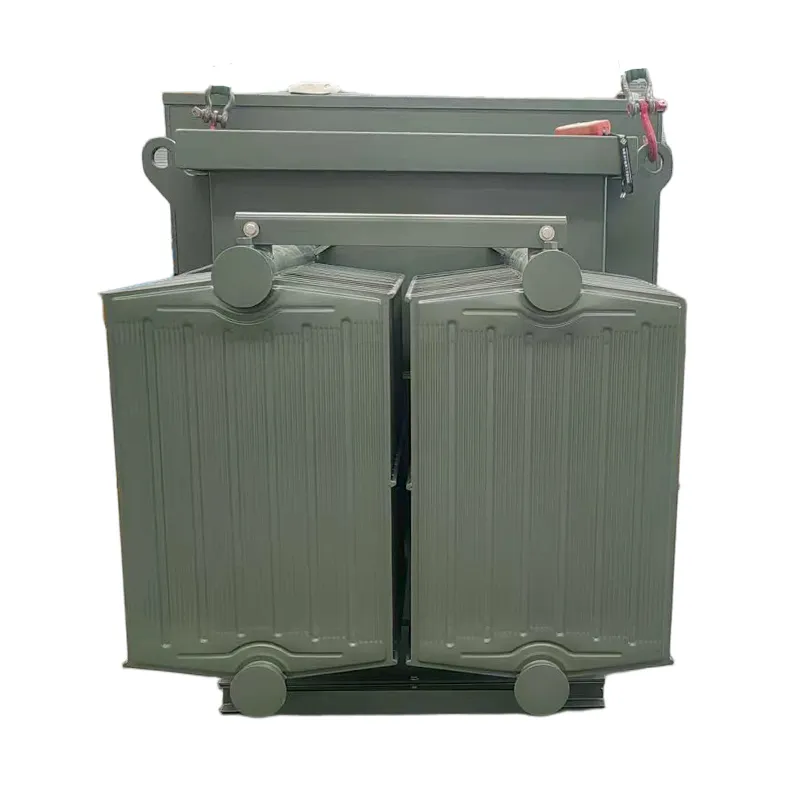
The Green Boxes: Pad‑Mounted Transformer Costs Explained
Pad-mounted transformers are green or gray in color, typically filled with oil, and operate at 75 through 500 kVA for residential developments. For instance, a standard 75 kVA single-phase pad mounted is approximately $1,500–$3,500 and a larger 500 kVA three-phase pad mounted serving a small commercial area can range from $8,000–$15,000. All pad mounted units have a standardized design and come with tamper-resistant doors and locks, plus the color helps with their visual assimilation into the landscape. Standard design expects a life span of 25 to 30 years and they are prevalent in every North American suburb. Three-phase pad-mounted transformers are manufactured by ShineGrand to be used in distribution systems throughout the world and are available in configurations for both loop and radial feeding.
How Much Does One Transformer Cost? The Short Answer
To get a general idea of cost, a small transformer (for a residential application and low commercial load) costs about $800-2,000; a medium-sized transformer (for educational, office, and industrial applications) costs $5,000-30,000; a large utility substation transformer costs more than $50,000 and can be in the range of $1 million or more depending on kVA, voltage, frequency, cooling type, and various efficiency and certification requirements. The very best way to get a definitive number is by providing a manufacturer with the kVA, primary and secondary voltage, frequency, cooling type (etc). ShineGrand’s engineers will work with you from your specifications, providing an itemized quotation for the transformer you require rather than a rough approximation.
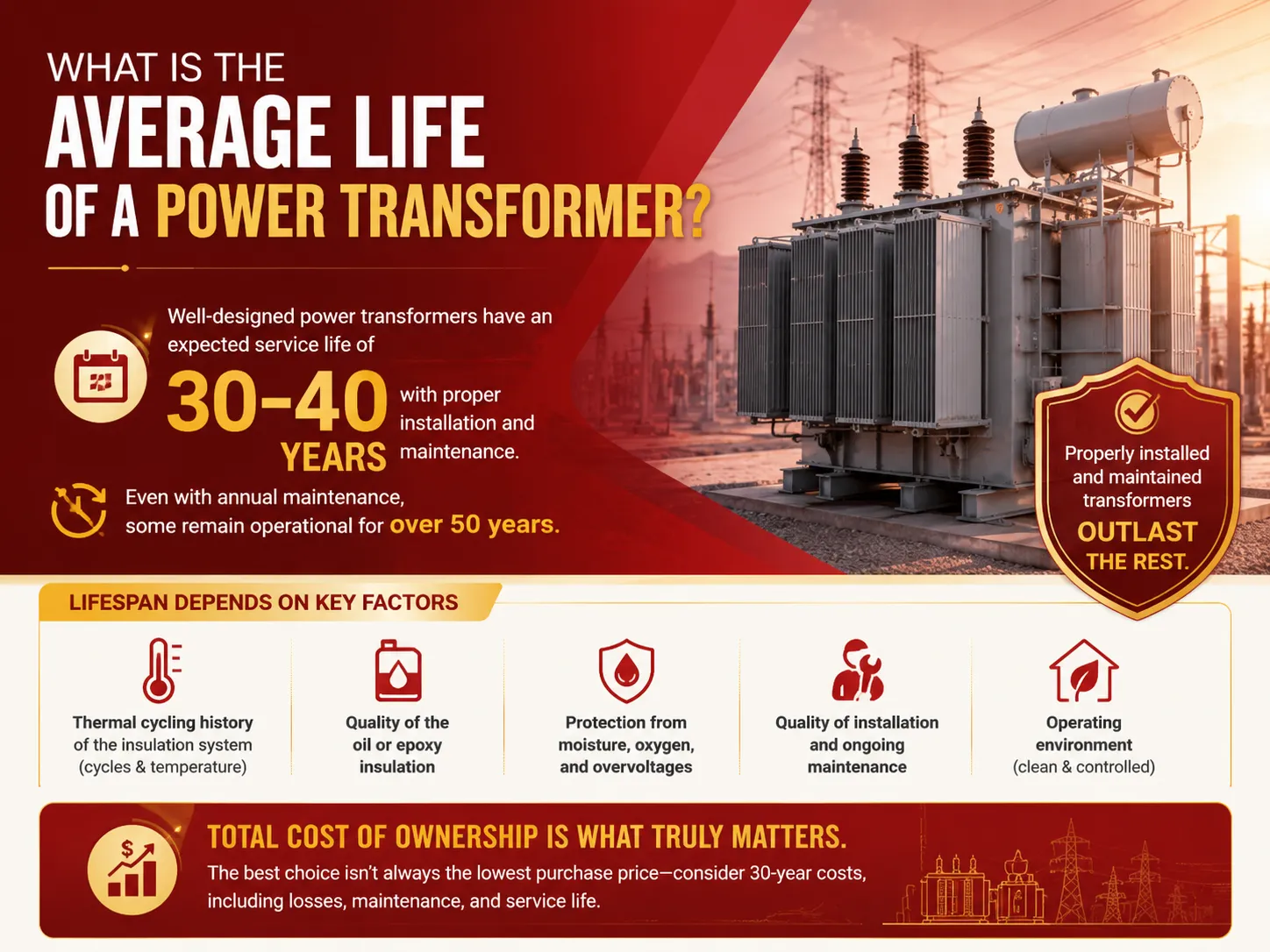
What Is the Average Life of a Power Transformer?
Well-designed power transformers have an expected service life of 30 to 40 years, but even with annual maintenance, some remain operational for over 50 years. The actual lifespan of the transformer will depend on factors such as the thermal cycling history of the insulation system (i.e., number of cycles and temperature), the quality of the oil or epoxy insulation, and how effectively the transformer has been protected from moisture, oxygen, and overvoltages. For example, a properly installed and maintained dry-type transformer operating in a clean indoor environment will often outlast an oil-filled transformer that has not been properly installed and maintained by decades. Therefore, the total cost of ownership (purchase price plus the present value of expected losses and maintenance over 30 years) is the only valid means of comparing different transformers. In most cases, a lower initial purchase price that results in higher losses or a shorter service life will not be the winning bid when all factors are taken into account.
Frequently Asked Questions
What are the green boxes in front of houses?
The transformer boxes you see are pad mounted and bring the electric utility’s medium voltage (either 7,200 or 14,400V) down to the voltage that is consumed by your house (120V/240V). Pad-mounted transformers are green and locked to indicate that they are a standard outdoor electrical installation on the ground in a residential area. Pad-mounted transformers contain oil that is used as an insulator and for cooling purposes, and are designed with safety and tampering in mind.
How much does one transformer cost?
Prices for transformers vary widely. A small single-phase pole-mounted transformer may be less than $1000 while a large substation transformer may exceed $1 million. If you’re purchasing a typical commercial building 500kVA dry-type unit, costs generally fall between $8000 to $25000 depending on winding material, efficiency and type of enclosure. The only way to obtain a precise pricing result is by requesting a specification based quotation.
How much does a transformer cost?
Factors affecting the cost of a transformer include its rated capacity in kVA, rated voltage, method of cooling, material used for the windings, and efficiency rating. The price of a single-phase, 25 kVA pole transformer varies from $800 to $1,500; while the cost of a 1,000 kVA cast-coil (dry-type) transformer can range between $20,000 and $45,000. In addition, the price of a power transformer rated at 20 MVA could be over $300,000 to $500,000. Always evaluate competitive quotes that also guarantee minimum losses because there is a significant difference between the average cost of ownership and the purchase price for transformers during their expected useful life.
What is the average life of a power transformer?
A well-maintained power transformer has a typical service life of between 30-40 years but many units will have much longer average service lifetimes (50 years or longer). The primary factor affecting a power transformer’s life span is created by the thermal aging of the insulation system. To best ensure that your power transformer can reach its maximum useful service life, the three most important practices to observe are: 1) to limit the hottest spot temperature of the winding to within the design limits; 2) maintain the quality of the oil (for oil-filled units); and 3) prevent exposure to sustained overload conditions and moisture, and voltage surges.
Answering “How Much Does An Electrical Transformer Cost?” Depends on load, location, and technical specifications, all of which must be accounted for when purchasing either a small pole-mount unit (impulse buy) or a substation power transformer (capital construction project–both require equal rigor in specification/supplier selection). ShineGrand Electric manufactures all types of electrical transformer products, From the dry-type/indoor commercial application to the oil-immersed/distribution application to the custom-engineered/power application of your exact specifications. When requesting a quotation from ShineGrand Electric, you receive a line item quote that is tied to a clear electrical transformer technical specification, including guaranteed loss values and test documentation. Therefore your quotation reflects the actual cost of a transformer that will last long-term.