In 2018, a consulting engineer named David was overseeing the electrical fit-out of a new data centre in Singapore. The specifications required two 2,500 kVA dry-type transformers to reduce the voltage from 22 kV down to 400 V for the server racks. David issued the tender to six different manufacturers. Five responded with bids within a 15% price difference; however, the other manufacturer provided a bid that was almost 40% lower than all the other bids. The lower bidder indicated that the transformers met the “IEC 60076 standard” and had “Class H insulation”; however, after David requested a partial discharge test report for the cast-coil windings, that manufacturer did not respond for over a week. Ultimately, David selected a higher-priced supplier who provided complete factory test data, an accurate temperature rise calculation for the windings, and previous customers with similar tropical installations. Since being commissioned, the data centre has operated at 99.995% uptime. David’s experience illustrates the real issues that impact finding the best dry-type transformer manufacturer: the critical factors are not merely based on the bid price but also on their willingness to disclose test data, availability of material traceability, and sufficient engineering knowledge to provide support for the specification during and following manufacturing.
Why Dry Type Transformer Quality Is Tested in the Details
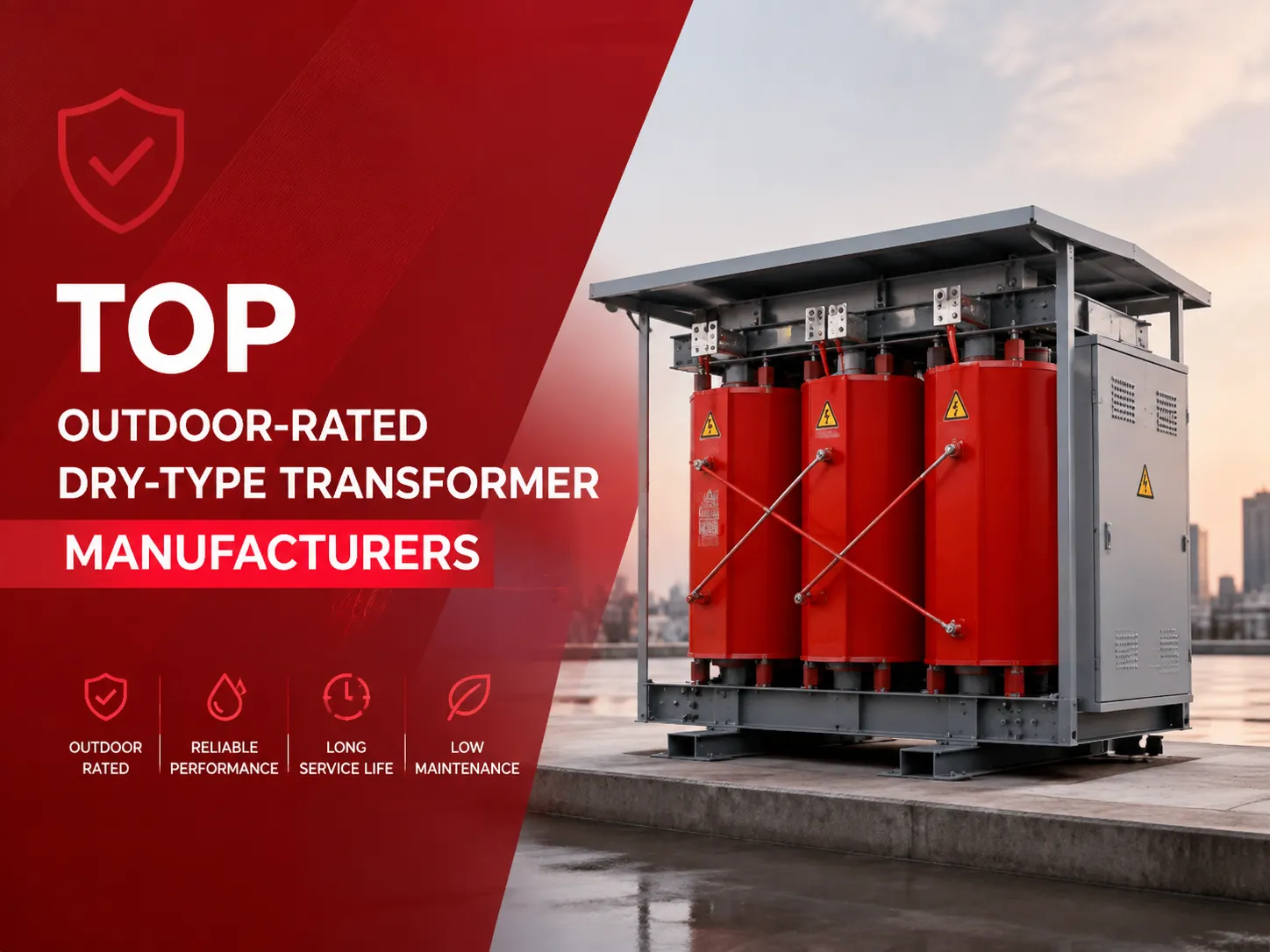
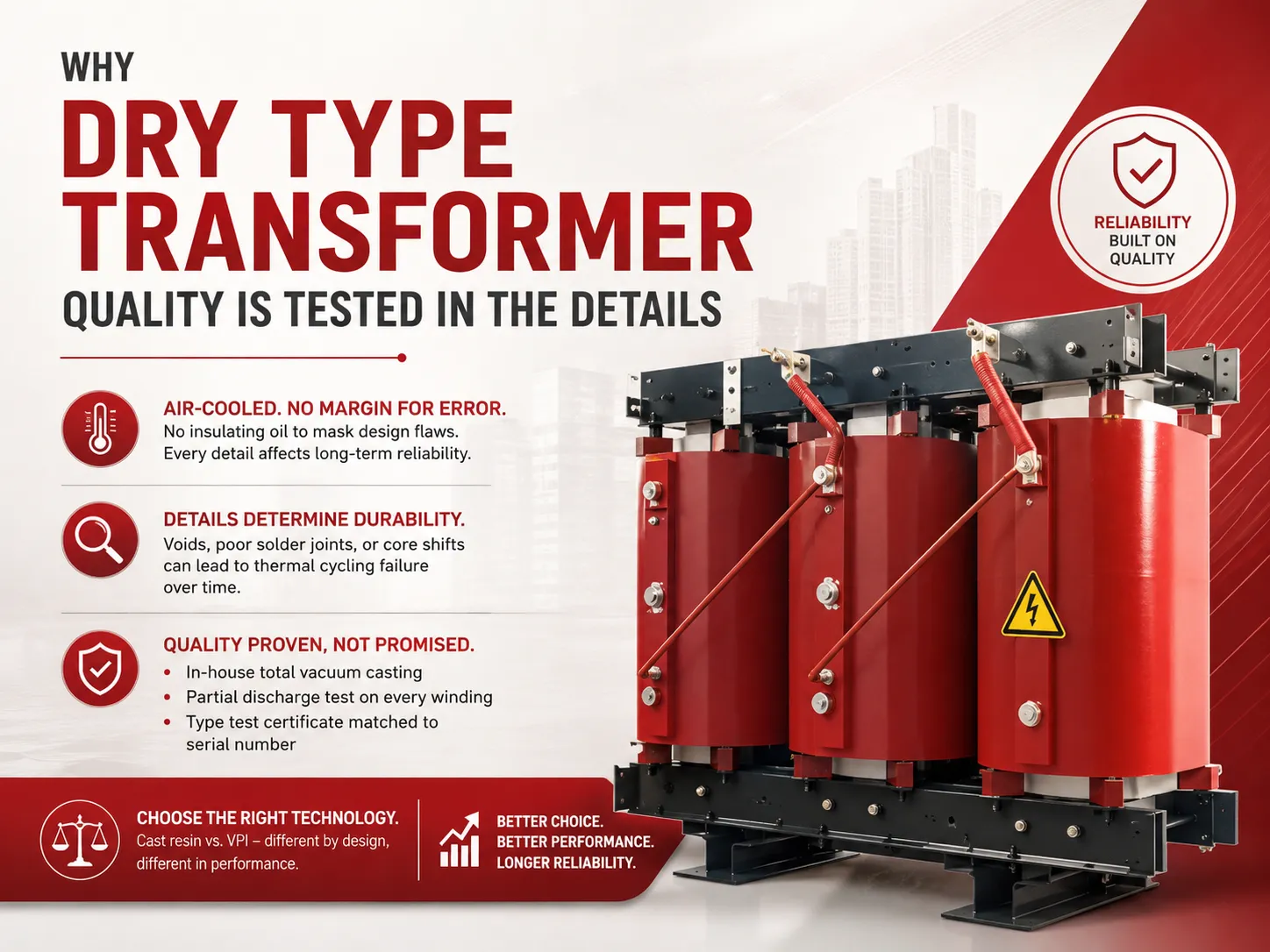
The dry type transformer is distinct from a typical commodity. The oil-filled transformer has an insulating fluid that may help cover any inadequacy in design by transferring heat away from the heated areas. On the other hand, the dry type transformer relies on air cooling for its windings. Any flaws — such as voids in the epoxy or poor solder joints; as well as any variations that occur caused by a core lamination that has shifted as the unit has gone through short-circuit testing — will remain contained within the solid insulation and will ultimately lead to failure due to thermal cycling after a number of years. Manufacturers that have a history of success in producing reliable transformers are those that perform the total vacuum casting process in-house; test each winding at the factory for partial discharge prior to shipment; and have documented proof of having produced a type test certificate which corresponds to the serial number provided on the nameplate of each transformer. Our overview of dry type transformer types including cast resin and VPI explains the technical distinctions that separate a commodity VPI unit from a fully encapsulated cast‑coil design, and why the choice of technology directly affects which manufacturer is suitable for a given project.
Evaluating a Manufacturer: Criteria That Predict Performance
When compiling a shortlist of the best dry type transformer manufacturers, look beyond the glossy catalog. The following criteria are what separate a reliable long‑term partner from a transactional supplier:
| Evaluation Criterion | What to Request |
|---|---|
| In‑house vacuum casting | Verify that the manufacturer owns and operates its own vacuum casting chambers. Outsourcing this critical step means losing control over resin formulation, gel time, and cure cycle — the variables that determine whether a winding has voids. |
| Partial discharge (PD) testing | Every cast‑coil winding should be PD‑tested, and the manufacturer should provide a report showing the measured charge (typically <10 pC) at 1.5 times the rated voltage. A refusal to share PD data is a red flag. |
| Type test certificates | A reputable manufacturer will have conducted type tests (temperature rise, lightning impulse, short‑circuit) on a representative unit and can provide the certificate. If they only offer “design verification” without a physical type test, ask why. |
| Material traceability | Ask for a sample Material Test Report (MTR) for the core steel and winding conductor. The MTR should trace back to the mill heat number. For critical applications, copper purity and oxygen content matter. |
| Reference installations in a similar environment | A manufacturer with units running for 10+ years in a data center, a subway, or a coastal chemical plant has proven their design in conditions that resemble your own. Ask for contactable references. |
| After‑sales and spare parts | Does the manufacturer maintain a regional service team? Are spare tap changers, temperature controllers, and fan motors stocked, or are they made to order? The answer determines how long you wait for a repair. |
Cast‑Coil vs. VPI: Why the Manufacturing Process Defines the Supplier Pool
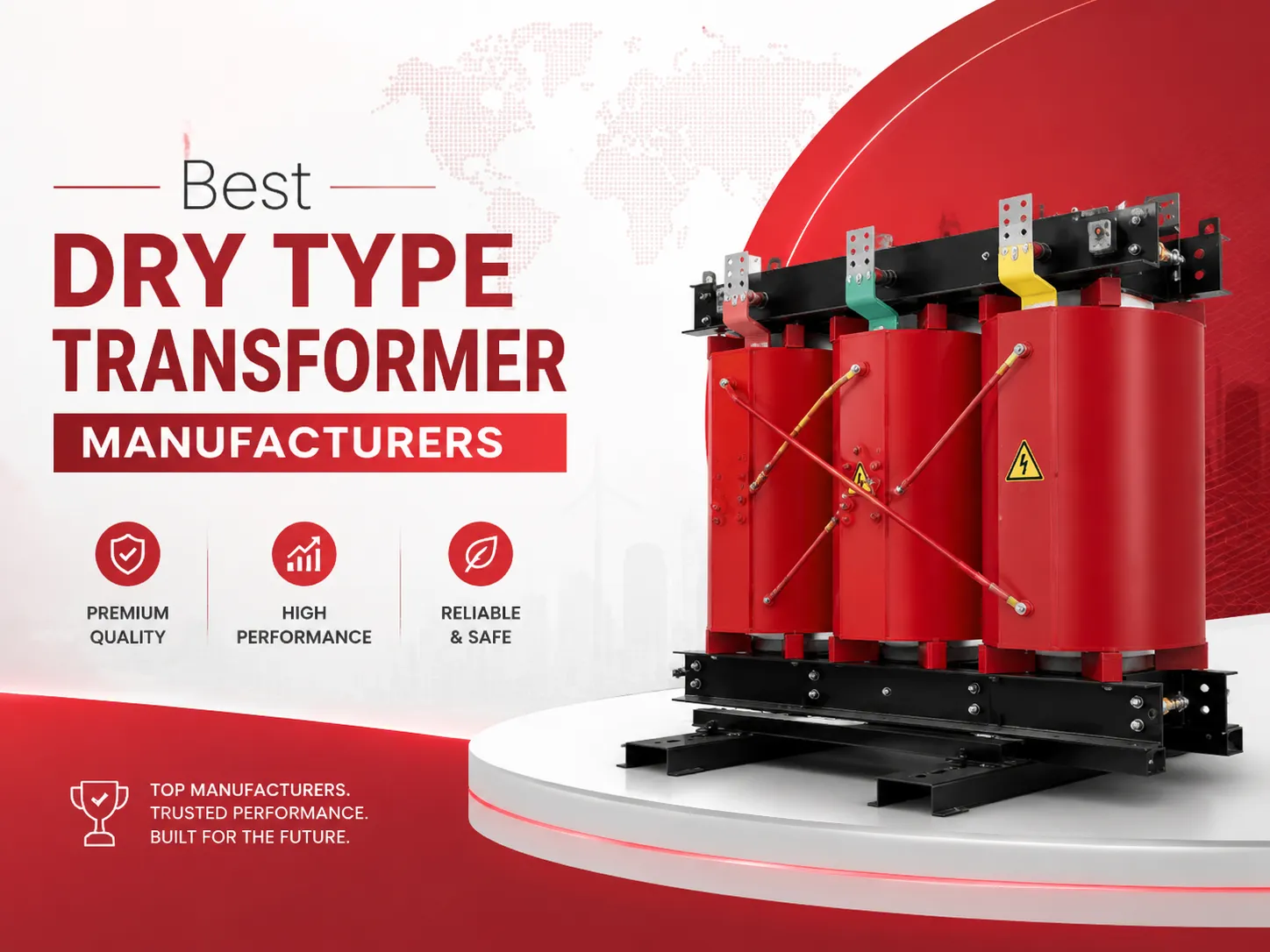
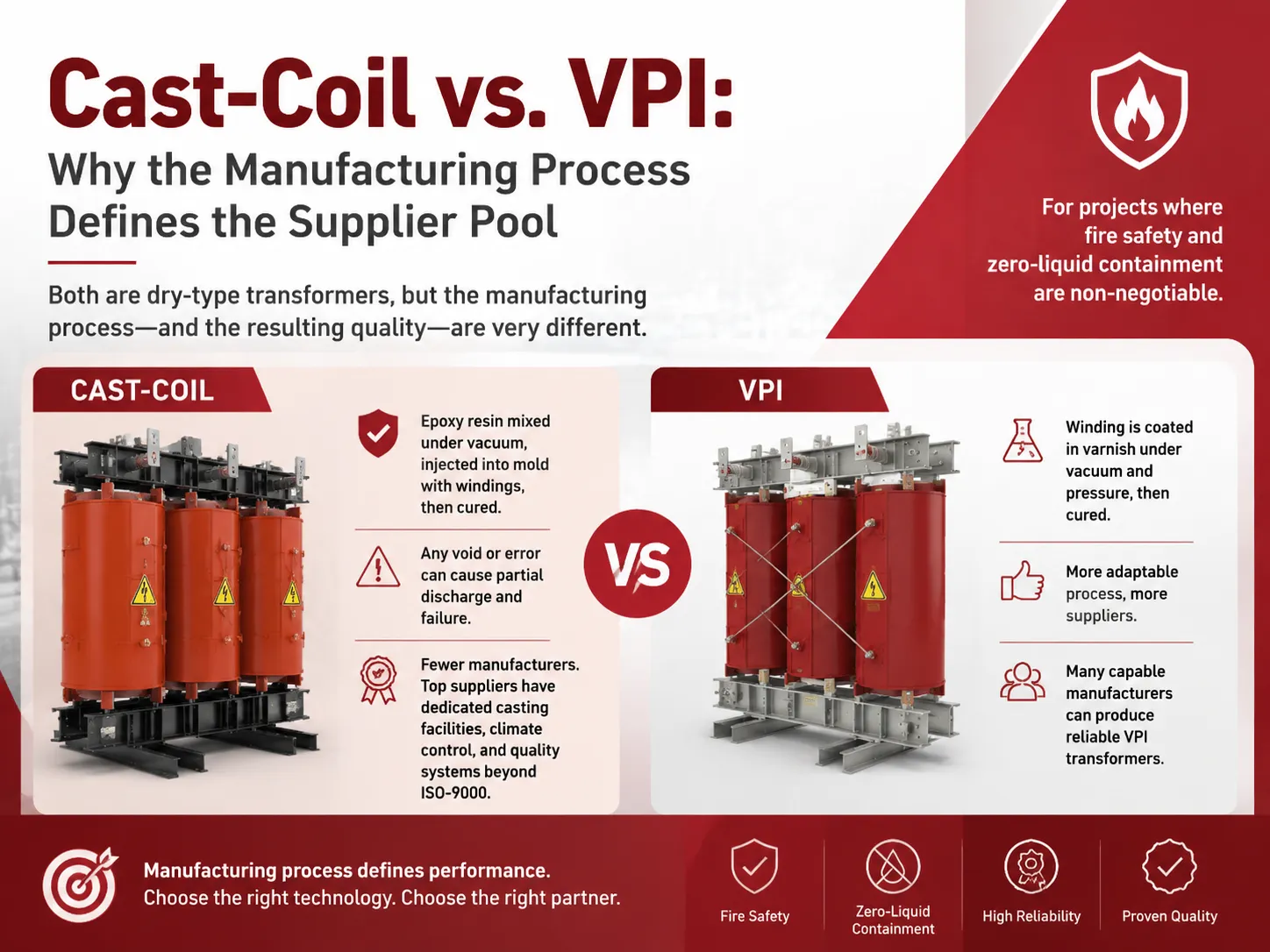
The two primary categories of dry-type transformers are cast-coil and vacuum pressure impregnated (VPI). While both are classified as dry-type, they operate under different guidelines. Manufacturing capabilities are typically reflected in the type of dry-type transformer manufactured. VPI dry-type transformers are produced by winding the conductor (winding), immersing it (coated) in varnish under a vacuum and pressure, and then curing the varnish. Many smaller shops can manufacture a reliable VPI transformer due to the more adaptable method of manufacturing. Conversely, cast-coil dry-type transformers are manufactured by mixing epoxy resin under vacuum, accurately injecting epoxy resin into a mold containing windings, and curing the epoxy resin to a controlled temperature profile. Any error (void) in any of these steps can result in partial discharge and failure; therefore, the number of cast-coil manufacturers is significantly less than VPI manufacturers. The most respected cast-coil dry-type transformer manufacturers often have dedicated casting facilities with climate control, as well as an ISO-9000-based quality management system that has been audited to a degree higher than ISO-9000. For projects where fire safety and zero‑liquid containment are non‑negotiable, our guide to best rated cast‑coil dry type transformer suppliers provides a focused evaluation of manufacturers who specialize in this demanding segment.
How ShineGrand Builds Dry Type Transformers for Demanding Environments
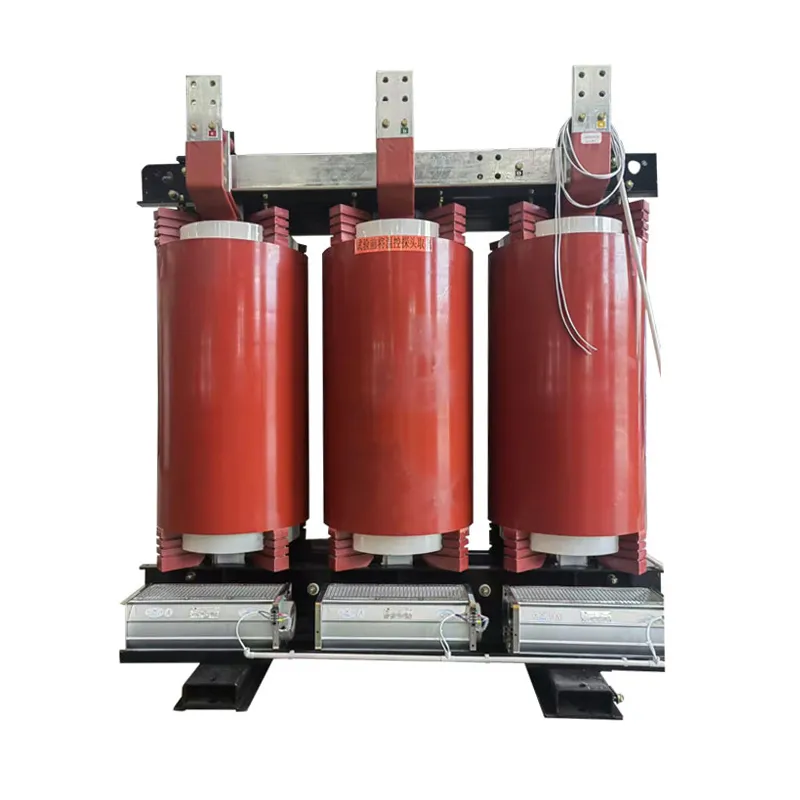
ShineGrand Electric is a dry type transformer manufacturer that has invested in the in‑house processes that produce reliable, long‑life units. Our vacuum casting line, partial discharge test bay, and temperature rise test cell are under the same roof, which means our engineering team controls the complete sequence from resin mixing to final test. We build cast‑coil dry type transformers for primary voltages up to 36 kV, in kVA ratings from 100 to over 10,000, with Class F (155°C) or Class H (180°C) insulation systems specified to match the installation environment. Our standard product lines include:
- SCB Series Epoxy Resin Cast‑Coil Dry Type Transformers for 6‑10 kV primary voltages, widely used in commercial buildings, hospitals, and industrial plants where fire safety and minimal maintenance are required.
- SCBH Series Amorphous Alloy Core Dry Type Transformers that reduce no‑load losses by up to 70% compared to conventional silicon steel cores, making them ideal for installations where the transformer is energized continuously and energy cost is a significant factor. Detailed specifications are available on the SCBH amorphous alloy dry type transformer product page.
- 20‑35 kV Cast‑Coil Dry Type Transformers for wind farm collector circuits, industrial distribution, and utility substations where medium voltage primary demands higher BIL ratings and rigorous partial discharge control. See the 20‑35 kV SCB series epoxy dry type transformer page for full technical data.
Every ShineGrand dry type transformer ships with its routine test report (including PD measurement, winding resistance, voltage ratio, and applied potential test) and a copy of the relevant type test certificates. We believe that a transformer’s quality is documented, not asserted — a principle that our clients in data centers, metros, and heavy industry have come to depend on. If you need to calculate the correct kVA for your installation before requesting a quote, our transformer calculation table provides full‑load current data for all common ratings.
What Is the Lifespan of a Dry Type Transformer?
If a dry type transformer is properly designed and operated in compliance with requirements, it may be expected to have a service life of 25-35 years, with many installations lasting successfully for more than 40 years. The predominant reason for the variance in expected life is thermal degradation of the insulation system. For example, every time the temperature of the hottest winding (the winding with the highest measured temperature) exceeds the temperature rating of its insulation class by 10 degrees Centigrade, its total life expectancy is reduced by approximately one-half.
Consequently, following the rule of not loading a dry type transformer above 80% of its rated nameplate kVA capacity is of utmost importance to preserve thermal buffer (or headroom) to slow the aging of the insulation.
In addition, the environment in which a dry type transformer is located significantly alters the aging characteristics of the transformer. For example, a clean, dry, well-ventilated electrical room greatly extends the life expectancy of a dry type transformer compared to one exposed to conductive/invasive dust, high humidity, or corrosive vapors.
Finally, routinely inspecting, cleaning, and maintaining ventilation openings, fan operation, and insulation condition for signs of thermal stress are critical to detect early indications of potential thermal failure in a dry type transformer.
Frequently Asked Questions
Which brand of transformer is best?
Choosing the best dry transformer for a project is not always obvious because different brands are better suited to different types of projects. Whether you’ll get what you need from a specific manufacturer will depend on whether they have the ability to cast transformers in-house, documented evidence of partial discharge testing, and certification of type testing, as well as reference installations in an environment that is comparable to yours. For example, while one manufacturer may do a great job of building small commercial VPI units, they may not be capable of producing larger cast units (10,000kVA) that meet all of the requirements of a data center. You need to choose the manufacturer based solely on the technical requirements outlined in your specifications, rather than preconceived notions about what brand will meet those requirements.
Who is the manufacturer of dry type transformer?
Dry type transformers Various companies have manufactured products; MNCs (multinational corporations) manufacture products as do small/medium-sized companies. We are a specialized manufacturer who does its own (in-house) vacuum casting, partial discharge testing and complete routine testing. We manufacture both cast-coil and VPI type dry transformers for commercial, industrial and renewable energy projects; voltages range from 100 kVA to 10+ kVA and the maximum sustaining voltage is 36kV.
Who are the top transformer manufacturers?
The top tier of manufacturers worldwide consists of large multinational companies with a diverse array of product lines that encompass both oil-filled (liquid) and dry transformers. But for dry-type transformers with specialized applications, a dedicated manufacturer typically provides better engineering support, shorter lead times, and a greater willingness to customize than do the larger companies. The best manufacturer for your project is the one whose standard design comes closest in matching your voltage, kVA, impedance, and environmental requirements, and will provide your company with type test data to support the claim.
What is the lifespan of a dry type transformer?
Typically, a dry-type transformer has a service life of twenty-five (25) to thirty-five (35) years when used under normal conditions; however, many transformers will provide service for forty-plus (40+) years. The service life of a dry-type transformer is determined by thermal embrittlement of the insulation system. Maintaining an eighty percent (80%) continuous loading, providing sufficient ventilation, and keeping the windings free of moisture and clean are the best methods to maximize the service life of a dry-type transformer.
Selecting the best dry type transformer manufacturer is an engineering exercise, not a purchasing guess. It demands that you look past the nameplate and into the factory: the casting process, the test bay, the material certifications, and the reference list. A manufacturer who meets those criteria is one whose unit will run cool, stay quiet, and protect your operation for decades. ShineGrand Electric meets that standard with a transparent, test‑backed approach to dry type transformer manufacturing, and we welcome the opportunity to prove it — from the first inquiry through to the final site acceptance test.