Two surge arresters might have similar rated voltages, similar MCOV and similar zinc oxide blocks, but still function differently in practice. The reason behind the difference is the housing. The housing of a polymer surge arrester comprises silicone rubber, while the housing of a porcelain surge arrester consists of a glazed ceramic tube. Based on these different choices different weight, pollution performance, behaviour at failure, life span and installation costs will be involved. This guide analyzes both materials from all angles explaining when it is better to use either one.
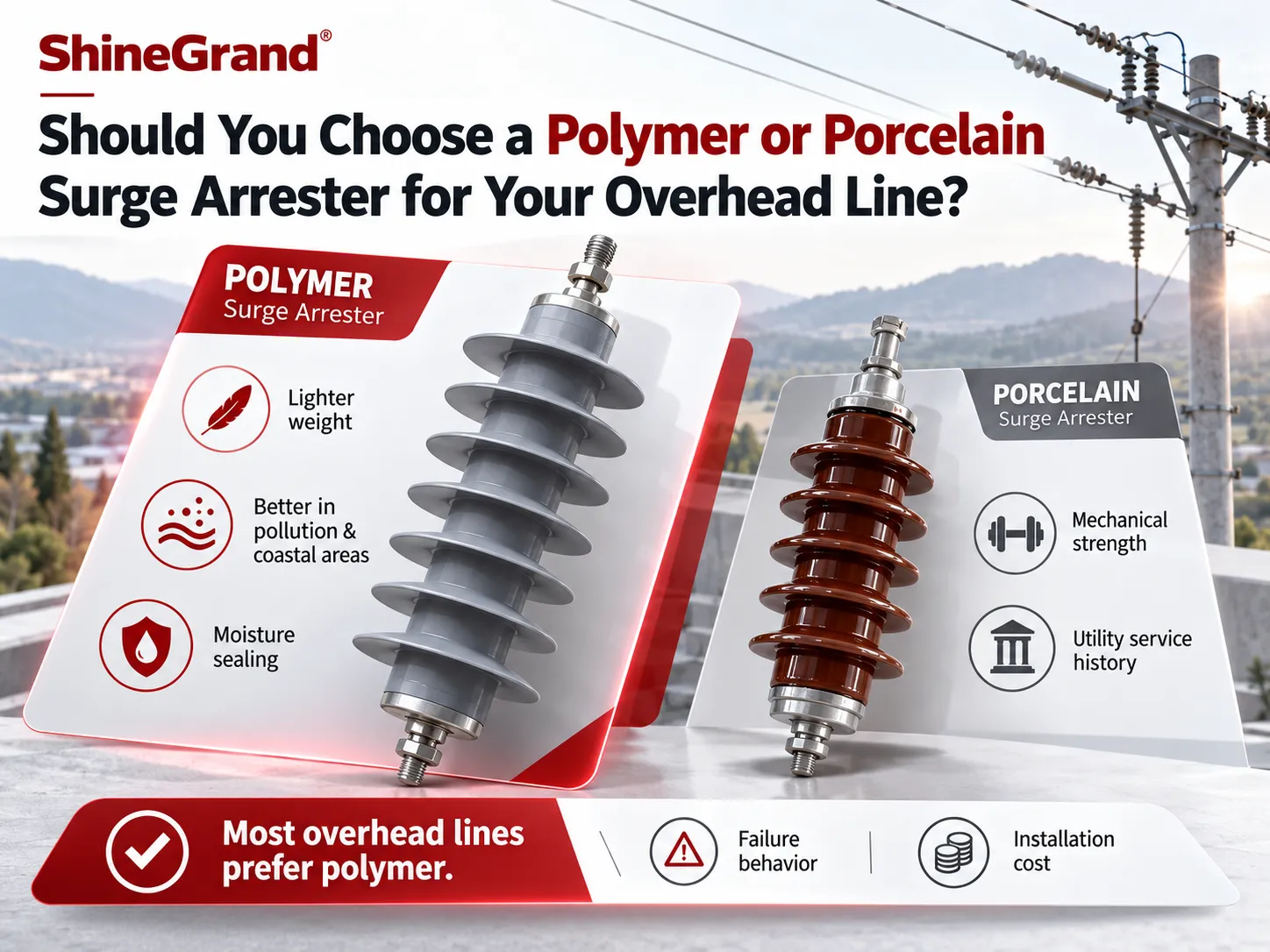
Polymer or porcelain surge arrester: which one is better? In most distribution and in some substation situations, a polymer housed surge arrester is a better option for several reasons: its design reduces the overall weight, its hydrophobic silicone rubber ensures better results in polluted and coastal environments; its housing design eliminates internal air space, in treated and when it breaks down, the housing usually splits instead of shatters. Porcelain surge arresters are still a good option in places where very high mechanical strength is required; in places where long serving history and utility regulations guarantee their reliability.
If you need a refresher on how arresters work and how MCOV and rated voltage are selected, start with ShineGrand’s guide What Is a Surge Arrester. This article focuses only on the housing material.
What Is a Polymer Surge Arrester?
A polymer surge protector is what one refers to as a composite or polymer-device surge protector, made of several layers of a metal oxidizer or ZnO used mechanically along with certain fiberglass-reinforced materials. The housing of the surge protector is made of silicone rubber. The most traditional designs include the following:
Individually wrapped: where the blocks are wrapped in fiberglass and resin.
Caged designs of surge protectors which have fiberglass rods building an open cage for blocking and then molding the silicone rubber over the cage.
Tube designs of the surge protector involve placing blocks in a tube made out of fiberglass and covered with silicone for the outer shell.
Most reliable distribution surge protectors involve silicone being molded onto the active part which eliminates the presence of air bubbles in the construction.
Advantages of polymer housings
- Lightweight material, resulting in easier installation of brackets and cross-arms and lower mechanical loads on the structures.
Water-repelling surface, leading to the formation of droplets instead of films, thus preventing the current through the leakage circuit.
Safer reaction to malfunction in that when an arrester fails due to overload, it breaks into pieces releasing its arc instead of shattering into sharp parts.
Robustness to breakage due to impacts and vandalism; fewer damages during transportation and manipulation.
Tight structure containing no gas inside in all types of directly formed design.
Limitations of polymer housings
- Silicone rubber is a ‘living material’, so the long-term operation of such devices is dependent on the formulation and production technology. If produced from the wrong materials it may exhibit tracking, erosion or lose its water repellent properties.
Very high cantilever loads, as those acting on large station arresters that play the role of braces, may require the use of pipes or porcelain materials.
The experience in the utility operations is based on several decades, while porcelain has been used for the construction of equipment for almost a century – thus some companies avoid using it in operation at the highest voltage levels. 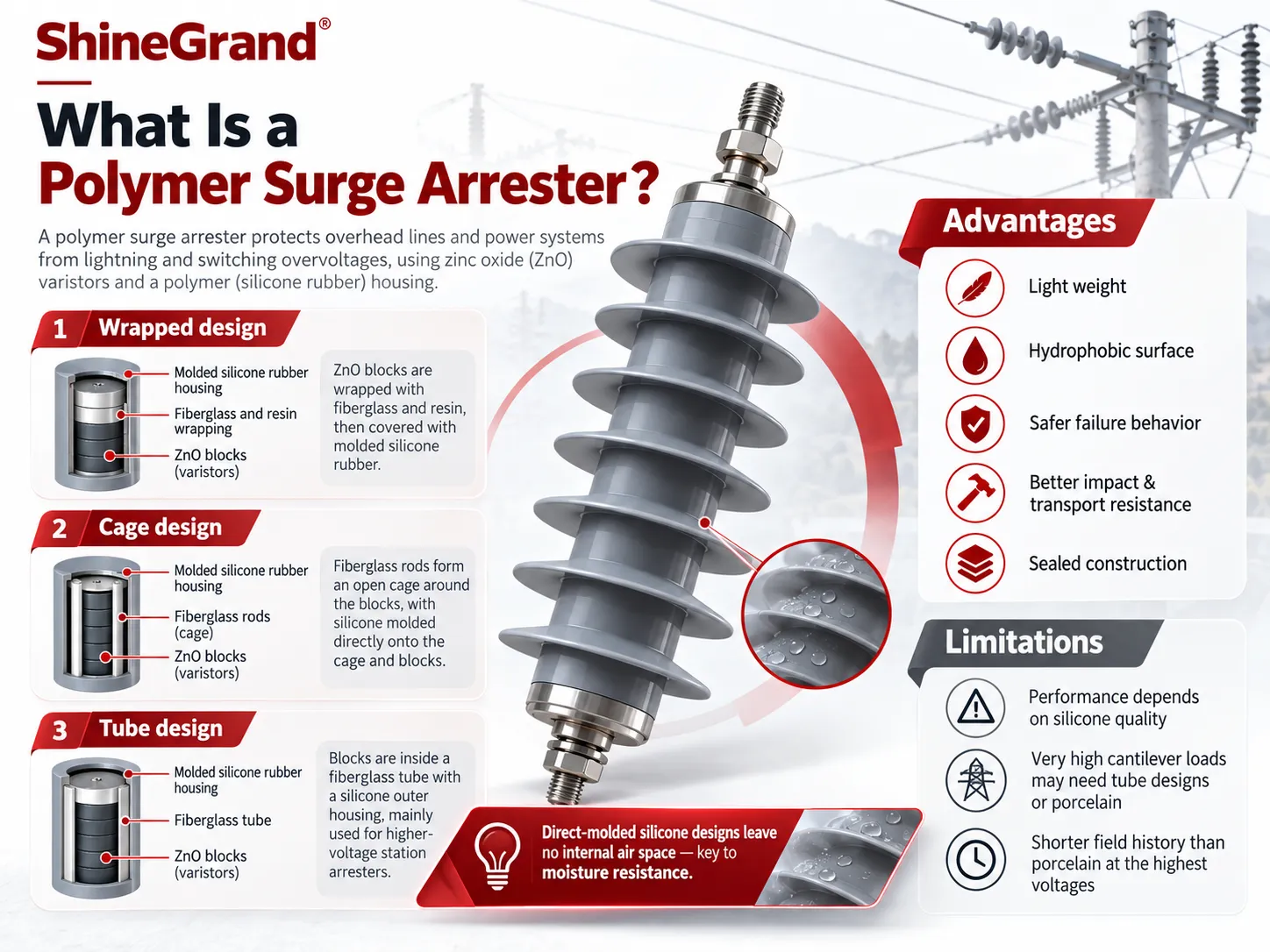
What Is a Porcelain Surge Arrester?
A porcelain surge arrestor consists of its zinc oxide portions in a hollowed insulator made of porcelain, and with metal components and seals located at both of the ends. Pressure relief mechanisms, such as ventilation/valves, are constructed for the purpose of opening the housing whenever something goes wrong and preventing spark formation while discharging the electric current.
Throughout most of the last century, porcelain surge arresters were predominately used. This type of protection equipment was applied starting from gapped silicon carbide models to contemporary gappeless metal-oxide varieties.
Advantages of porcelain housings
- Porcelain is characterized by substantial resistance to ultraviolet radiation, heat and chemicals and there is no aging of the material itself.
Porcelain enclosures provide high rigidity alongside with high mechanical strength which makes them effective for high columns of arresters.
Porcelain has a long operational experience and even now, some of the utility requirements require to provide porcelain enclosure.
Limitations of porcelain housings
- Heavy – which calls for huge efforts while installing it.
Brittleness – porcelain is vulnerable to breaks due to heavy impacts, vandalism, earthquakes or rough behavior.
Internal airspace – the gap exists between enclosures and porcelain and therefore, the device is relying upon the end seals to prevent moisture or other substances from inside. If the seals are broken, moisture gets into the device leading to failure or flashover.
Risk of failure – if the pressure relief function does not take place, the failing porcelain device can explode and splatter debris.
Contamination – glazed porcelain is characterized by hydrophilic properties thus the pollution layer remains damp and conductive.
Polymer vs Porcelain Surge Arrester: Key Differences
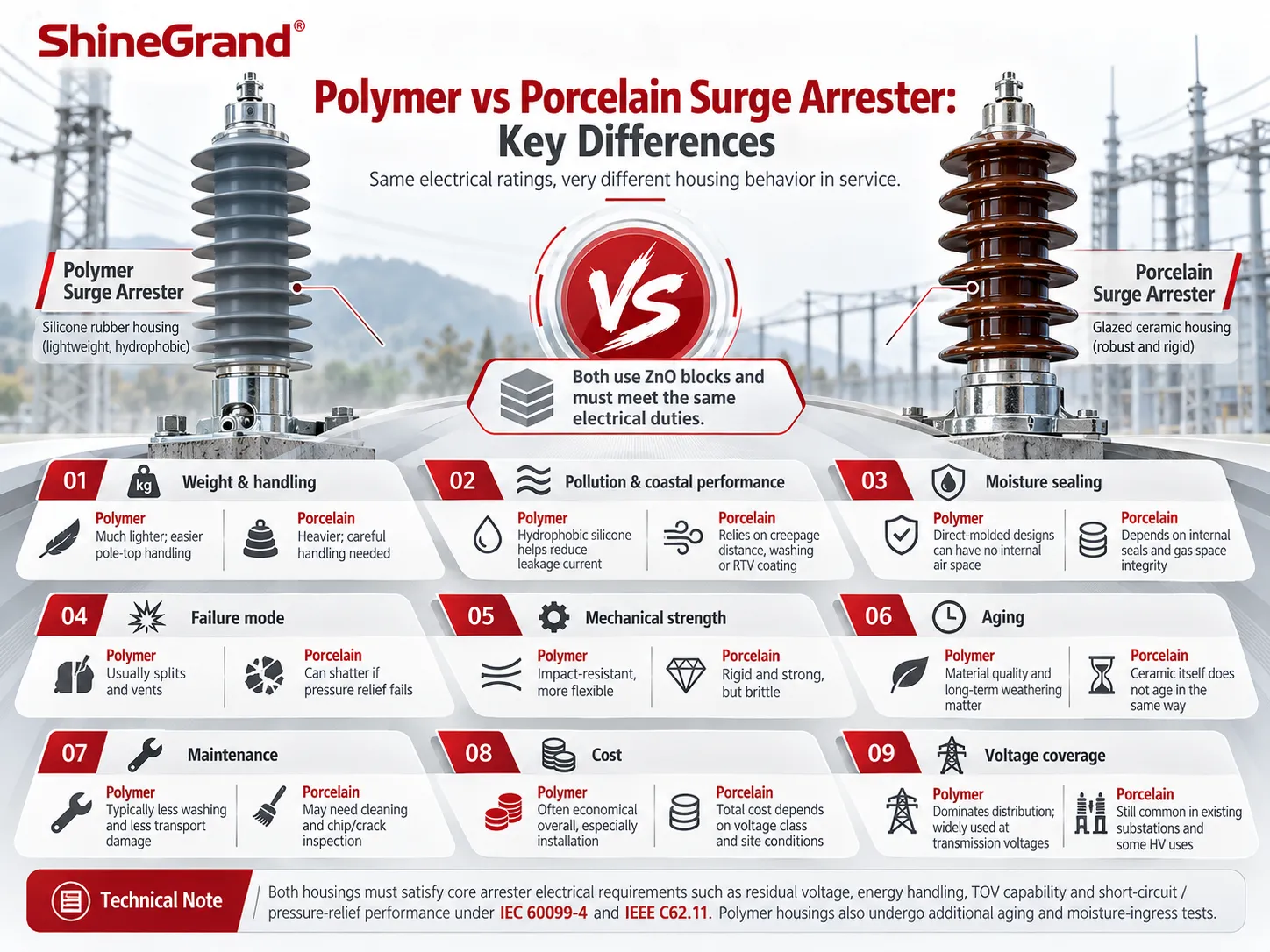
The differences between a polymer surge arrester and a porcelain surge arrester can be dealt with as follows:
1) Weight and handling = polymer surge arresters are much lighter than similar voltage porcelain surge arresters which makes their work atop a pole easier. Porcelain surge arresters are heavy which makes handling them difficult due to the risk of getting damaged.
2) Pollution and coastal performance = polymer silicone is hydrophobic meaning it makes possible to transfer this property to the thin layer of pollution preventing high leakage current. Porcelain surfaces are easily wet so they rely on creepage distance, washing or using RTV coatings.
3) Moisture sealing = direct mold polymer surge arresters lack any internal air cavity. Porcelain surge arresters consist of an internal gas cavity depending on ends sealing.
4) Failure mode = the failure in polymer housings means that they break and start leaking; in stress circumstances porcelain housings maybe vent through pressure relief systems but sometimes the failure results in breaking the housing into pieces.
5) Mechanical strength = although porcelain is rigid, solid and strong, it is brittle, whereas polymers are flexible and resist impact, so very tall columns might need to be made using tubular designs.
6) Aging = porcelain does not age; polymer silicone ages slowly under UV radiation, corona effect and pollution, thus some requirements must be met.
7) Maintenance = polymer surge arresters need less washing than porcelain ones and do not get damaged when hit; porcelain ones may need regular washing in polluted areas and inspection for cracks and mechanical damage.
8) Cost = polymer surge arresters cost less than standard porcelain ones because of their weight. Cost of the device depends on voltage class, construction type and installation conditions.
9) Voltage coverage = polymer is a leader in distribution voltage class devices and also is widely used in transmission classes. Porcelain surge arresters are used in many substations and some high-voltage applications.
Both types of surge arresters of both designs must meet the same electrical requirements. The arresters are tested for residual voltage, energy handling capabilities, ability of temporary overvoltage handling and short circuit (pressure relief) characteristics according to the requirements of IEC 60099-4 and IEEE C62.11 standards. But at the same time the polymer housed ones have to undergo some additional tests related to rum-weather and moisture.
When to Choose a Polymer Surge Arrester
At the point of making a decision whether to utilize a polymer housed surge arrester, one should bear in mind the following cases when it would be the best option:
– Coastal, desert and industrial places where the specific environment contributes to the increase of the possibility of flashover or leakage by traditional porcelain.
– Pole-mounted configurations and crossarm constructions where handling matters not only due to weight of the materials but due to other factors as well.
– Public areas, roads and buildings where any shattering/failing of materials may cause damage to people and properties.
– Potential locations where vandalizing, shootings of hardware, earthquakes occur.
– Protection of transformers during the procedure of installation of overhead lines usually at the same places together with the fuse cutout.
– Solar and wind farms collection presence, which includes the considerable number of arrested in essential natural locations.
When a Porcelain Surge Arrester May Still Be Preferred
- Utility standards or existing substation designs specify porcelain for uniformity with installed equipment and spare parts.
Arrester columns need to bear high cantilever or supporting loads.
Clean, dry environments where maintenance is well defined, and where porcelain’s susceptibility to pollution is of less concern.
Certain, very high voltage station applications, where an owner prefers porcelain’s long service record.
Polymer vs Porcelain Insulators: The Same Story in a Wider Context
The same principles about materials apply to both line insulators and post insulators as well as arresters. Polymer insulators, with silicone rubber sheds on fiberglass rods, stand out due to their lightweight characteristic, hydrophobicity, and shock resistance property. On the contrary, porcelain and glass insulators are rigid, inert, and reliable for many years, but these materials are heavy and fragile. The main concern with polymer insulators is long-term aging of material and the possibility of damage to a fiberglass core upon failure of the insulating housing; the main concerns with porcelain include breakage, pollution, and weight.
Porcelain is a perfect electrical insulator itself. It has a high level of dielectric strength and absorbs no moisture if correctly glazed, is resistant to UV and most chemicals, and keeps its properties in high-temperature conditions. Its weaknesses are mechanical vulnerability and wettable surface but not its insulating property.
Quality porcelain insulators remain in operation for decades, for the whole period of their life, which is usually more than forty or fifty years, as porcelain insulators become useless due to mechanical damage, cement growth in fittings, hardware corrosion or pollution problems instead of material wear out.
Selection Factors Beyond the Housing Material
Material for the installation matters, although it is only one aspect of a surge arrester specification. Before selecting one out of polymer and porcelain, be sure to determine:
1. The maximum continuous operating voltage (MCOV or Uc) and rated voltage, appropriate for highest voltage level in the system and grounding type;
2. The capability of withstanding temporary overvoltages, related to the fault condition and switching;
3. Nominal discharge current and energy class, e.g., distribution class at 5 kA or 10 kA or station class for substations;
4. Residual voltage and resulting protecting margin as compared to the insulating level of equipment;
5. Creepage distance, considering pollution level of the location;
6. Mechanical requirements: maximum cantilever load, installation method and seismic qualification;
7. Accessories which include ground lead disconnectors, insulated brackets, wildlife guards, etc.;
8. Meeting requirements stipulated in IEC 60099-4 and IEEE C62.11 with the available results of the type tests.
Installing Arresters with Fuse Cutouts and Transformers
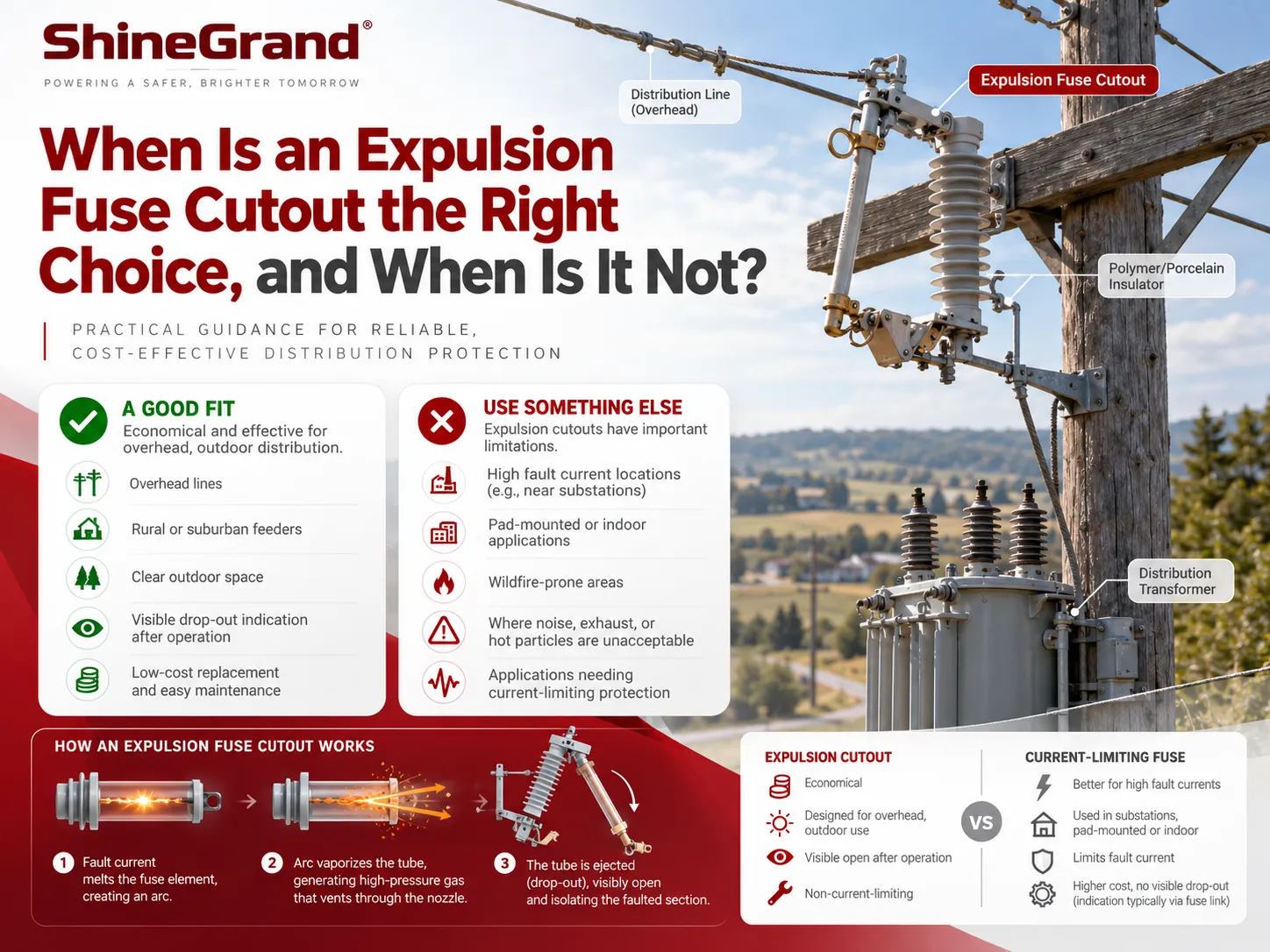
Usually, both a surge arrester and a fuse cutout are used together on overhead distribution lines for the protection of a transformer on the pole. Remember some practical aspects:
An arrester should be installed as close to the transformer bushing as possible since the transformer should not see the protective level of the arrester and the influence of the long-length leads.
The ground of the arrester, the transformer tank, and the neutral system must be connected with the help of bonding.
Some companies make connections to the arrester on the line side of the cutout in order to avoid the flow of surge current in the fuse link, which can lead to its operation by mistake. Others do the connection on the load side or on the transformer tank. Everything depends on the local practice.
A disconnector of the ground lead should be used in order to disconnect the failed arrester from the ground and make it evident.ShineGrand’s guides on fuse cutouts, expulsion fuse cutouts and pole mounted transformers cover the other parts of this pole-top protection package.
Why the Market Has Moved Toward Polymer
In the last few decades, electricity companies have transitioned entirely from the traditional porcelain equipment to polymer installations when acquiring new distribution arresters throughout the world. All the factors causing this switch are the same as mentioned above: lower installation expense, safe failure characteristics, lower number of malfunctions occurring due to pollution influence and lower chances of accidents during operation, including transportation. At the same time, polymer solutions have become available for transmission and substation voltages as well in the new ranges of products produced by the manufacturers–that is the polymer technology has moved to extra-high-voltage station solutions while the porcelain arresters remain in service where it is specified. Thus, polymer arresters are being widely used in new projects of the distribution and renewable energy sectors.
ShineGrand Polymer Surge Arresters
ShineGrand Electric manufactures polymer-housed metal-oxide surge arresters for distribution and substation applications:
- YH5W-10 polymer surge arrester for 10 kV distribution networks.
- YH5WS-17/50 lightning surge arrester with a silicone rubber housing, Ur 17 kV and Uc 13.6 kV, for 10 kV class overhead lines.
- 11 kV anti-pollution surge arrester with a polymer housing and 372 mm creepage distance for coastal and polluted areas.
- HY5WS-17/50DL dropout surge arrester and 17 kV pillar surge arrester for special mounting arrangements.
- Station surge arresters for substation equipment protection.
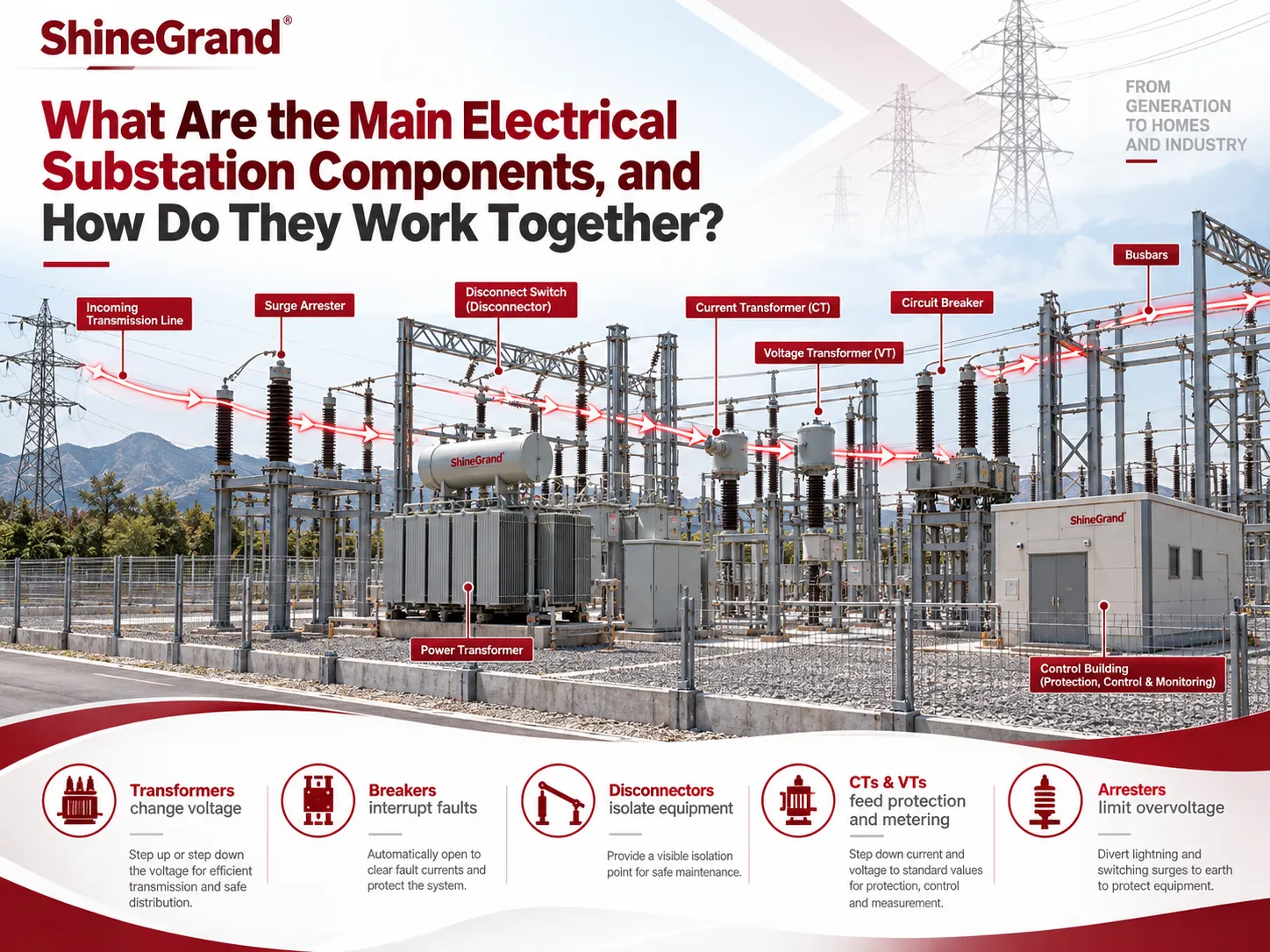
Browse the full surge arrester range, or see how arresters fit into a substation in ShineGrand’s guide to electrical substation components.
Frequently Asked Questions
What are the key differences between polymer and porcelain insulators?
Silicone rubber or other types of elastomers are used for polymer insulators, which are built around a core made from fibreglass. They have so many advantages including being lightweight and resistant to the effects of moisture and impacts. However, the chemical components of the materials used for making polymers can deteriorate over time. Porcelain insulators are made using a rigid and heavy material which has been proven to serve for a very long time and offer reliable performance. Moreover, the materials used in these insulators can be ironed out in contaminated environments.
Is a polymer surge arrester better than a porcelain one?
Mostly for distribution and in many instances of substation applications it is true. Polymeric surge arresters are lighter in weight, that deal better with contamination, are impervious to moisture, and are safe to use in case of failure. Porcelain may be used when there is a need for very high mechanical strength in a clean environment or in accordance with utility regulations.
What is the difference between a surge protector and a surge arrester?
On a general level, surge protection refers to low-voltage circuits from a level less than 1,000 V and includes surge protectors and SPD, as mentioned by IEC 61643 and UL 1449. However, surge arresters protect power equipment with medium and high voltage, i.e., transformers; hence, the applicable standards are IEC 60099-4 and IEEE C62.11. Although both are aimed at diverting surge current to the ground, they are designed and rated for different voltages and levels of energy.
How long do porcelain insulators last?
Well-made porcelain insulators commonly serve for many decades, often more than forty or fifty years. Service life is usually ended by mechanical damage, hardware corrosion, cement growth or pollution problems rather than by the porcelain material itself degrading.
Is porcelain a good insulator for electricity?
Yes. Due to its excellent dielectric strength, porcelain is hardly able to absorb water when glazed and is highly resistant to UV light, heat, and chemical materials. Thus, porcelain has been used as the material for power insulators for over 100 years. Its drawbacks include its brittleness, heaviness, and poor performance in moist polluted conditions, not its insulating capacities.
Can polymer surge arresters be used in coastal areas?
Yes. Coastal and salt-fog conditions are one of the major reasons why utilities prefer polymer arresters. Loss of leakage current and arc-over are prevented due to hydrophobic surface of silicon resin and therefore the proper creepage distance should be defined according to the degree of pollution.
What happens when a polymer surge arrester fails?
In most cases an overloaded polymer arrester ruptures its casing and opens up to allow the internal arc to escape. Heavily loaded polymer arresters do not throw heavy fragments. If equipped with a ground lead disconnector, the defective arrester is disconnected from ground and clearly indicates to the crew that it requires replacement.
How should a surge arrester be coordinated with a fuse cutout?
Install the surge arrester adjacent to the transformer and ensure that the electrical connections are kept short, identify the grounding specifications from the transformer tank and neutral point, and check the utility regulations to know which side of the cutout the device is to be attached. The purpose of connecting on the line side is to ensure that the surge current does not flow through and trip the fuse link.
References
- IEC 60099-4 — Metal-oxide surge arresters without gaps for a.c. systems. Ratings and tests for porcelain- and polymer-housed arresters.
- IEEE C62.11 — Standard for Metal-Oxide Surge Arresters for AC Power Circuits. North American arrester ratings and tests.
- IEC 60815 — Selection and dimensioning of high-voltage insulators for polluted conditions. Guidance on creepage distance and pollution classes.
- Electrical Engineering Portal (EEP). Technical articles on arresters and insulators.
- ShineGrand — What Is a Surge Arrester?. How arresters work and how to select them.
Choosing Arresters for Your Network?
In general, the use of a polymer surge arrester is ideal for many applications because it provides the optimal combination of light weight, pollution control features and safety in case of failure. However, porcelain surge arresters are still needed in applications where strength and reliability are more important. Regardless of the type of housing used, it is necessary to use surge arresters that fit electrical ratings of the system. Send your system voltage, method of grounding, pollution degree and quantity to ShineGrand and get advice on selecting appropriate assigners. Contact ShineGrand for a quotation.